
Why Is Volunteerism Declining in 2026?
 Feb, 22 2026
Volunteer Match Calculator
Enter your details above to see matching opportunities
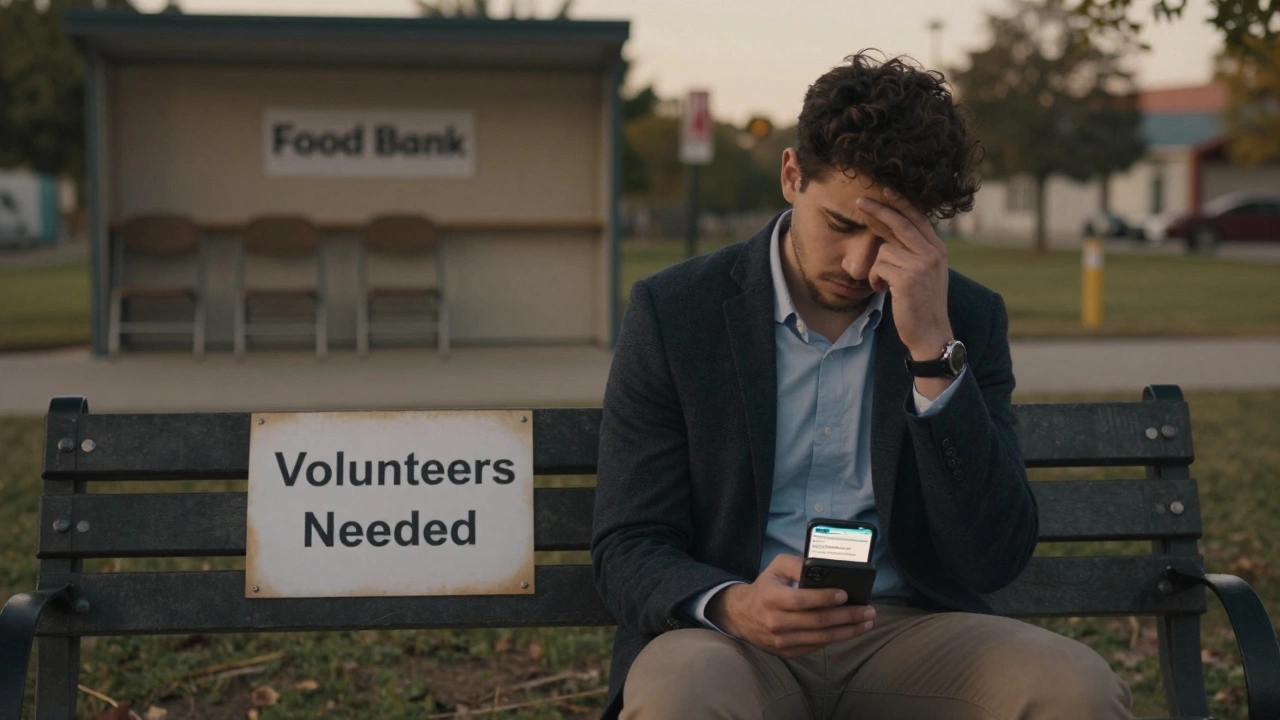
More people than ever say they care about their communities. Yet fewer are showing up to help. In the UK, volunteer rates have dropped by nearly 15% since 2019, according to the Office for National Statistics. That’s not just a number-it’s empty benches at food banks, canceled school reading programs, and silence where neighbors used to gather. So why is volunteerism declining? It’s not because people have stopped caring. It’s because the system isn’t built for real life anymore.
Time poverty isn’t just a buzzword
People aren’t lazy. They’re exhausted. Two-income households, gig work, and long commutes have turned weekends into recovery time, not service time. A 2024 study by the Charities Aid Foundation found that 68% of potential volunteers said they couldn’t commit because they didn’t have "enough free time." That’s not a lack of willingness-it’s a lack of bandwidth. When you’re working two jobs, caring for aging parents, and managing kids’ schedules, the idea of signing up for a weekly shift at a shelter feels like adding another unpaid task to a broken system.
Volunteer roles still ask for rigid commitments: "Must attend every Tuesday from 4-7 PM." But life doesn’t work that way. A sick child, a late shift, a broken-down car-these aren’t exceptions. They’re the norm. And when organizations don’t adapt, people walk away.
The burnout cycle
Volunteers used to be the backbone of local charities. Now, too often, they’re the only backbone. With staff cuts and shrinking donations, nonprofits rely more on unpaid labor than ever before. That means one person is doing the work of three. One volunteer handles intake, outreach, and admin because there’s no one else. That’s not volunteering-it’s exploitation disguised as gratitude.
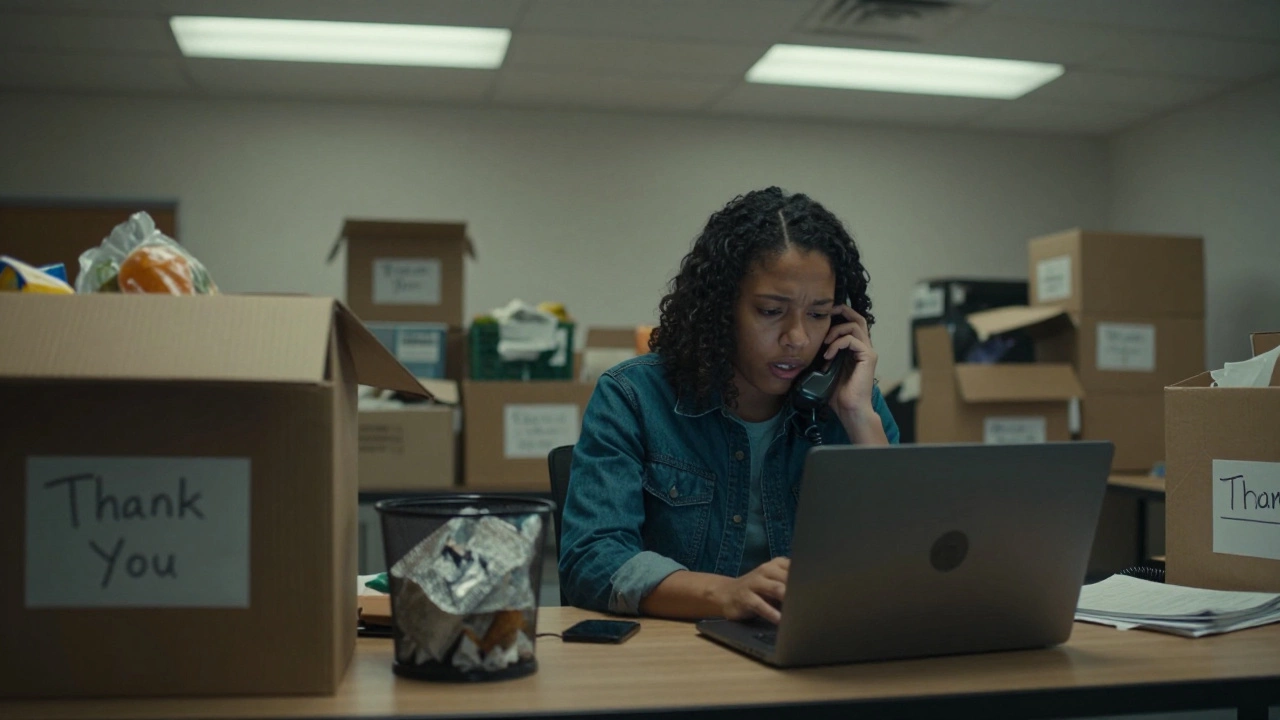
And it doesn’t last. A 2025 survey of former volunteers in Scotland showed that 53% quit because they felt "used and unappreciated." They weren’t burned out from hard work. They were burned out from being treated like disposable resources. When your effort isn’t acknowledged, when you’re never thanked beyond a generic email, and when your input is ignored, why keep showing up?
Digital distraction is real
It’s easier to donate £5 online than to show up at a soup kitchen. Social media has turned activism into a click. Liking a post about homelessness feels good. So does sharing a fundraiser. But that’s not the same as showing up with gloves and a smile. Digital engagement gives people the illusion of impact without the messiness of real connection.
Younger generations, especially, have grown up with this model. They donate, they sign petitions, they hashtag causes. But they don’t join committees. They don’t show up for training. And when charities don’t offer digital alternatives to hands-on work, they lose them entirely. The gap isn’t about values-it’s about convenience.
Volunteerism feels outdated
Think about how most volunteer opportunities are advertised. "Join our team! Help the homeless! Serve meals every Thursday!" It sounds like a 1990s charity poster. There’s no flexibility. No recognition. No clear impact. People want to know: "What will I actually do? Who will I help? Will it matter?"
Modern volunteers-especially under-35s-don’t want vague roles. They want projects with measurable outcomes. They want to see a before-and-after. They want to know their time made a difference. A food bank that says, "You’ll sort 500 meals this shift," and shows a photo of the families who received them, gets 3x more sign-ups than one that says, "Help us feed the hungry."
Volunteer programs that still operate on guilt and obligation are dying. Those that focus on purpose, clarity, and respect are thriving.
Generational disconnect
Older volunteers grew up in a time when community service was expected. Church, school, civic clubs-it was woven into daily life. But today’s youth don’t have those structures. Schools cut after-school programs. Churches are shrinking. Local clubs have vanished. There’s no natural pipeline into volunteering anymore.
And when organizations don’t meet young people where they are-on TikTok, Discord, Instagram-they’re invisible. A 17-year-old won’t sign up for a 9-to-5 shift at a charity shop. But they’ll spend two hours building a social media campaign for it. The problem isn’t that young people don’t care. It’s that the old systems don’t speak their language.
It’s not about money-but money matters
Volunteering isn’t declining because people are selfish. It’s declining because the infrastructure is crumbling. Charities can’t afford to hire coordinators to train, schedule, and support volunteers. So they rely on volunteers to do that too. It’s unsustainable.
And when funding dries up, the first thing cut? Volunteer programs. No budget for transport reimbursement? No training materials? No thank-you events? People notice. They remember. And they don’t come back.
Volunteerism isn’t free labor. It’s a partnership. And partnerships need investment.
What’s changing-and what’s working
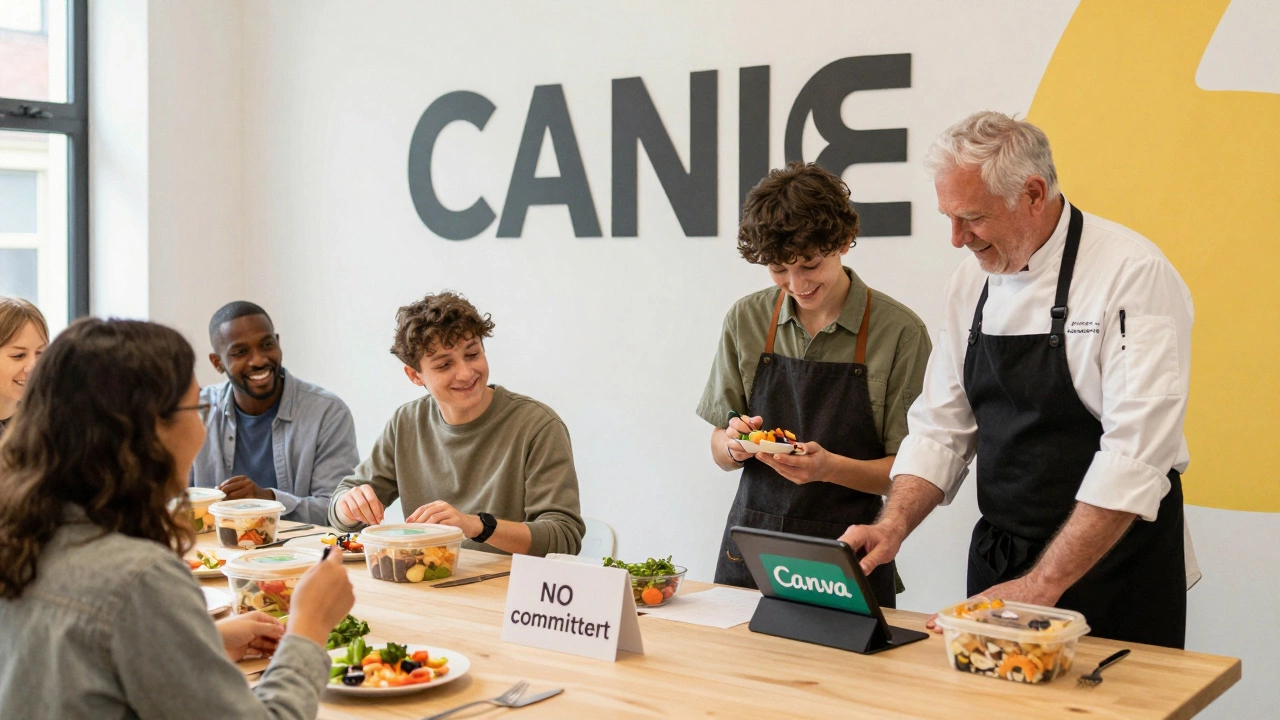
Some places are fixing this. In Edinburgh, a youth-led initiative called "SkillSwap" lets volunteers trade skills instead of hours. A graphic designer helps a charity redesign its website. In return, they get free cooking lessons from a retired chef. No rigid schedules. No guilt. Just value exchanged.
Another group, "Drop-In Days," lets people volunteer for just one hour-no commitment. They show up, do one simple task, and leave. No pressure. No follow-up. Just a chance to help. Sign-ups tripled in six months.
And nonprofits that send personalized thank-you notes-not emails, but actual handwritten cards-see 40% higher retention. It’s not about money. It’s about being seen.
The path forward
Volunteerism isn’t dead. It’s just waiting to be redesigned. We need to stop asking people to fit into old boxes. We need to offer flexibility, recognition, and real impact. We need to stop treating volunteers like a substitute for staff and start treating them like partners.
Organizations that adapt will survive. Those that don’t will keep wondering why no one shows up.
The answer isn’t more ads. It’s better design. Better respect. Better humanity.
Is volunteerism declining everywhere, or just in the UK?
It’s a global trend. The United Nations reported a 12% drop in formal volunteering across 30 developed nations between 2018 and 2025. The US, Canada, Australia, and Germany all saw similar declines. The reasons are consistent: time poverty, burnout, and outdated models. But some countries are responding faster. In the Netherlands, volunteer programs now offer micro-volunteering options-tasks under 30 minutes-and saw a 22% increase in participation. The UK is catching on, but slowly.
Can digital volunteering replace in-person work?
Not fully-but it can help. Online tasks like translating documents, managing social media, or designing flyers are valuable. But they don’t replace the human connection that comes from serving meals, tutoring kids, or visiting isolated seniors. The most successful organizations now use digital volunteering to support, not replace, in-person roles. Think of it as a sidekick, not a substitute.
Why don’t more companies support employee volunteering?
Many say they do-but the reality is mixed. Only 38% of UK companies offer paid volunteer days, and even fewer let employees choose when to use them. Some only allow volunteering during lunch breaks or on weekends. That defeats the purpose. The companies that see real results-like higher employee morale and retention-are the ones that give 2 full paid days per year, let employees pick their cause, and track impact. It’s not charity. It’s culture.
Are younger people less willing to volunteer?
No. In fact, 18-24-year-olds are more likely to support causes than older groups. But they don’t volunteer the same way. They prefer one-off events, skill-based tasks, or peer-led campaigns. They’ll organize a community clean-up on Instagram, not join a weekly committee. The problem isn’t their willingness-it’s that most charities still operate on the assumption that volunteering means showing up for 3 hours every Thursday.
What’s the biggest mistake charities make with volunteers?
Assuming that gratitude is enough. A thank-you email doesn’t replace recognition. A vague description of your role doesn’t build commitment. Volunteers want to know: What did I do? Who did I help? Will I be needed again? Charities that fail to answer those questions lose volunteers-not because they’re ungrateful, but because they’re invisible.