
Why Are Some People Against Volunteering?
 Dec, 1 2025
Volunteer Barrier Assessment Tool
Discover if you're experiencing common barriers to volunteering or find alternative ways to contribute. This tool helps you understand why volunteering might feel difficult and suggests meaningful alternatives.
Answer the following questions honestly to identify potential barriers. Your responses will help suggest personalized alternatives to traditional volunteering.
- Each question has 3 options: "Not applicable," "Sometimes," or "Often"
- Results appear after you submit
- No personal data is collected
Answer the questions above to see your personalized results.
Volunteering seems like a no-brainer. Help others, feel good, strengthen communities. But not everyone buys into it. In fact, a growing number of people openly say they won’t volunteer-not because they’re selfish, but because they’ve seen too much of the same broken system. If you’ve ever been told to "just volunteer more" and felt a knot in your stomach, you’re not alone. The truth is, volunteering isn’t always the warm, uplifting experience it’s painted to be. For many, it’s exhausting, unfair, or even harmful.
People are tired of being asked to fix broken systems
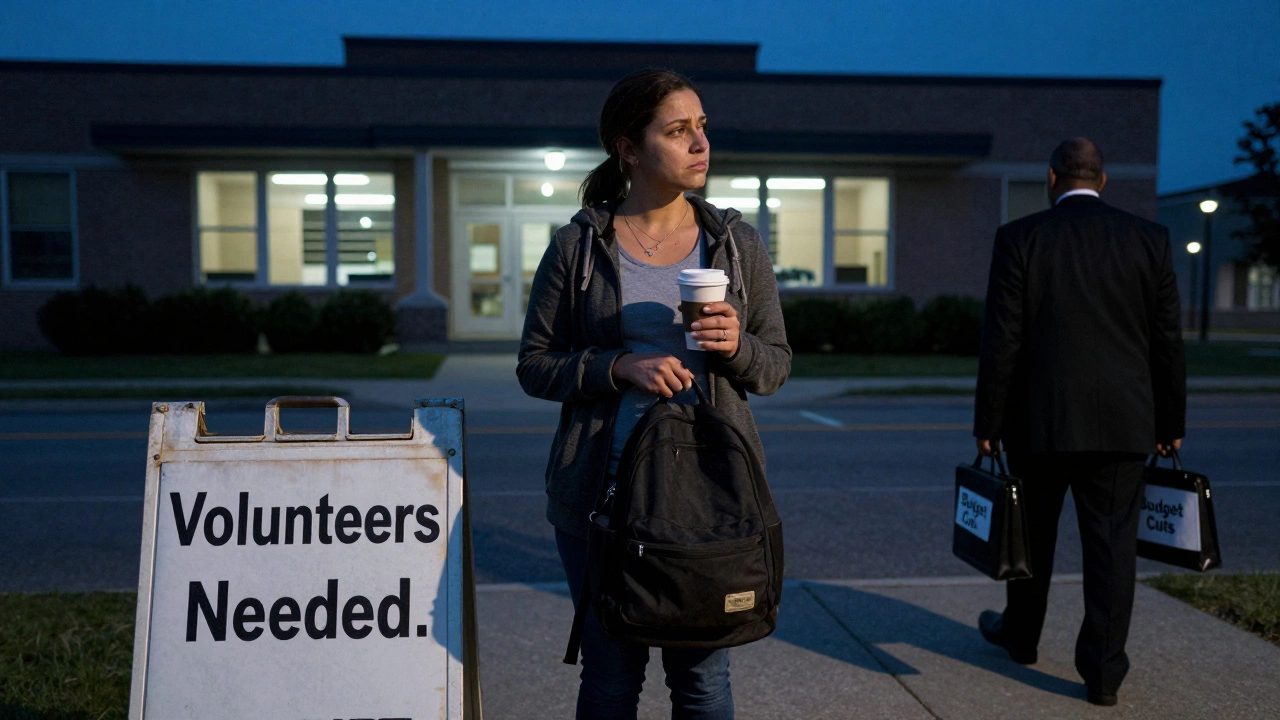
Most volunteer drives frame the problem like this: "There’s a food shortage? Volunteer at the food bank." "Homelessness rising? Serve meals downtown." The message is clear: if you care, you’ll show up. But what if the real problem isn’t a lack of hands-it’s a lack of funding, policy, or accountability? When volunteers become the default solution for systemic failures, it lets governments and corporations off the hook. People notice. They see nonprofits scrambling to fill gaps left by underfunded public services, and they get angry-not at the cause, but at the expectation that they should fix it for free.One mother in Cleveland told me she stopped volunteering at the local youth center after realizing the city cut after-school programs by 60% but kept asking for volunteers to "step in." She said, "I’m not a substitute for public education. I’m a single parent working two jobs. Why am I being asked to do the government’s job?" That’s not resistance to helping. That’s resistance to being exploited.
Volunteer burnout is real-and it’s getting worse
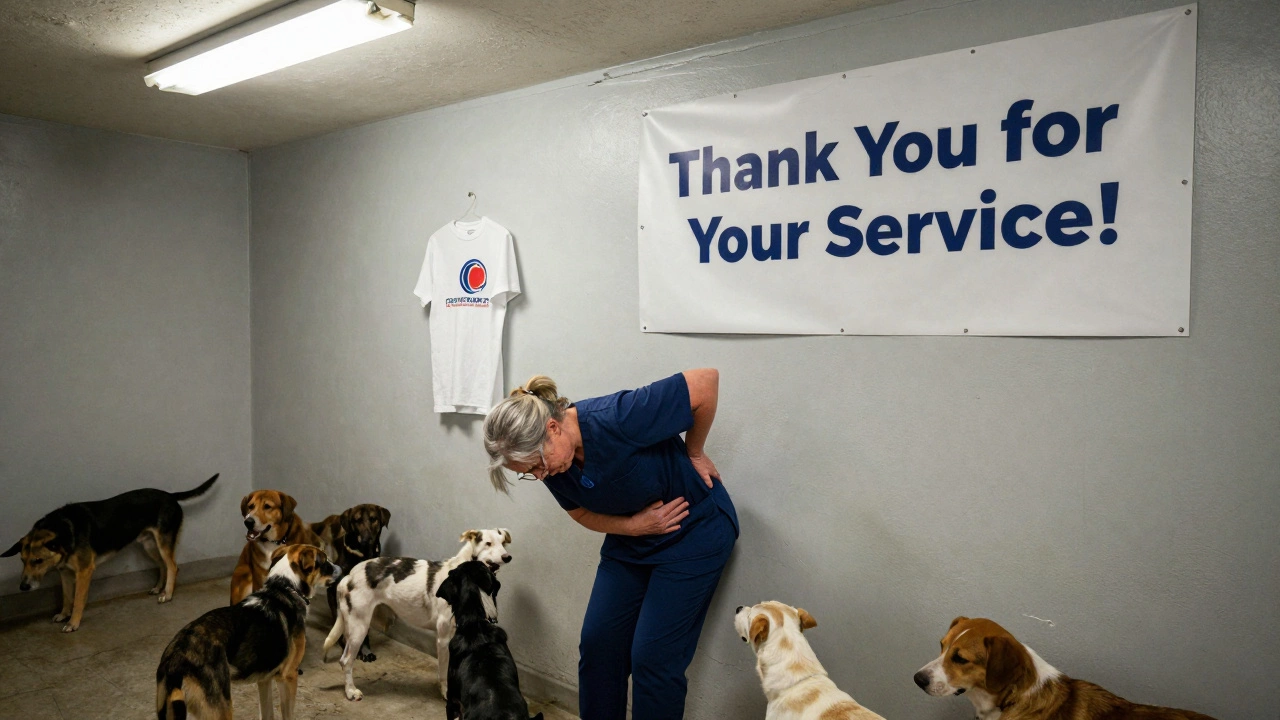
In 2023, a study by the Urban Institute found that 42% of long-term volunteers quit within 18 months. The main reason? Emotional exhaustion. Not from the work itself, but from being treated like disposable labor. Many nonprofits rely on volunteers to handle everything from client intake to grant writing, with no training, no support, and no recognition. Volunteers are expected to show up, smile, and absorb the emotional weight of trauma, poverty, and loss-without pay, without therapy, without boundaries.At a rural animal shelter in Ohio, volunteers were asked to work 20 hours a week, handle euthanasia decisions, and manage social media-all while being told, "We’re so grateful you’re here." One volunteer, a retired nurse, left after her back gave out from lifting dogs all day. She said, "I didn’t sign up to be a human forklift. I signed up to help animals. But no one cared if I lived or died doing it."
Volunteering often feels performative, not meaningful
Corporate volunteer days have become a staple of workplace culture. Employees are paid to spend a Friday painting a community center or sorting canned goods. On the surface, it sounds noble. But for many, it feels like PR theater. The same companies that underpay workers, cut benefits, or pollute local waterways ask their employees to "give back" for an hour a year. It’s not service-it’s reputation laundering.Young professionals, especially, are calling this out. A 2024 survey by LinkedIn found that 58% of workers under 30 said they’d refuse corporate volunteer events unless they were tied to real policy change. "I’m not going to plant trees for your ESG report while your supply chain destroys forests," one tech worker wrote. People want impact, not photo ops.
Volunteering can be exclusionary and culturally tone-deaf
Not everyone has the privilege to volunteer. It takes time, transportation, childcare, language skills, and physical ability. A single parent working night shifts can’t show up for a 9 a.m. food drive. Someone with a disability might be turned away because the organization has no accessible facilities. Immigrants who don’t speak English fluently are often excluded from volunteer roles that require communication.And then there’s the cultural mismatch. A nonprofit in Minneapolis ran a "family cooking class" for refugees, using ingredients most had never seen. Volunteers assumed they were helping. The participants said they felt like they were being taught how to be American, not how to eat. "We didn’t need help cooking," one woman said. "We needed help finding a job so we could buy our own food."
People are tired of being told they’re selfish for saying no
The guilt-tripping around volunteering is relentless. "You have time-you just don’t care." "If everyone thought like you, the world would fall apart." These phrases are weaponized to silence dissent. But saying no to volunteering doesn’t mean you’re heartless. It might mean you’re protecting your mental health. It might mean you’re donating money instead. It might mean you’re voting, organizing, or fighting for policy change-work that’s harder to measure but just as vital.One man in Portland told me he stopped volunteering after his church called him out in a sermon for "not giving enough time." He said, "I give 20% of my income. I mentor kids after work. I vote. But I’m not a volunteer because I’m not a charity employee. And I’m tired of being shamed for that."
Some people are choosing different kinds of contribution
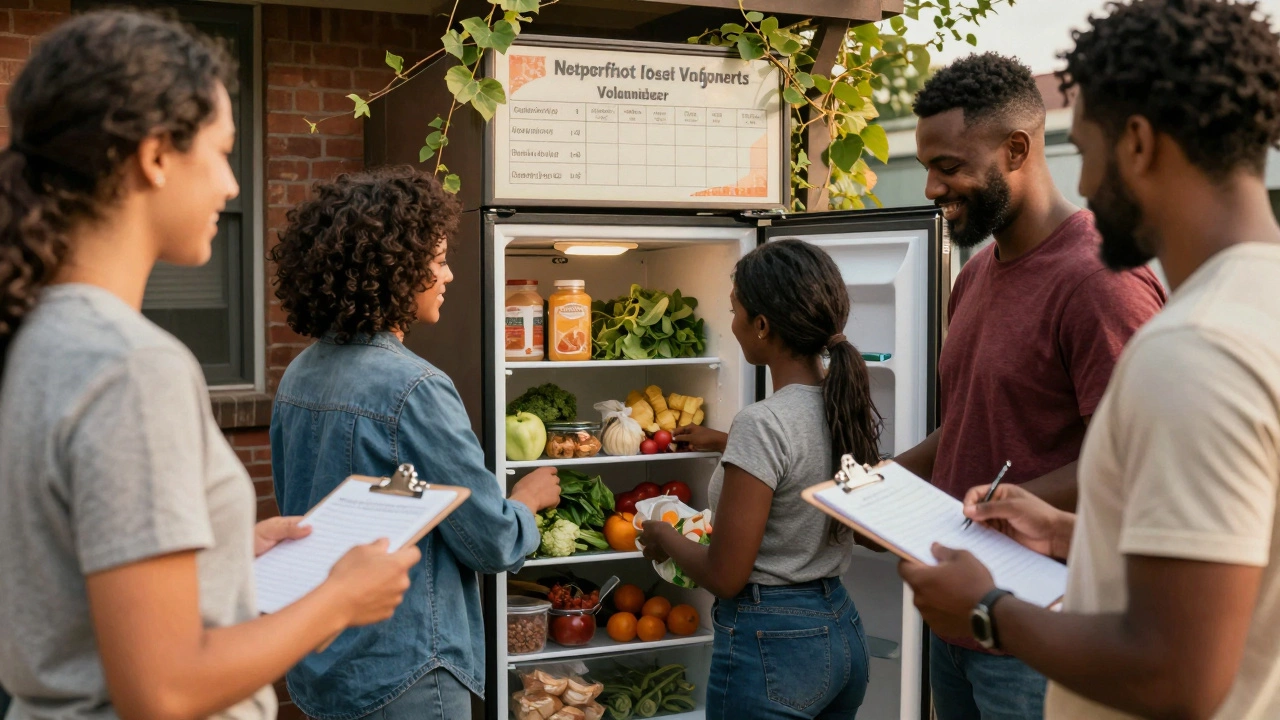
The idea that volunteering is the only way to help is outdated. Many people now give in ways that don’t involve showing up. They donate regularly. They fundraise online. They sign petitions. They advocate for policy changes. They support worker-owned cooperatives or mutual aid networks that don’t rely on unpaid labor. In fact, mutual aid groups-where neighbors help neighbors without nonprofits in the middle-are growing fast. They’re faster, more responsive, and don’t demand emotional labor from volunteers.One group in Detroit started a community fridge where people leave food they don’t need. No sign-up sheets. No volunteer shifts. Just trust. It’s working better than the food bank that required 15 hours of training to even get a bag of groceries.
It’s not about refusing to help-it’s about demanding better
People aren’t against helping. They’re against being used. They’re against systems that treat compassion like a commodity and human dignity like an afterthought. The answer isn’t to shame people into volunteering. It’s to fix the structures that make volunteering necessary in the first place.Real change doesn’t come from more volunteers. It comes from fair wages, public funding, accessible services, and accountability. If you want more people to help, stop asking them to fill the gaps. Start demanding that the gaps be closed.
Is it wrong to not want to volunteer?
No, it’s not wrong. Volunteering is a personal choice, not a moral obligation. People contribute in different ways-through donations, advocacy, voting, or simply supporting local businesses. Expecting everyone to volunteer ignores real barriers like time, health, finances, and systemic inequality. Pressuring people to volunteer often does more harm than good.
Why do nonprofits keep asking for volunteers if people are resistant?
Many nonprofits rely on volunteers because they can’t afford to pay staff. Funding cuts, donor restrictions, and bureaucratic overhead force them to use unpaid labor just to stay open. It’s not that they don’t care-they’re stuck in a broken system. But this dependency makes volunteers the easy scapegoat when services fail, and it hides the real problem: lack of public investment.
Can volunteering ever be done well?
Yes, but only when it’s voluntary, respected, and properly supported. Good volunteer programs offer training, set clear boundaries, pay for transportation or meals, and treat volunteers as partners-not free workers. They also listen to the community they serve and adjust based on real needs, not assumptions. The best programs don’t just ask for help-they ask how they can be useful.
What’s a better alternative to traditional volunteering?
Supporting mutual aid networks, donating to organizations that pay fair wages, advocating for policy changes, or contributing to community-led initiatives can be more effective than showing up for a one-time event. These approaches address root causes instead of symptoms. For example, donating to a group that fights for affordable housing has a longer-lasting impact than serving meals at a shelter.
Do people who don’t volunteer care less about others?
No. Compassion isn’t measured in hours logged. Many people who don’t volunteer are deeply engaged in other forms of support-financially, politically, or emotionally. Judging someone’s empathy based on whether they show up for a bake sale ignores the full picture of how people care for each other.