
What Was the First Youth Organization? A Historical Deep Dive
 Sep, 27 2026
Youth Organization Timeline & Quiz
Explore the key milestones in the history of organized youth activities. Click on any event to reveal more details about its founding principles and legacy.
Test Your Knowledge
You might think you know where modern youth groups started. Maybe it’s the Boy Scouts with their neckerchiefs and badges, or perhaps the Girl Guides with their promise to help others. But if you dig into the archives of social history, you’ll find that the concept of a dedicated youth organization didn’t spring up fully formed in 1907. It was a slow burn, fueled by industrialization, urbanization, and a growing concern for what young people were doing with their spare time. The answer to "what was the first" depends slightly on how strictly you define "youth organization," but there is one clear frontrunner that changed everything: the Young Men's Christian Association (YMCA).
The Industrial Backdrop: Why Did We Need Them?
To understand why the first youth organizations emerged, you have to look at the world they were born into. In the mid-19th century, Europe and North America were undergoing massive shifts. Cities were exploding in size. Rural families moved to urban centers for factory jobs. For many teenagers, this meant long hours in dangerous mills, followed by nights spent roaming crowded streets with little supervision. There were no after-school clubs, no community centers, and definitely no smartphones to keep them indoors.
Social reformers and religious leaders saw a crisis brewing. They believed that without structured guidance, these young men-and eventually women-would fall into vice, crime, and poverty. The idea wasn't just about keeping kids busy; it was about moral preservation. This anxiety created the perfect soil for organized groups designed specifically for young people, separate from the adult-focused church congregations or trade unions.
The YMCA: The Undisputed Pioneer
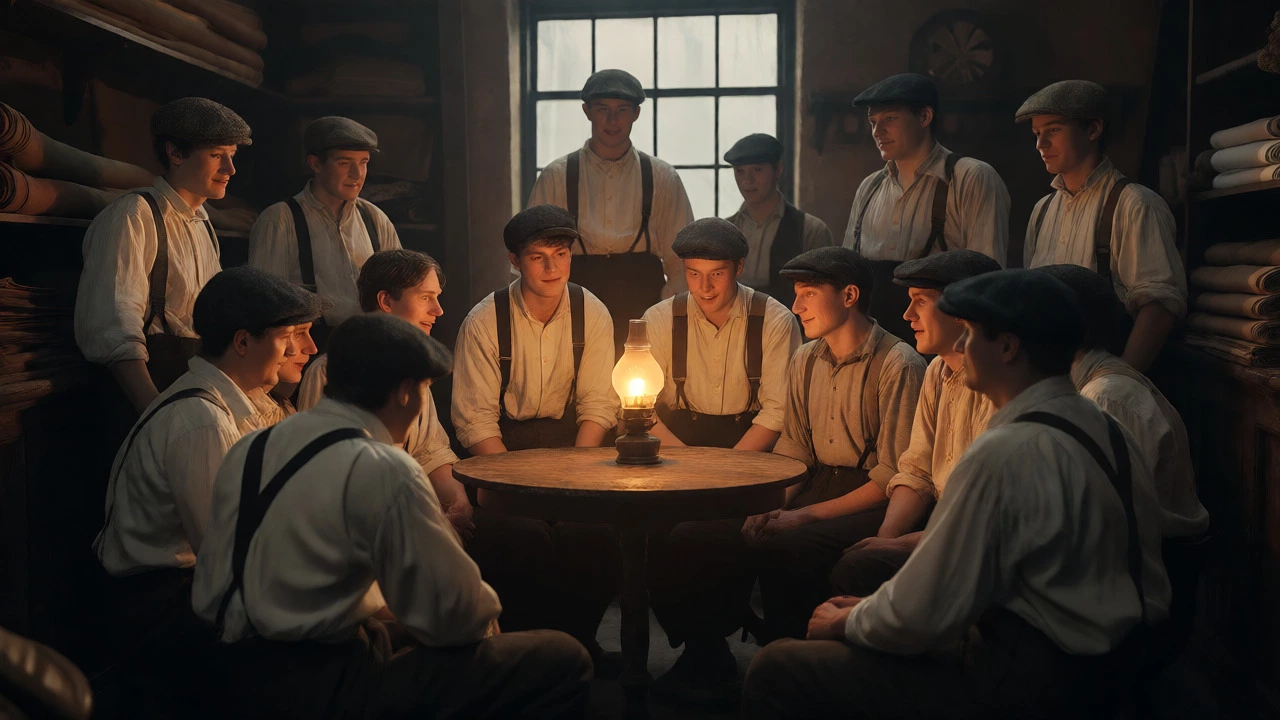
If we are talking about an organization explicitly designed for young people as its primary demographic, the Young Men's Christian Association is the definitive answer. Founded in London in 1844 by George Williams, a draper's assistant, the YMCA began as a small prayer group for twelve young men who worked in nearby shops. Their goal was simple: provide a safe space for spiritual growth and fellowship away from the temptations of the city.
The YMCA is an international confederation of national associations working to improve human well-being through programs focused on character development, community service, and physical health.
What makes the YMCA unique is its scale and longevity. It didn't stay a local club. Within decades, it spread across the British Empire and into the United States. By the late 1800s, YMCAs were building gyms, offering vocational training, and providing affordable housing for young workers migrating to cities. While it started as a religious entity, it evolved into a secular powerhouse of youth services. If you count any structured group for young people, the YMCA beats almost everyone else by a significant margin in terms of formal establishment and global reach.
The Boys' Brigade: The Military Model
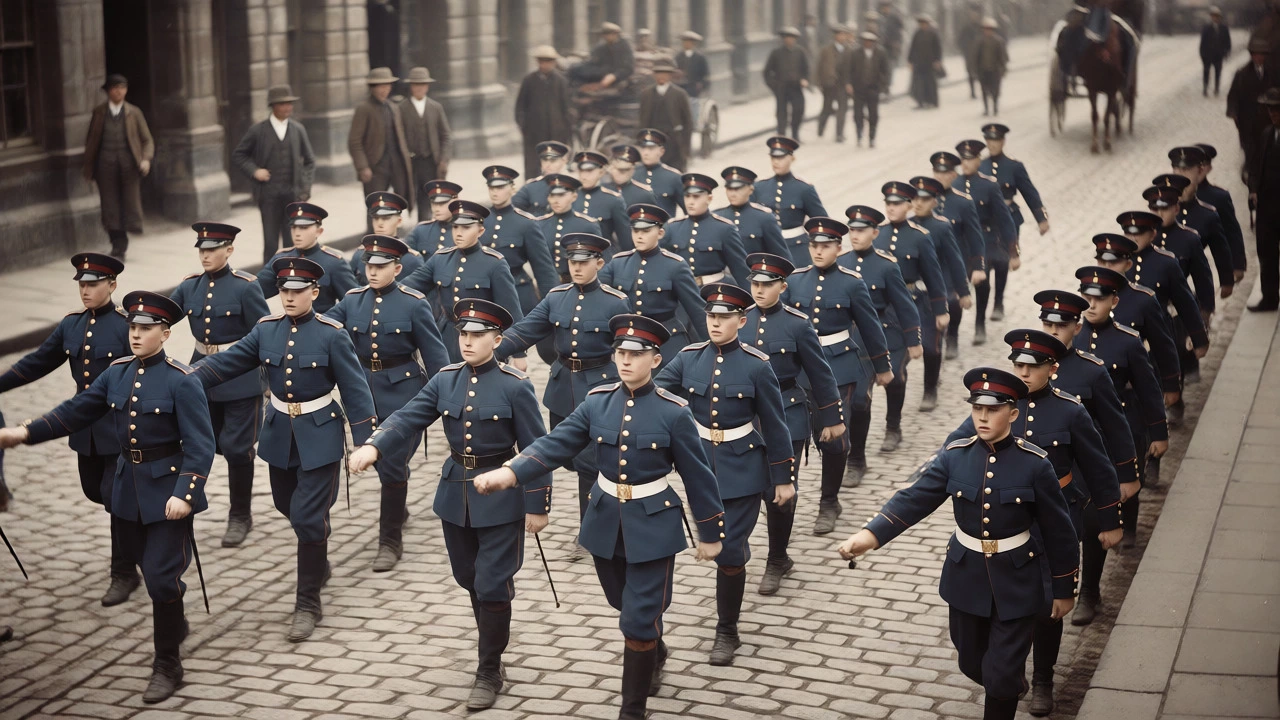
While the YMCA focused on spiritual and social welfare, another group emerged in 1883 that would shape the future of youth activities more visibly. The Boys' Brigade, founded in Glasgow by William Alexander Smith, introduced a different model: military discipline mixed with Christian values.
Smith wanted to channel the energy of boys into constructive habits. He used drills, uniforms, and ranks to instill obedience, courage, and perseverance. Unlike the YMCA, which was more about personal development and comfort, the Boys' Brigade was about character building through structure. This approach was revolutionary because it made self-improvement feel like an adventure rather than a chore. It also directly inspired Robert Baden-Powell when he created the Scout Movement two decades later. In fact, many early Scout troops were essentially offshoots of existing Boys' Brigade companies.
Scouting and Guiding: The Global Phenomenon
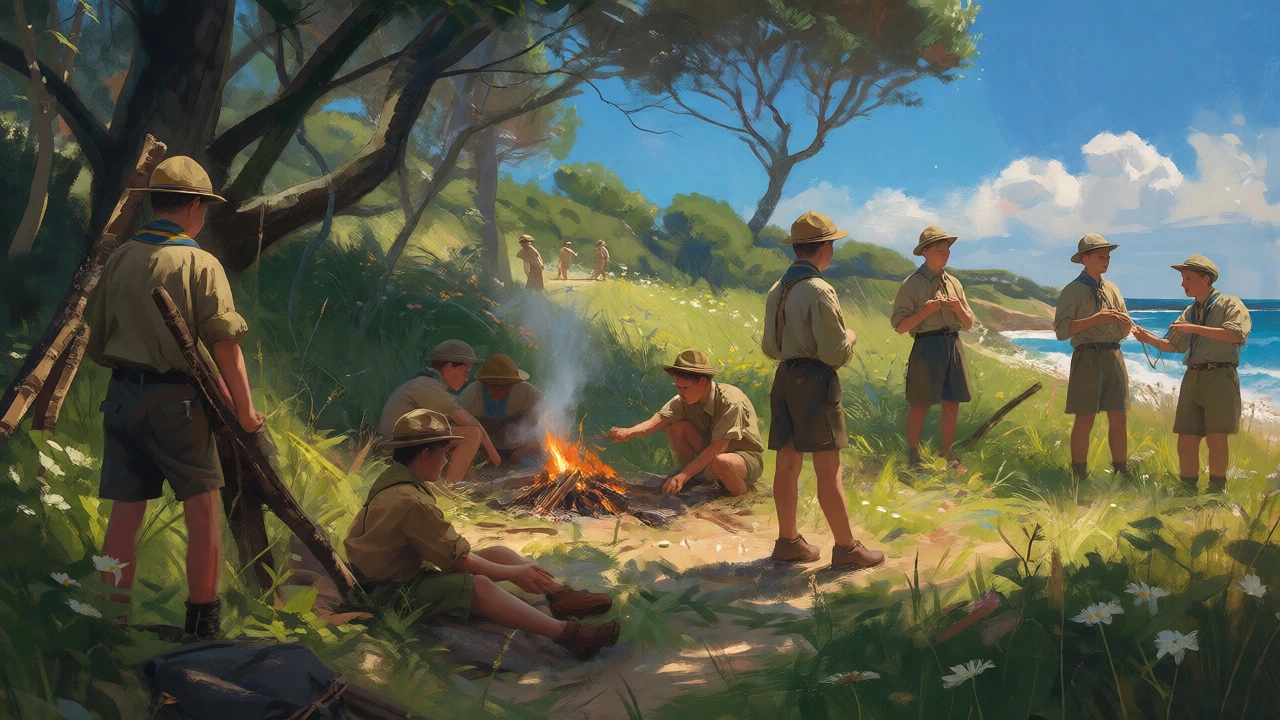
You can't talk about youth organizations without mentioning Scouting. However, calling it the "first" is a common misconception. Scouting officially launched in 1907 with the Brownsea Island camp, over sixty years after the YMCA. So why does it get all the credit? Because Scouting invented the modern template: outdoor skills, merit badges, and a decentralized, peer-led structure.
Baden-Powell took elements from the Boys' Brigade and the YMCA but stripped away the rigid church attendance requirements. He focused on practical skills-knots, tracking, camping-that appealed to boys regardless of their religious background. This inclusivity allowed Scouting to explode globally. When Girlguiding followed shortly after, it adapted these principles for girls, creating a parallel movement that empowered young women through independence and competence.
Comparing the Early Giants
It helps to see how these early groups differed in their core missions and methods. Each solved a specific problem faced by youth in their respective eras.
| Organization | Founded | Primary Focus | Key Method | Legacy |
|---|---|---|---|---|
| YMCA | 1844 | Spiritual & Social Welfare | Prayer groups, housing, sports | Global network of community centers |
| Boys' Brigade | 1883 | Character & Discipline | Military drills, uniform, ranks | Inspired Scouting; emphasis on duty |
| Scouting | 1907 | Outdoor Skills & Citizenship | Camping, badges, patrol system | Largest global youth movement today |
Beyond the Big Three: Other Early Contenders
History is rarely black and white, and there were other groups that deserve mention. The Salvation Army, founded in 1865, had youth corps that offered music and marching bands, giving poor children a sense of belonging and pride. These weren't always labeled "youth organizations" in the modern sense, but they functioned exactly like them.
There were also educational societies like the Cooperative Educational Society in the UK, which ran summer schools for working-class children starting in the 1890s. These groups focused less on recreation and more on literacy and political awareness. While they didn't have the catchy names or badges of the Scouts, they played a crucial role in shaping the minds of young workers.
Why Does This History Matter Today?
You might wonder why you should care about Victorian-era groups. The truth is, every modern youth program-from coding clubs to sports leagues-is fighting the same battles these pioneers faced. How do we keep kids engaged? How do we build character without being preachy? How do we make sure everyone gets a seat at the table, regardless of income?
The YMCA taught us the value of safe spaces. The Boys' Brigade showed us the power of routine and identity. Scouting proved that learning by doing works better than sitting in a classroom. When you sign your child up for a local club today, you're tapping into a lineage that stretches back nearly two centuries. These organizations survived because they adapted. They stopped being purely religious, they embraced diversity, and they learned to compete with digital entertainment.
So, next time you see a badge on a backpack or walk past a community center gym, remember where it started. It wasn't just about keeping kids off the streets. It was about believing that young people deserved investment, attention, and opportunity. That belief is the true legacy of the first youth organizations.
Was the YMCA really the first youth organization?
Yes, in terms of formal, large-scale structures dedicated specifically to young people, the YMCA (founded 1844) is widely recognized as the first. While there were earlier charitable efforts for children, the YMCA established the model of a permanent institution run by and for youth, with branches worldwide.
Did the Boy Scouts come before the Boys' Brigade?
No. The Boys' Brigade was founded in 1883, while the Boy Scouts began in 1907. In fact, Robert Baden-Powell heavily borrowed ideas from the Boys' Brigade, including the use of uniforms and a structured hierarchy, though he added the outdoor adventure component that became Scouting's hallmark.
Were these early organizations only for boys?
Initially, yes. The YMCA started for men, and the Boys' Brigade and Scouts were male-only. Girls had fewer options until the formation of the Girls' Friendly Society (1875) and later Girlguiding (1910). Over time, most major organizations became co-ed or created parallel branches for girls.
Why did youth organizations become popular so quickly?
They filled a vacuum created by rapid industrialization. Parents were working long hours, and cities were chaotic. These groups provided safety, structure, and social connection. Additionally, the rise of compulsory education left children with more free time, which needed to be managed constructively.
Is the YMCA still considered a youth organization?
Absolutely. While the YMCA now serves people of all ages, its core mission remains rooted in youth development. Many local YMCAs still prioritize teen leadership programs, camps, and after-school activities, maintaining their historical commitment to young people.