
What Is the Most Popular Charity in the World Today?
 Dec, 18 2025
Donation Impact Calculator
Calculate how your donation can change lives through emergency medical care. Input your donation amount to see what impact it makes at Doctors Without Borders or other top charities.
When people ask what the most popular charity is, they’re usually not just looking for a name-they want to know which one truly moves the needle. Which one gets the most money, reaches the most people, and actually changes lives on a massive scale? The answer isn’t as simple as picking the biggest name on a billboard. Popularity doesn’t always mean impact, and impact doesn’t always mean fame. But if you look at the data-donations, reach, transparency, and long-term results-there’s one charity that consistently stands out: Doctors Without Borders.
Why Doctors Without Borders Leads the Pack
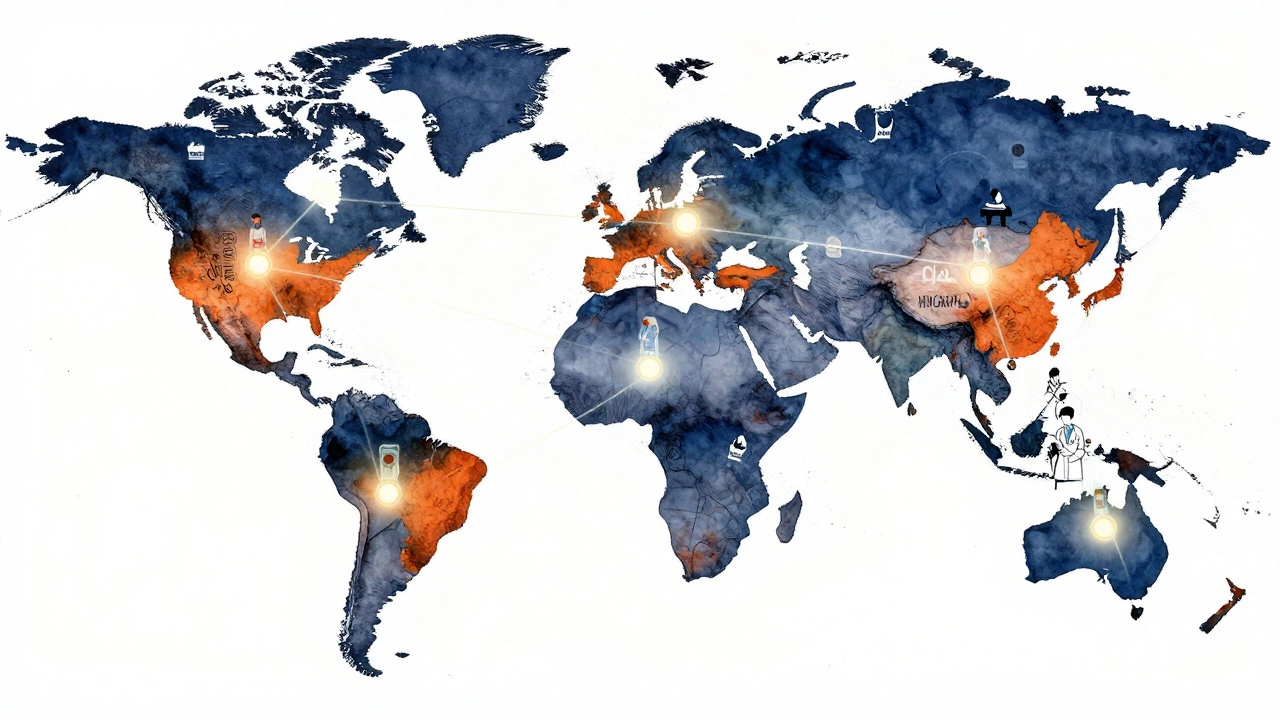
Doctors Without Borders, known internationally as Médecins Sans Frontières (MSF), has been operating in over 70 countries since 1971. They send medical teams into war zones, refugee camps, Ebola outbreaks, and natural disaster areas-places where hospitals have collapsed and local health systems are gone. In 2024 alone, they treated more than 12 million patients. That’s more than the entire population of Scotland. And they do it without government funding as their main source. Over 90% of their budget comes from private donations.
What makes them different isn’t just scale-it’s independence. They don’t wait for permission to enter a crisis. They show up. In Gaza, they ran the last functioning hospital in northern Gaza for months. In Ukraine, they set up mobile clinics within 48 hours of the invasion. In Nigeria, they treated malnourished children in areas where aid convoys were blocked. Their ability to act fast, stay neutral, and speak out when others stay silent builds deep public trust.
How Popularity Is Measured
Not all charities are measured the same way. Some are popular because they’re visible. Others are popular because they’re effective. Here’s how the top charities stack up across three key metrics:
| Charity | Annual Donations (USD) | Patients/People Reached | Transparency Score (Charity Navigator) |
|---|---|---|---|
| Doctors Without Borders | $1.8 billion | 12 million+ | 98% |
| World Food Programme | $12.3 billion | 150 million+ | 94% |
| Red Cross / Red Crescent | $4.2 billion | 100 million+ | 90% |
| UNICEF | $7.6 billion | 150 million+ | 92% |
| GiveDirectly | $500 million | 5 million+ | 99% |
Notice something? The World Food Programme and UNICEF raise more money-but they’re UN agencies, so their funding comes from governments, not individuals. That makes them less "popular" in the public sense. People don’t donate to them the way they do to MSF. GiveDirectly has the highest transparency score, but its reach is much smaller. MSF sits at the sweet spot: massive scale, high transparency, and public trust built through personal stories, not political backing.
What Makes a Charity "Popular" to the Public?
Popularity isn’t just about numbers. It’s about connection. People give to causes they can picture. They give to charities that feel human. MSF’s donors aren’t just giving money-they’re giving a doctor a chance to stitch a wound in a tent, or a nurse a chance to deliver a baby in a bombed-out clinic. Their campaigns don’t use celebrities. They use real footage. Real voices. Real silence after a bombing, then a baby crying.
Compare that to charities that rely on emotional manipulation-like sending photos of starving children with tear-jerking music and a phone number to call. Those work, but they don’t build lasting trust. MSF doesn’t need to beg. They show up. They report. They’re honest about failures. In 2023, they publicly admitted they couldn’t reach all children in Sudan due to access restrictions. That honesty? It’s rare. And it’s why people keep giving.
Other Major Contenders
It’s fair to say other charities are also giants. The Red Cross operates in every country. UNICEF is the largest provider of vaccines for children. The World Food Programme feeds more people than any other organization on Earth. But here’s the catch: they’re not primarily funded by individual donors. Their budgets come from national governments. That means they’re not "popular" in the same way a charity you personally chose to support is popular.
GiveDirectly is rising fast. They send cash directly to people in poverty-with no strings attached. Studies show it works better than donating food or supplies. But their model is newer. They don’t have the decades of field presence MSF has. People still don’t know their name as well.
Then there’s local charities. Food banks in your town, shelters in your city-they save lives every day. But they don’t make global headlines. They don’t raise billions. And that’s okay. Popularity isn’t the same as importance.
Choosing Where to Give
If you’re wondering where to donate, don’t just pick the most popular. Pick the one that matches your values.
- If you care about emergency medical care in war zones → Doctors Without Borders
- If you care about feeding families during famine → World Food Programme
- If you care about cash giving that empowers people directly → GiveDirectly
- If you care about children’s health and education → UNICEF
- If you care about local crisis response → Your community food bank or shelter
The best charity isn’t the one with the biggest logo. It’s the one that aligns with what you believe matters most. And if you want to give to the charity that’s been quietly saving lives in the hardest places for over 50 years-while staying completely independent-Doctors Without Borders is the one.
How to Verify a Charity Before Donating
Popularity doesn’t mean legitimacy. Before you give, check three things:
- Is the charity registered with your country’s official charity regulator? (In the UK, that’s the Charity Commission)
- Do they publish detailed financial reports? Look for annual reports with income and spending breakdowns.
- Can you find independent ratings? Sites like Charity Navigator (for US-based), GuideStar, or GiveWell rate charities on transparency and impact.
Never donate via text message or unsolicited calls. Always go directly to the charity’s official website. Scammers love to copy the names of popular charities. MSF’s official site is msf.org. Anything else is a fake.
Why Popularity Matters-And Why It Doesn’t
Popularity helps charities survive. More donations mean more teams on the ground. More visibility means more pressure on governments to act. But popularity shouldn’t be the goal. Impact should.
Some of the most effective charities are small. A rural clinic in Malawi that trains local women as midwives might only serve 2,000 people a year. But if every mother they help gives birth safely, that’s life-changing. That’s impact.
So when someone asks you what the most popular charity is, you can say: "Doctors Without Borders." But you should also add: "But the most important one? The one that fits your heart.""
Is Doctors Without Borders the biggest charity in the world?
No, Doctors Without Borders is not the biggest in terms of total funding-that’s the World Food Programme. But it’s the most popular among individual donors. It raises nearly $2 billion a year from private contributions, not governments, and has the highest public trust among global charities.
How much of my donation actually goes to the cause?
For Doctors Without Borders, around 89% of every pound donated goes directly to programs. The rest covers fundraising and administration. That’s well above the 75% benchmark most experts consider strong. Compare that to some charities where only 40-60% reaches the field.
Can I volunteer with Doctors Without Borders?
Yes, but only if you’re a trained medical professional-doctor, nurse, surgeon, anesthetist-or a logistical expert like an engineer, water specialist, or project manager. They don’t accept untrained volunteers. You need at least two years of professional experience and must pass a rigorous selection process.
Are there charities that are better than Doctors Without Borders?
"Better" depends on what you want to achieve. If you want to feed children, UNICEF or the World Food Programme may be more aligned. If you want to give cash directly to people in poverty, GiveDirectly is more effective. MSF excels in emergency medical response. There’s no single "best"-only the best fit for your values.
How do I know a charity isn’t a scam?
Always donate through the official website-never through a text, call, or social media link. Check the charity’s registration number on your country’s official charity regulator website. Look for annual reports, financial transparency, and independent ratings. If a charity won’t tell you how your money is used, walk away.
What to Do Next
If you’re ready to give, start small. Set up a £10 monthly donation. That’s less than your coffee habit. Over a year, that’s £120-enough to provide 100 medical consultations in a conflict zone. Or donate your birthday. Or ask friends to give to MSF instead of sending gifts. Small actions, repeated, move mountains.
And if you’re not ready to give yet? Share their stories. Talk about them. Popularity grows when people talk. And sometimes, that’s the first step to saving a life.