
What is Fun Friday at School? A Guide to After-School Clubs
 Sep, 13 2026
Fun Friday Activity Planner
Select your top three interests below to see which Fun Friday categories might be the best fit for you or your child.
🔧 Hands-On STEM
Building bridges, coding challenges, robotics, electronics kits.
🎨 Creative Expression
Drama workshops, graphic design, mural painting, pottery.
🍳 Life Skills
Basic cooking, financial literacy games, first aid training.
🤝 Community Service
School garden, care packages, local shelter support.
You’ve probably heard the term floating around the staff room or seen it on a parent newsletter. Fun Friday isn’t just code for "teachers are tired." It’s a structured block of time, usually late in the afternoon, dedicated to non-academic enrichment. Think of it as the school’s answer to the question: "How do we keep kids engaged without burning them out before the weekend?"
If you’re a parent wondering if this is just babysitting with extra steps, or an educator trying to justify the budget for art supplies over exam prep, you need to understand what actually happens during these sessions. It’s not chaos. When done right, after-school clubs and similar enrichment blocks are where students discover passions they never knew they had.
The Core Concept Behind Fun Friday
At its heart, Fun Friday is a designated period-often the last hour or two of the school day-where traditional academic instruction pauses. Instead of math drills or essay writing, students participate in interest-based activities. This concept stems from the understanding that cognitive fatigue sets in by mid-afternoon. Pushing more rote learning into a brain that’s already full yields diminishing returns.
Schools implementing this model typically rotate themes weekly or monthly. One week might be "STEM Challenge," focusing on robotics or coding basics. The next could be "Creative Arts," involving pottery or digital design. Another might focus on "Physical Well-being," introducing yoga or team sports that don’t fit into the standard PE curriculum. The goal is breadth. You want every child to touch something outside their comfort zone.
| Feature | Traditional After-School Club | Integrated Fun Friday |
|---|---|---|
| Timing | Post-dismissal (3:30 PM - 5:00 PM) | End of school day (2:30 PM - 3:30 PM) |
| Attendance | Voluntary; requires parental transport | Mandatory or opt-out; no extra transport needed |
| Staffing | Often external providers or paid overtime | Internal staff rotation or volunteers |
| Cost to Family | Fees often apply | Usually included in tuition or free |
| Social Impact | Limited to club members | Whole-grade interaction possible |
Why Schools Are Adopting This Model
Let’s look at the data. According to research from the National Association for Secondary School Principals, schools with consistent enrichment programs report higher attendance rates on Fridays. Why? Because students actually want to come to school when there’s something to look forward to. It reduces the "Sunday Scaries" effect that starts creeping in by Thursday afternoon.
Furthermore, it addresses equity issues. Not every family can afford private music lessons or weekend sports leagues. By embedding these experiences into the school day, you level the playing field. A student from a low-income household gets the same exposure to chess, drama, or coding as their wealthier peers. This access is crucial for identifying talent early. How many future engineers were lost because they never touched a circuit board until college?
Popular Activity Types That Work
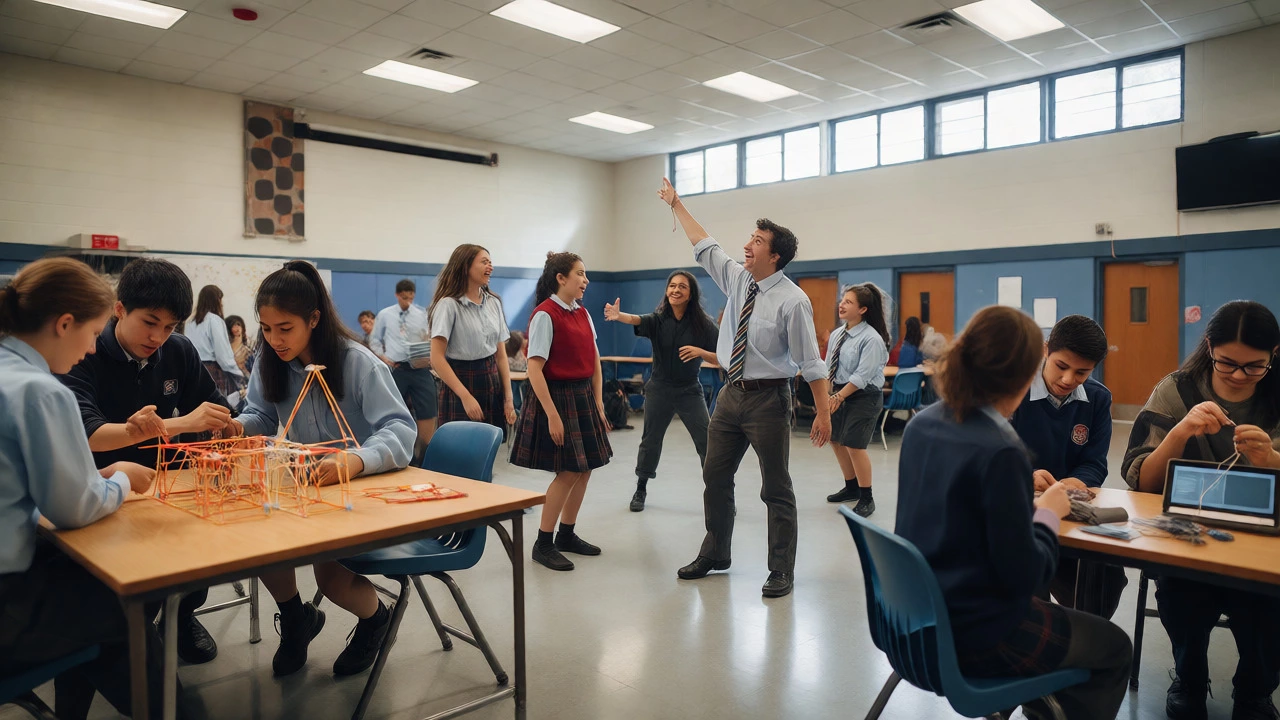
Not all activities are created equal. If you try to force a high-energy sport on a group of introverted readers, you’ll lose them. Successful Fun Friday schedules rely on variety and choice. Here are four categories that consistently see high engagement:
- Hands-On STEM: Building bridges with spaghetti, simple electronics kits, or basic Python coding challenges. These appeal to logical thinkers who struggle with abstract theory but excel at application.
- Creative Expression: Drama workshops, graphic design using tablets, or collaborative mural painting. This allows verbal and visual learners to shine.
- Life Skills: Basic cooking, financial literacy games, or first aid training. Parents love this because it translates directly to home life.
- Community Service: Preparing care packages for local shelters or organizing a school garden. This builds empathy and civic responsibility.
Notice the pattern? Each category targets a different intelligence type. You aren’t just killing time; you’re diversifying the skill set of your student body.
Implementation Challenges and Solutions
It’s not always smooth sailing. The biggest hurdle is staffing. Teachers are already stretched thin. Asking them to lead a pottery club after grading papers for six hours is a recipe for burnout. So, how do successful schools handle this?
They leverage community resources. Local retirees often have skills-woodworking, gardening, storytelling-that they’re eager to share. Partnering with local businesses can also provide mentors. A local IT firm might send developers to run a coding workshop once a month. This brings real-world context into the classroom without draining teacher energy.
Another issue is behavior management. Without the structure of strict academic rules, some students drift. Clear expectations are vital. Even in a "fun" session, respect and participation are mandatory. Using positive reinforcement systems, like earning points toward a whole-school reward, keeps motivation high without creating a punitive atmosphere.

How Parents Can Support the Process
If your child comes home talking about a "weird" activity they did on Friday, listen. Don’t dismiss it as unimportant. Ask specific questions: "What was the hardest part?" or "Who did you work with?" This validates the experience. It shows your child that learning isn’t confined to textbooks.
Also, consider volunteering. You don’t need to be an expert. If you know how to knit, bake, or play guitar, offer to lead a session for ten minutes. Your presence signals that the community values these skills. It strengthens the bond between home and school, turning parents into active partners rather than passive observers.
The Long-Term Impact on Student Development
Over time, regular exposure to diverse activities changes how students view themselves. A student who struggles in math might realize they’re a natural leader in a debate club. Another who feels invisible in large lectures might find confidence in a small robotics team. This self-discovery is priceless.
Colleges and employers increasingly value well-rounded individuals. They look for evidence of curiosity and initiative. A transcript filled only with grades tells one story. A profile that includes leadership in a school garden project or participation in a coding hackathon tells a richer, more compelling narrative. Fun Friday provides the raw material for those stories.
Is Fun Friday mandatory for all students?
It depends on the school's policy. In many cases, it is part of the timetable, meaning attendance is expected unless a student has a pre-approved appointment. However, some schools allow students to opt out if they have external commitments, though staying in is usually encouraged for social integration.
Do teachers get paid extra for running Fun Friday sessions?
This varies by contract and school budget. Some schools include it in the base teaching load, while others offer stipends or reduce other duties. Many rely on volunteer staff or external providers to manage costs, especially for specialized skills like musical instruments or advanced robotics.
What happens if a student hates all the available activities?
Rotation is key. Since themes change weekly or monthly, a student might dislike the current "Drama" module but love the upcoming "Chess" or "Cooking" module. Schools should also offer a "free study" or "library" option for students who genuinely prefer quiet independent work, ensuring inclusivity for introverts.
Can parents suggest new activities for Fun Friday?
Absolutely. Most schools welcome parent input through PTAs or suggestion boxes. If you notice a gap-say, no gardening club-and have the expertise or connections to start one, you’re likely to find support. Parent-led initiatives often become the most popular sessions because they reflect genuine community interests.
Does Fun Friday affect academic performance?
Research suggests a neutral to positive impact. While instructional time is slightly reduced, the improved morale and reduced stress levels often lead to better focus during core academic hours. Students return to Monday classes refreshed and more motivated, offsetting any minor loss in direct instruction time.