
What is an After-School Activity Called? Decoding the Terminology
 Nov, 9 2026
After-School Activity Finder
Not sure what to call that Tuesday afternoon program? Answer three quick questions to find the right label and search terms for your needs.
Recommended Term:
Tip: Use these specific terms when searching local directories or asking school administrators.
You pick up your kid at 3:15 PM, and they ask to join "the thing" happening on Tuesdays. You nod, sign a form, pay a fee, but you still don't know what to call it. Is it a club? A class? An enrichment program? The truth is, there isn't one single correct term. What you're looking for depends entirely on who is asking and where you live.
Most people use after-school activity as a catch-all phrase. It covers everything from competitive soccer leagues to quiet pottery workshops. But schools, community centers, and parents often use specific labels to signal different things: cost, structure, educational value, or social intent. Understanding these nuances helps you find exactly what your child needs, rather than just filling their afternoon.
The Big Umbrella: Extracurricular Activities
If you want the most formal, universally understood term, use extracurricular activities. This is the language of university admissions officers, college counselors, and serious educators. The prefix "extra-" literally means "outside of," referring to anything that happens outside the standard academic curriculum.
This term carries weight. When a teenager lists "extracurriculars" on a CV, it implies commitment, leadership, or skill development. It’s not just babysitting with a hobby attached. If you’re aiming for high school applications later down the line, framing an activity this way matters. However, for a seven-year-old joining a Lego building group, calling it an "extracurricular" feels stiff and overly academic. Use this term when talking to teachers, administrators, or in official documentation.
Clubs: Social and Interest-Based Groups
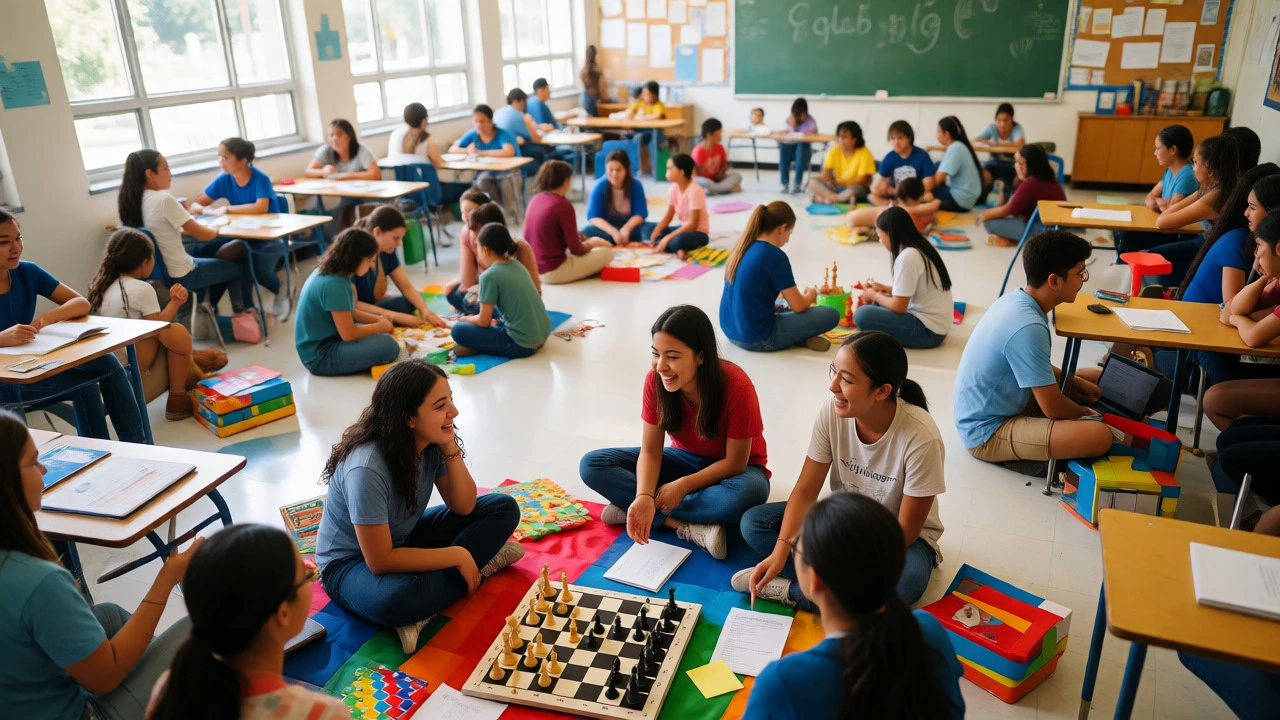
Ask a student what they’re doing after school, and they’ll likely say, "I’m going to club." In many UK and US schools, school clubs are student-led or teacher-supervised groups focused on shared interests. Think Chess Club, Drama Society, or Coding Guild.
Here’s the key distinction: clubs are usually low-cost or free, run by volunteers or staff within the school building, and prioritize social interaction over rigorous instruction. You don’t get graded in Chess Club. You go because you like chess and want to talk to other kids who like chess. These are excellent for building confidence and finding friends with similar niche interests. They rarely require expensive equipment beyond what the school provides.
- Structure: Informal to semi-formal; often meets weekly.
- Cost: Usually free or nominal fee (<£5 per session).
- Goal: Social connection and interest exploration.
Classes and Enrichment: Skill-Building Focus
If the activity involves a paid instructor, a syllabus, and tangible skill acquisition, it’s typically called a class or an enrichment program. Parents often confuse clubs with classes, but the difference lies in the outcome. In a drama club, you might improvise scenes together. In a drama class, you learn stagecraft, vocal projection, and perform a scripted play.
Enrichment programs are designed to supplement academic learning. Math Olympiad prep, advanced robotics, or foreign language immersion fall here. These are almost always external providers-private companies renting space in the school gym or local community halls. Because they involve professional instructors, expect higher fees (£10-£25+ per hour). The promise here is measurable progress. You can see if your child can now solve quadratic equations or speak basic French. If you want results, look for "classes." If you want exposure, look for "clubs."
Care vs. Activity: The Supervision Factor
There’s a massive gap between "activity" and "care." Many parents enroll children in after-school care (or wrap-around care) primarily for safety and supervision until working hours end. While some care providers offer structured activities, others simply provide homework help and free play.
Be careful with terminology here. A provider might advertise "engaging activities," but if the ratio of supervisors to children is high and the schedule is loose, it’s essentially supervised childcare. Check the Ofsted rating (in the UK) or local accreditation. If your goal is keeping the child safe while you finish work, "care" is fine. If you want them to learn guitar, ensure the provider explicitly offers "instructional modules," not just "playtime with instruments."
| Term | Primary Goal | Typical Cost | Structure Level | Provider Type |
|---|---|---|---|---|
| Club | Socializing & Interest Sharing | Free / Low | Low | School Staff / Volunteers |
| Class | Skill Acquisition | Medium / High | High | Private Companies / Experts |
| Team/Sport | Athletic Development & Competition | Variable (Kit/League Fees) | High | Sports Clubs / Leagues |
| Care | Supervision & Safety | Medium | Low/Medium | Nurseries / Care Centers |
Sports Teams: Commitment and Identity
We rarely call sports an "activity" in casual conversation. We say, "He’s on the team." Sports teams represent the highest level of commitment among after-school options. Unlike a drop-in art class, missing practice affects the whole group. There are tryouts, coaches, uniforms, and schedules dictated by league calendars, not just school terms.
This distinction matters for planning. A club might let you quit mid-term easily. A sports team often requires season-long financial commitment and parental involvement in transport. If your child is shy, a team sport can be intimidating initially but builds strong camaraderie. If they prefer autonomy, individual sports like swimming or martial arts (often labeled as "lessons") might fit better under the "class" umbrella rather than "team."

Regional Nuances: UK vs. US Terminology
Language shifts across borders. In the United States, you’ll hear "after-school programs" frequently, often associated with government-funded initiatives like 21st Century Community Learning Centers. These emphasize homework help and safety in underserved areas.
In the UK, the term "wrap-around care" is more common for supervision-focused services, while "extracurriculars" dominates private school discourse. State schools often refer to "enrichment activities" funded through pupil premium grants. If you’re moving between countries or reading international forums, keep these distinctions in mind. A "program" in the US might be a "club" in the UK, even if the content is identical.
How to Choose the Right Label for Your Needs
Stop worrying about the perfect word and start focusing on the job-to-be-done. Ask yourself three questions:
- Do I need supervision? Look for "Care" or "Wrap-around." Prioritize safety ratios and location proximity to home/school.
- Do I want my child to make friends? Look for "Clubs." Prioritize shared interests and low-pressure environments.
- Do I want my child to learn a hard skill? Look for "Classes" or "Coaching." Prioritize instructor credentials and clear progression paths.
Once you identify the category, search using those specific terms. Searching for "after-school activities London" yields generic results. Searching for "Saturday morning coding classes Edinburgh" or "local drama clubs for 8-year-olds" gets you closer to reality. The label guides the quality of what you find.
Frequently Asked Questions
Is an after-school club the same as an extracurricular activity?
Not exactly. All clubs are extracurricular activities, but not all extracurricular activities are clubs. "Extracurricular" is a broad academic term covering any activity outside regular lessons, including sports teams, paid classes, and volunteer work. "Club" specifically refers to informal, interest-based groups, often run by students or staff, with less focus on formal instruction.
What is the difference between after-school care and after-school activities?
After-school care is primarily for supervision and safety, allowing parents to work late. It may include homework help and free play. After-school activities are focused on specific engagement, such as learning a skill, playing a sport, or pursuing a hobby. While care providers may offer activities, the primary product is time coverage, whereas activity providers sell instruction or experience.
Why do some schools call them 'enrichment' instead of 'clubs'?
Schools use "enrichment" to highlight educational value and justify funding or fees. It signals that the activity supplements the core curriculum (e.g., STEM labs, debate society) rather than just being recreational. This terminology appeals to parents interested in academic advantage and helps distinguish these programs from purely social or leisure-based clubs.
Are sports considered after-school activities?
Yes, absolutely. Sports are one of the most common types of after-school activities. However, they are often categorized separately due to their high commitment levels, physical requirements, and external league structures. Whether played on school fields or at local community clubs, organized sports fall under the broader umbrella of extracurricular participation.
How much should I expect to pay for different types of activities?
Costs vary widely. School-run clubs are often free or very cheap (£0-£5/session). Private enrichment classes typically range from £10 to £25 per hour depending on the specialist nature (e.g., music vs. general crafts). Sports teams may have seasonal fees covering kit and league registration (£50-£200+ per term). After-school care is usually billed daily or hourly, comparable to nursery rates.