
What is a community outreach strategy? A practical guide to building real connections
 May, 31 2026
Community Outreach Strategy Health Check
Many organizations mistake visibility for true connection. Use this checklist to evaluate if your current approach is transactional or truly relational.
Strategy Audit Checklist
Outreach Health Score
Start checking items to see your score
Understanding Your Metrics
Don't rely on Vanity Metrics. Focus on Relational Metrics:
You have the mission. You have the budget. But nobody knows you exist, or worse, they know you exist and don't care. This is the silent killer of many good intentions in the nonprofit and corporate social responsibility worlds. It’s not enough to just 'do good.' You have to make sure that good actually reaches the people who need it, in a way that respects them and invites them in.
This is where a community outreach strategy comes in. It is not a marketing brochure. It is not a press release. It is a structured plan to build genuine, two-way relationships between an organization and the specific groups it aims to serve. Without it, you are shouting into the void. With it, you are starting a conversation that leads to trust, support, and lasting change.
The Core Definition: More Than Just Showing Up
Community Outreach Strategy is a systematic approach used by organizations to identify, engage, and collaborate with local communities to achieve mutual goals and build long-term trust. Unlike one-off events, which might include a single charity run or a donation drop-off, a strategy implies continuity, planning, and measurable outcomes. It bridges the gap between an organization's internal objectives and the external needs of the public.
Think of it like dating. You can’t just show up at someone’s house with flowers and expect a lifelong partnership. You need to learn about their interests, respect their boundaries, find common ground, and invest time over weeks and months. Community outreach is exactly this process, but scaled up for neighborhoods, demographic groups, or cause-based communities. It requires empathy, consistency, and a willingness to listen more than you speak.
Why Your Current Approach Might Be Failing
Many organizations mistake visibility for outreach. They buy billboards, post on social media, and host open houses. If no one shows up, they blame the community for being "uninterested." This is a fundamental error. True outreach fails when it is transactional rather than relational.
If your strategy is purely transactional-"We give you X, you give us Y"-you will hit a wall. Communities are tired of being treated as data points or beneficiaries. They want agency. They want to be partners. When an organization enters a neighborhood without understanding its history, power dynamics, or existing leaders, it often causes friction rather than flow. This is known as "parachuting in," and it damages credibility instantly. A solid strategy prevents this by prioritizing listening tours and stakeholder mapping before any action is taken.
Step-by-Step: Building Your Outreach Framework
Creating a strategy doesn't require a massive budget, but it does require rigor. Here is how you build one from the ground up, ensuring every step adds value and builds trust.
- Conduct a Needs Assessment: Don't assume you know what the community needs. Use surveys, town halls, and informal interviews. Who are the key stakeholders? What are their biggest pain points? For example, if you are a food bank, ask residents not just what they eat, but why current options aren't working. Is it location? Hours? Stigma?
- Define Clear Objectives: What do you want to achieve? Increase volunteer sign-ups by 20%? Reduce local littering? Improve health literacy? Your goals must be Specific, Measurable, Achievable, Relevant, and Time-bound (SMART). Vague goals lead to vague results.
- Identify Key Partners: You cannot do this alone. Map out existing organizations, faith groups, schools, and local businesses. Who already has trust in the community? Partner with them. A library may have better access to families than a new nonprofit ever could.
- Choose Your Channels: Where does your audience hang out? If you are targeting seniors, Facebook and local newspapers might work. If you are targeting Gen Z, TikTok and Discord servers are essential. Don't spread yourself thin; pick two or three channels and master them.
- Create Value-First Content: Every interaction should offer something to the community member. Education, resources, entertainment, or connection. Avoid content that only serves your organization's ego.
- Measure and Adapt: Track engagement metrics, but also qualitative feedback. Are people feeling heard? Adjust your tactics based on real-time data.
The Power of Local Partnerships
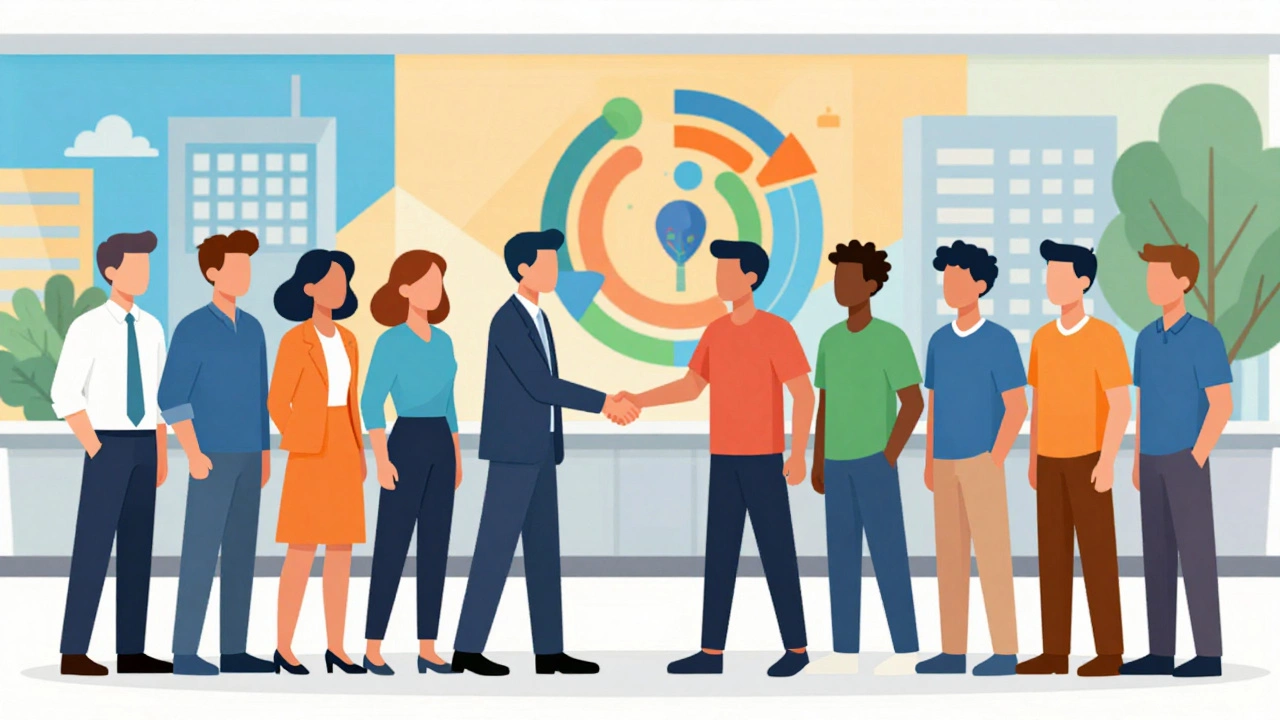
One of the most effective levers in any community outreach strategy is leveraging existing networks. Trust is transferable. If a respected local figure or established organization vouches for you, the barrier to entry drops significantly.
Consider a scenario where a tech company wants to teach coding to underprivileged youth. Instead of launching a standalone program, they partner with a local after-school club. The club provides the venue, the trust, and the student base. The tech company provides the curriculum and mentors. This symbiotic relationship ensures higher attendance and better retention because the students feel safe and supported by familiar faces.
When seeking partners, look for alignment in values, not just demographics. A financial literacy nonprofit partnering with a predatory payday lender would be a strategic disaster, regardless of the potential reach. Due diligence on partners is non-negotiable.
Measuring Impact Beyond Numbers
It is tempting to measure success solely by headcounts, funds raised, or social media likes. These are vanity metrics. They tell you how loud you were, not how deep you connected. To truly evaluate a community outreach strategy, you need to look at relational metrics.
| Metric Type | Example | What It Tells You | Limitation |
|---|---|---|---|
| Vanity | Event Attendance | How many people showed up | Doesn't indicate engagement or satisfaction |
| Vanity | Social Media Likes | Visibility of content | Likes can be bought or passive; no real action |
| Relational | Volunteer Retention Rate | Quality of volunteer experience | Takes longer to measure |
| Relational | Community Feedback Score | Perceived value and trust | Requires active surveying |
| Relational | Partnership Longevity | Strength of network ties | Hard to quantify financially |
Ask questions like: "Did participants feel respected?" "Did they leave with actionable knowledge?" "Would they recommend us to a friend?" Use Net Promoter Score (NPS) surveys tailored to community contexts. If your NPS is low, your outreach is failing, even if your event was "full."

Common Pitfalls to Avoid
Even well-intentioned strategies can go off the rails. Here are the most common traps:
- The Savior Complex: Assuming the community is broken and needs fixing. This creates dependency and resentment. Frame your role as an enabler, not a rescuer.
- Inconsistency: Showing up once a year for a holiday drive and disappearing otherwise. Trust is built through regular, predictable presence.
- Jargon Overload: Using industry-specific language that excludes laypeople. Speak human. If you are discussing healthcare, explain terms simply.
- Ignoring Cultural Nuances: A tactic that works in one neighborhood may offend another. Always localize your approach. Respect holidays, dietary restrictions, and communication styles.
- No Feedback Loop: Broadcasting without listening. If you don't have a mechanism for the community to critique or suggest improvements, you are monologuing, not engaging.
Adapting to Digital and Hybrid Models
The landscape of community engagement has shifted. While face-to-face interaction remains gold, digital tools extend your reach. However, digital outreach requires different rules. Online spaces can be echo chambers. They can also amplify misinformation quickly.
A hybrid model often works best. Use digital platforms for information dissemination, scheduling, and initial contact. Then, move critical conversations offline. For instance, use a WhatsApp group to coordinate volunteers, but hold monthly in-person check-ins to discuss challenges and celebrate wins. This blend ensures accessibility while maintaining the depth of human connection.
Also, consider accessibility. Is your website screen-reader friendly? Are your videos captioned? Is your physical venue wheelchair accessible? Excluding people with disabilities is a failure of outreach strategy, plain and simple. Inclusivity must be baked into the design phase, not added as an afterthought.
Building Long-Term Sustainability
Outreach is not a project with an end date. It is an ongoing function. To sustain it, you need to embed it into your organizational culture. Hire staff dedicated to community relations. Train all employees, not just outreach specialists, on cultural competency and active listening. Make community feedback a standard agenda item in leadership meetings.
Funding models should also reflect this. Seek grants that support capacity building and relationship management, not just program delivery. Demonstrate to donors that investing in community trust yields higher ROI in terms of program effectiveness and resilience. When a community trusts you, they become your advocates, your fundraisers, and your defenders during tough times.
What is the difference between community outreach and community engagement?
Outreach is often one-way communication where an organization informs the community about services or initiatives. Engagement is two-way, involving dialogue, collaboration, and shared decision-making. Outreach says, "Here is what we are doing." Engagement asks, "What do you need, and how can we do it together?"
How do I start a community outreach strategy with zero budget?
Start with listening. Walk around the neighborhood. Attend existing community meetings. Introduce yourself to local leaders. Offer your skills pro bono to trusted partners. Build relationships first. Money helps scale, but trust is built through time and effort, not cash. Use free digital tools like social media and email newsletters to share value.
Who should be involved in creating the strategy?
It shouldn't just be senior leadership. Include frontline staff who interact directly with the community, as they see the realities on the ground. Also, involve community representatives early in the planning process. Their insights will prevent costly mistakes and ensure relevance.
How long does it take to see results from a community outreach strategy?
Trust takes time. Expect 6 to 12 months to see meaningful shifts in community perception and participation. Short-term spikes in activity may occur, but sustainable change requires consistent effort over years. Patience is a key component of the strategy.
Can a business use community outreach strategies?
Absolutely. Businesses benefit from strong community ties through brand loyalty, talent acquisition, and regulatory goodwill. Corporate Social Responsibility (CSR) programs are essentially community outreach strategies. Focus on authentic contributions rather than superficial sponsorships to avoid accusations of "greenwashing" or "purpose-washing."