
What Environmental Factors Cause Mental Illness?
 Dec, 4 2025
Environmental Mental Health Risk Estimator
This tool estimates your mental health risk based on key environmental factors discussed in the article. Results are based on research from the World Health Organization and peer-reviewed studies.
Your Mental Health Risk Assessment
Key Recommendations
Living in a noisy, crowded city isn’t just annoying-it can wear down your mind. If you’ve ever felt anxious, depressed, or overwhelmed without a clear reason, the problem might not be inside you. It might be outside-where you live, breathe, and move every day. Mental illness isn’t just genetics or bad luck. The environment around you plays a powerful, often ignored role.
Air Pollution and Your Brain
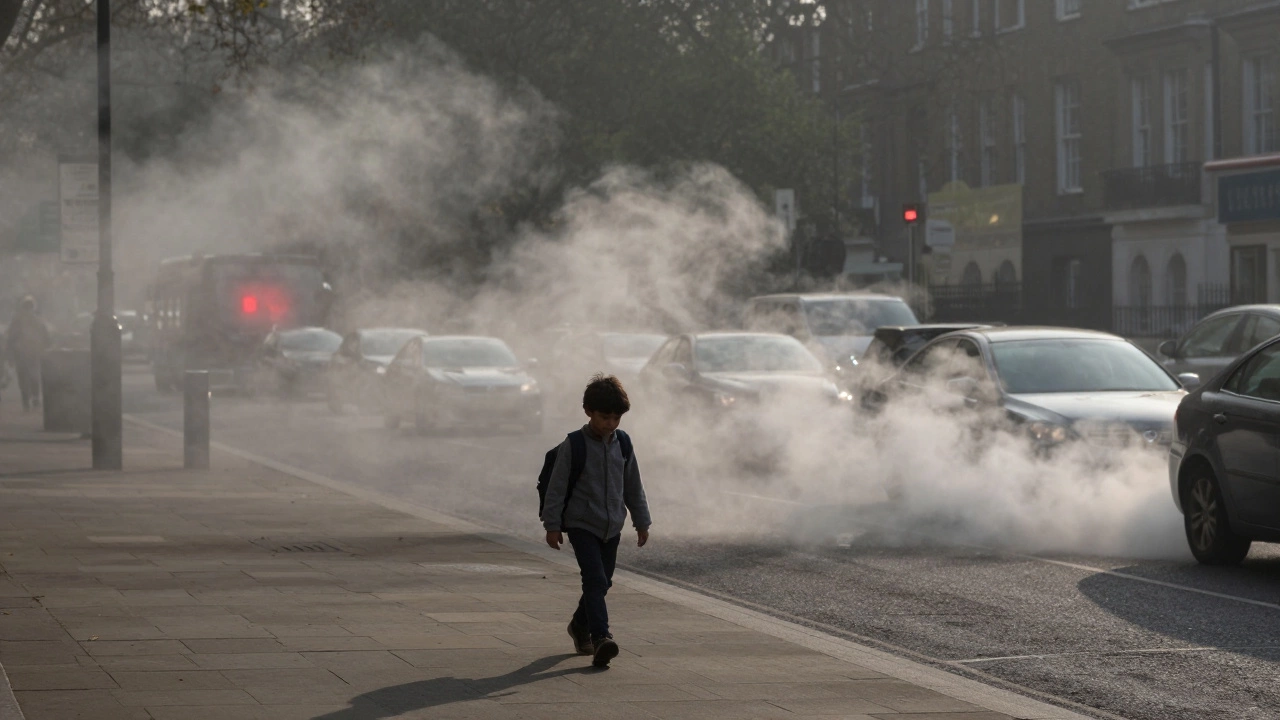
Thousands of studies now link air pollution to higher rates of depression, anxiety, and even schizophrenia. In London, researchers found that people living near busy roads had a 20% higher risk of developing psychosis by age 18. Fine particles from car exhaust, diesel fumes, and industrial smoke don’t just get into your lungs-they cross into your bloodstream and reach your brain.
These particles trigger inflammation. Chronic inflammation in the brain is linked to mood disorders. Children exposed to high levels of nitrogen dioxide (NO₂) before age 12 are more likely to show early signs of depression by their teens. It’s not about being ‘weak.’ It’s about biology. Your brain is a sensitive organ, and dirty air is poisoning it slowly.
Noise That Never Stops
Think about your neighborhood. Is there a constant hum from traffic? A train that rattles your windows at 5 a.m.? A construction site that never sleeps? That’s not just background noise. It’s a stressor your body can’t turn off.
Studies from the World Health Organization show that chronic noise exposure raises cortisol levels-the body’s main stress hormone. Over time, this leads to sleep loss, irritability, and eventually, clinical anxiety or depression. People living near airports have a 30% higher chance of being prescribed antidepressants. Even low-level noise, like a neighbor’s TV or a noisy fridge, disrupts deep sleep. And poor sleep? That’s one of the fastest routes to mental health decline.
Green Spaces Are Medicine
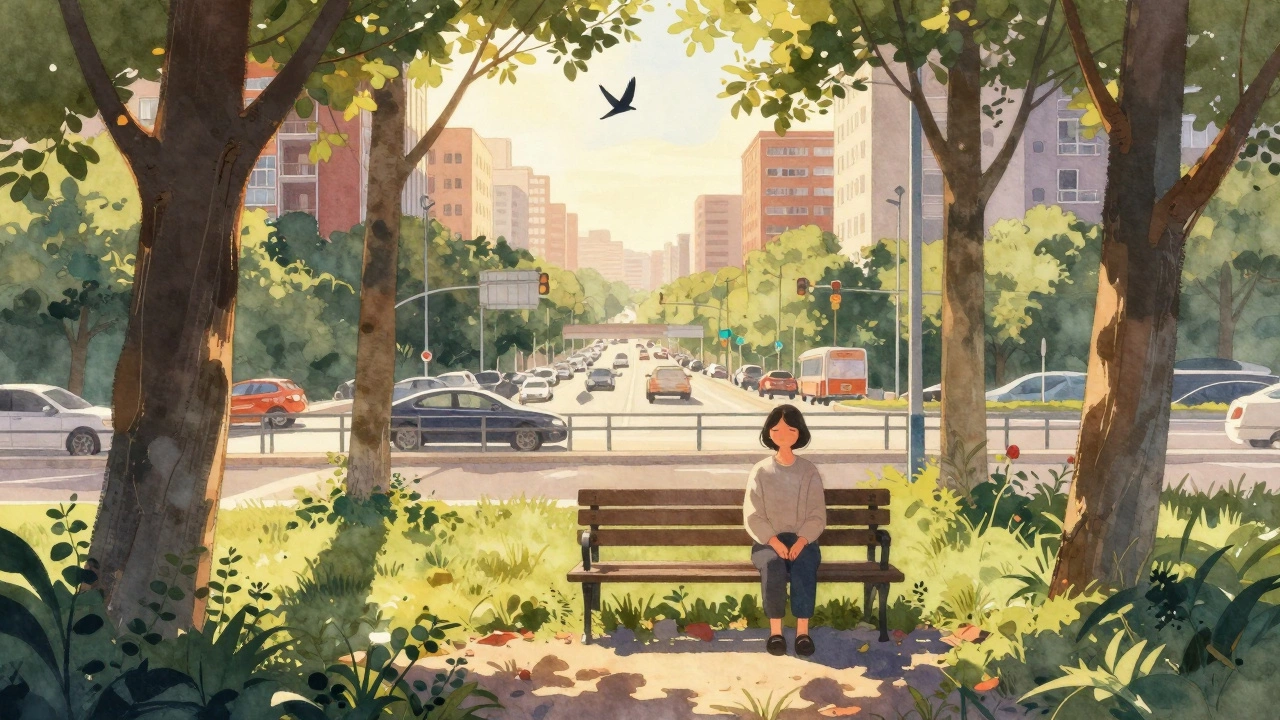
On the flip side, access to nature is one of the most powerful protective factors against mental illness. A 2023 study tracking 100,000 people in Scotland found that those living within 300 meters of a park or forest had 25% lower rates of depression. Trees aren’t just pretty. They filter pollution, reduce noise, and give your brain a chance to rest.
Walking through a woodland, sitting by a river, or even tending a small garden lowers activity in the prefrontal cortex-the part of the brain that ruminates, worries, and overthinks. In cities like Edinburgh, where green space is unevenly distributed, people in poorer neighborhoods often live far from parks. That’s not just an inequality in recreation. It’s an inequality in mental health.
Social Isolation and Broken Communities
Loneliness isn’t just a feeling. It’s a biological threat. People who live in neighborhoods with low trust, high crime, or little social connection are up to twice as likely to develop depression. When you don’t know your neighbors, when you feel unsafe walking outside, when community spaces have been shut down-you lose the safety net that holds people together.
After the 2008 financial crash, cities across the UK saw a spike in mental health cases. Why? Not just because people lost money. Because community centers closed. Libraries shut. Youth clubs vanished. People stopped talking. The physical environment changed-and so did the social one. Humans are wired to need connection. When that’s stripped away, the mind breaks.
Climate Stress and Future Anxiety
It’s not just today’s pollution. It’s the fear of tomorrow. Climate anxiety is real. More than half of young people in the UK now report feeling ‘hopeless’ about the future because of extreme weather, heatwaves, and flooding. In 2024, Edinburgh saw its worst flooding in 30 years. People lost homes. Schools closed. Insurance became unaffordable.
That kind of instability-knowing your home could vanish in a storm, or your city could become too hot to live in-creates a low-grade, constant stress. It’s not panic. It’s exhaustion. And it’s growing. This isn’t a phase. It’s a response to real, worsening conditions.
Unsafe Housing and Overcrowding
Living in damp, moldy, or overcrowded housing is a direct risk factor for mental illness. In Scotland, one in five homes still has visible mold. Mold spores trigger inflammation. But worse than the physical health impact is the psychological toll. People in poor housing feel ashamed. They feel trapped. They can’t invite friends over. Their children can’t do homework because there’s no quiet space.
Children raised in overcrowded homes are more likely to develop ADHD and behavioral problems. Adults in unstable housing have higher rates of suicide. Housing isn’t just shelter. It’s the foundation of mental stability. When that foundation cracks, so does the mind.

Food Deserts and Mental Health
Ever heard of a food desert? It’s an area where fresh food is hard to find-often because grocery stores closed, or prices are too high. In places like parts of Glasgow or Dundee, people rely on corner shops selling chips, sugary drinks, and packaged snacks.
Diets high in sugar and processed foods are linked to higher rates of depression. Why? Because your gut and brain are connected. Poor nutrition changes your microbiome, which affects serotonin production-the chemical that regulates mood. Eating well isn’t a luxury. In many neighborhoods, it’s a privilege you can’t afford.
What Can Be Done?
It’s easy to feel powerless. But change is possible-and it’s already happening. Cities that invest in green space, public transport, and community centers see mental health improve within years. In Copenhagen, bike lanes and tree-lined streets cut depression rates by 15% in a decade. In Manchester, community gardens built on abandoned lots reduced loneliness among seniors by 40%.
Policy matters. Clean air laws. Affordable housing. Park funding. Noise regulations. These aren’t just ‘environmental’ issues. They’re mental health policies. When we fight for cleaner streets, quieter neighborhoods, and more trees, we’re not just saving the planet. We’re saving minds.
Where to Start
If you’re feeling overwhelmed, start small. Walk through a park. Plant something-even a pot of herbs on a windowsill. Talk to a neighbor. Join a local clean-up group. These actions don’t fix everything. But they rebuild connection. They remind you that you’re not alone-and that the world can still be made better.
Mental illness isn’t just in your head. It’s shaped by the air you breathe, the noise you hear, the space you live in, and the people around you. Fixing it means fixing the world around you.
Can living in a city cause depression?
Yes. Cities often have higher levels of air pollution, noise, overcrowding, and social isolation-all linked to increased depression risk. But not all cities are the same. Those with good green spaces, public transport, and community services show much lower rates.
Is pollution really that bad for mental health?
Yes. Studies show that long-term exposure to fine particulate matter (PM2.5) increases inflammation in the brain, which is directly tied to depression, anxiety, and psychosis. Children and older adults are especially vulnerable.
How much green space do I need to protect my mental health?
Research suggests even small amounts help. Living within 300 meters of a park or natural area reduces depression risk by 25%. But it’s not just distance-it’s quality. A well-maintained, safe green space where you can sit quietly or walk without feeling watched makes the biggest difference.
Can noise pollution lead to anxiety?
Absolutely. Constant noise-traffic, trains, construction-keeps your body in a state of low-grade stress. This raises cortisol, disrupts sleep, and over time can trigger anxiety disorders. Even nighttime noise you don’t fully wake up to can harm your mental health.
Does climate change affect mental health?
Yes. Climate change causes direct trauma through extreme weather, displacement, and loss. It also creates chronic stress-known as ‘eco-anxiety’-especially in young people who feel powerless about the future. This isn’t irrational fear. It’s a rational response to real threats.
What role does housing play in mental illness?
Poor housing-damp, cold, overcrowded, or unstable-is one of the strongest predictors of mental illness. Mold triggers inflammation. Overcrowding increases stress. Constant fear of eviction or homelessness keeps the nervous system on high alert. Safe, stable housing isn’t a luxury-it’s a mental health necessity.
When we talk about protecting the environment, we’re not just talking about polar bears or melting ice. We’re talking about people-your neighbors, your friends, your family. Their minds are shaped by the world they live in. And that world can change-for the better.