
What Does Good Community Outreach Look Like? A Practical Guide
 Sep, 17 2026
Community Outreach Health Check
Answer these questions honestly to evaluate how relational vs. transactional your current approach is. Good outreach is about presence, not just promotion.
You’ve probably seen it before. A flyer gets stapled to a lamppost. An email blasts out with generic corporate jargon. A representative shows up for ten minutes, takes a photo, and vanishes. That’s not community outreach; that’s marketing disguised as connection. Real outreach isn’t about broadcasting your message-it’s about listening until you hear what actually matters to the people living down the street from you.
If you’re running a charity, a local business, or a public service initiative in Edinburgh (or anywhere else), you know the struggle. You have resources, you have good intentions, but getting genuine participation feels like shouting into a void. Why does one program fill up in an hour while another sits empty despite having better funding? The difference rarely lies in the budget. It lies in the approach. Good outreach is relational, not transactional. It requires humility, consistency, and a willingness to let the community shape the solution rather than imposing one upon them.
Trust Is the Currency of Engagement
Let’s be blunt: nobody trusts a stranger who only calls when they need something. In community work, trust is the primary currency. Without it, even the most brilliant programs fail. Think about the last time you ignored a solicitor at your door. Was it because their cause was bad? Probably not. It was likely because you didn’t know them, and they didn’t know you.
Building this trust takes time. There are no shortcuts. You can’t download trust via a mobile app. It happens through repeated, positive interactions. This means showing up when you don’t need anything. Attend the local school play. Volunteer at the park clean-up. Buy coffee from the independent shop on the corner. These small acts signal that you are part of the fabric of the neighborhood, not just a visitor passing through.
A study by the National Council for Voluntary Organisations highlighted that organizations perceived as "outsiders" face significantly higher barriers to entry. Conversely, those embedded in local networks see participation rates rise by up to 40%. The lesson is clear: presence beats promotion. If you want people to engage with your project, you must first engage with their lives.
Listening Before You Speak
The biggest mistake in failed outreach efforts is assuming you know what the community needs. We often fall into the trap of "solution-first" thinking. We identify a problem-say, youth unemployment-and immediately design a workshop series. But if we hadn’t asked the teenagers themselves, we might have discovered that transportation costs were the actual barrier, not skill gaps.
Active listening is a technical skill, not just a soft one. It involves asking open-ended questions and resisting the urge to interrupt with your own agenda. When you hold a town hall meeting, do you spend 80% of the time presenting slides and 20% answering questions? Flip that ratio. Spend 20% explaining your capacity and 80% facilitating discussion.
Here is a simple framework for effective listening sessions:
- Meet people where they are: Don’t force residents to come to your office. Go to the pub, the library, or the bus stop.
- Use plain language: Avoid acronyms like KPIs, ROI, or SDGs unless everyone in the room already uses them daily.
- Validate feelings, not just facts: If someone says they feel unsafe walking home, acknowledge that fear before discussing street lighting budgets.
When people feel heard, they become advocates. They start recruiting their neighbors for you. This organic growth is far more sustainable than paid advertising.
Co-Creation Over Consultation
There is a massive difference between consulting a community and co-creating with them. Consultation asks, "What do you think of our plan?" Co-creation asks, "How shall we build this together?" The former is passive; the latter is active. And active participation drives ownership.
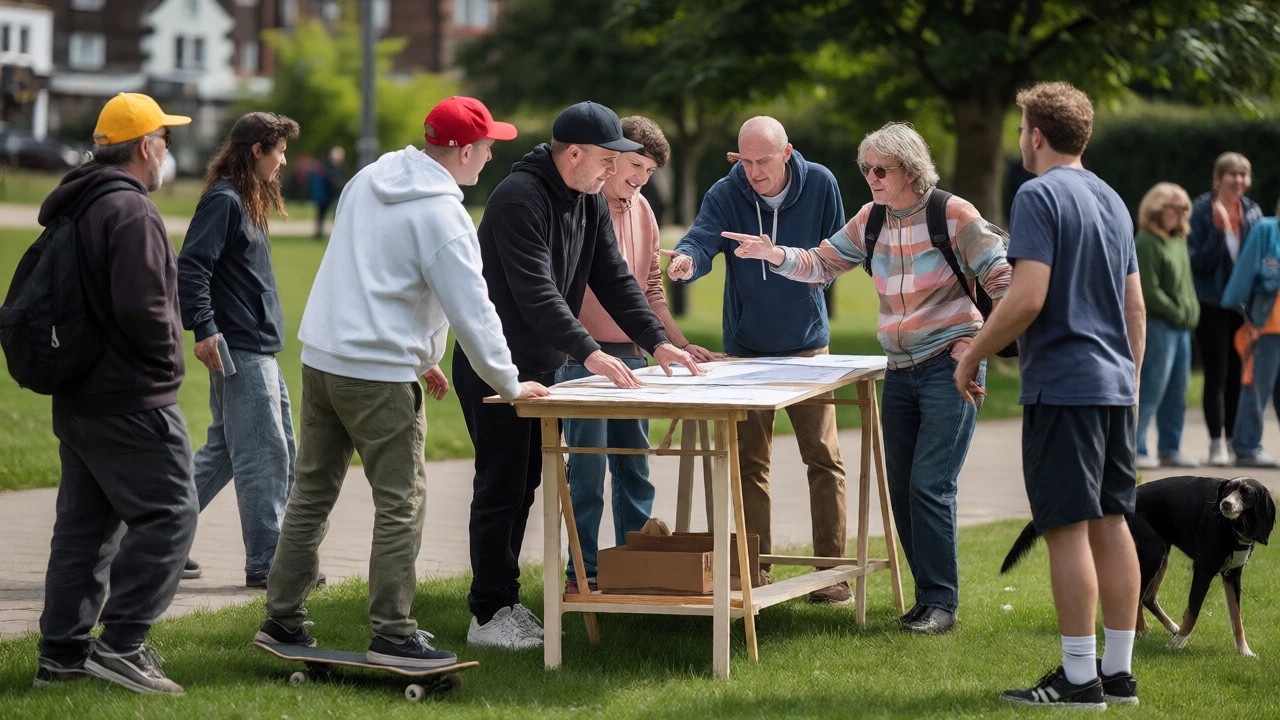
Consider a recent project in Leith, Edinburgh, aimed at reducing litter. Instead of hiring a cleanup crew, organizers partnered with local skate groups and dog walkers. These groups identified specific hotspots that official surveys missed. They designed the bins based on what fit their routines. The result? Litter complaints dropped by 60% in six months. Why? Because the community felt responsible for the outcome. They weren’t following orders; they were executing their own idea.
To move from consultation to co-creation, try these steps:
- Identify key influencers: Find the barbers, teachers, or shop owners who already command respect.
- Share power: Give these partners a vote on budget allocation or program timing.
- Iterate quickly: Launch a small pilot, gather feedback, adjust, and relaunch. Don’t wait for perfection.
This shift requires letting go of control. It can be scary for funders who want predictable metrics. But messy, collaborative processes often yield cleaner, longer-lasting results than rigid, top-down mandates.
Consistency Beats Intensity
Many organizations treat outreach as a campaign. It has a start date, a peak, and an end date. Communities, however, exist continuously. If you disappear after the grant cycle ends, you burn bridges. People remember broken promises.
Good outreach looks like maintenance, not construction. It’s the monthly newsletter that actually contains useful local news, not just self-promotion. It’s the quarterly drop-in session that happens rain or shine. It’s the follow-up call two weeks after an event to ask how things went.
Think of it like gardening. You don’t plant seeds once and expect a forest. You water, weed, and prune regularly. If you neglect the soil, nothing grows. Similarly, if you neglect relationships, engagement dies. Consistency builds reliability. Reliability builds trust. Trust builds community.
A practical tip: assign a dedicated liaison person. Not a rotating volunteer, but someone whose job title includes "relationship management." This person should be visible, accessible, and accountable. When residents see the same face every month, anxiety drops. They know who to call. They know who to blame. That clarity reduces friction.
Measuring What Matters
We love data. But too often, we measure vanity metrics. How many flyers distributed? How many website clicks? These numbers tell you almost nothing about impact. Did anyone change their behavior? Did anyone feel less isolated? Did anyone find a job?
Shift your focus to qualitative indicators alongside quantitative ones. Use stories. Record testimonials. Track retention rates rather than just new sign-ups. High turnover suggests your outreach attracts curiosity but fails to deliver value. Low turnover indicates satisfaction and fit.
| Metric Type | Example | What It Tells You |
|---|---|---|
| Vanity Metric | Number of attendees at launch event | Initial interest level |
| Process Metric | Response rate to survey invitations | Quality of existing communication channels |
| Outcome Metric | Percentage of participants reporting improved wellbeing | Actual impact on quality of life |
| Impact Metric | Reduction in local crime statistics over 12 months | Long-term societal change |
Don’t be afraid to admit failure. If a metric shows poor performance, share it openly with the community. Say, "We tried X, and it didn’t work. Here’s why. What should we try next?" This transparency reinforces partnership. It shows you value truth over optics.

Pitfalls to Avoid
Even well-meaning projects stumble. Here are common traps to watch out for:
- The Savior Complex: Assuming you are rescuing the community rather than partnering with it. This creates dependency and resentment.
- Jargon Overload: Using academic or bureaucratic language that alienates everyday residents. Keep it simple.
- Ignoring Digital Divides: Relying solely on Instagram or Facebook excludes elderly populations or low-income households without smartphones. Always maintain offline channels.
- Burnout Culture: Expecting volunteers to carry unsustainable loads. If your staff is exhausted, your outreach will suffer. Protect your team’s energy.
Avoiding these pitfalls requires constant self-reflection. Ask yourself regularly: Are we serving the community, or is the community serving our reporting requirements?
Real-World Example: The Library Hub Model
Look at how modern libraries operate. They aren’t just book repositories anymore. Many have transformed into community hubs offering everything from tax advice clinics to tech support for seniors. Why did this work? Because librarians listened. They noticed people using the space for warmth and safety, not just reading. So they adapted services to meet those hidden needs.
This adaptability is the hallmark of good outreach. It’s responsive. It evolves. It doesn’t stick to a five-year strategic plan if reality changes in year two. Flexibility demonstrates respect for the dynamic nature of community life.
In Edinburgh, several community centers have adopted similar models, integrating health screenings with social cafes. Attendance soared because people didn’t have to make a separate trip for healthcare. Convenience removed barriers. Integration created synergy. This is what smart outreach looks like: removing friction so people can naturally access help.
Next Steps for Your Organization
Ready to improve your approach? Start small. Pick one current project and audit its outreach strategy. Who are you talking to? Are they responding? If not, why?
Schedule three informal meetings with local stakeholders next week. No agendas, no presentations. Just coffee and conversation. Listen more than you talk. Then, adjust your plan based on what you hear. Repeat this cycle monthly.
Remember, community outreach isn’t a department. It’s a mindset. It permeates every interaction, from the way you answer the phone to how you design your flyers. When you prioritize relationships over transactions, you unlock potential that money alone cannot buy.
How long does it take to build trust in a new community?
It varies, but generally expect six to twelve months of consistent presence before seeing significant trust. Initial skepticism is normal. Show up reliably, keep promises, and listen actively during this period. Don't rush the process; trying to force quick wins often backfires.
What is the biggest mistake charities make in outreach?
Assuming they know best. Many organizations design solutions in isolation and then try to sell them to the community. The biggest error is failing to involve residents in the planning phase, leading to programs that don't address actual needs or cultural contexts.
How do I reach marginalized groups effectively?
Go to their physical spaces and use trusted intermediaries. Marginalized communities often distrust formal institutions. Partner with local leaders, faith groups, or cultural associations who already have established credibility. Offer multiple ways to engage, including offline options, and ensure materials are accessible and inclusive.
Is digital outreach enough for modern communities?
No. While digital tools expand reach, they lack the depth of face-to-face interaction. Many vulnerable populations have limited internet access or digital literacy. A hybrid approach combining online convenience with regular in-person touchpoints yields the best results for sustained engagement.
How can I measure the success of my outreach efforts?
Focus on outcome-based metrics rather than activity counts. Track retention rates, participant satisfaction scores, and tangible changes in community conditions (e.g., reduced loneliness, increased local employment). Qualitative feedback, such as personal stories and testimonials, provides crucial context that numbers alone miss.