
What Does a Community Outreach Leader Do? Roles, Responsibilities, and Real-World Impact
 Dec, 4 2025
Community Impact Estimator
Estimate Your Community Impact
Calculate how your outreach activities translate into meaningful community engagement and trust building. Based on principles from the article: impact isn't about quantity—it's about quality, trust, and community-led change.
Your Community Impact Assessment
Based on your input, here's what your outreach is likely achieving:
Remember: Real community impact isn't just about numbers—it's about people feeling seen, heard, and empowered.
Ever wonder who’s behind the scenes making sure a food bank reaches every family in need, or how a local nonprofit gets parents to show up for a free health fair? That’s often the work of a community outreach leader. It’s not a title you hear every day, but it’s one of the most vital roles in any organization trying to make a real difference where people live.
What Exactly Does a Community Outreach Leader Do?
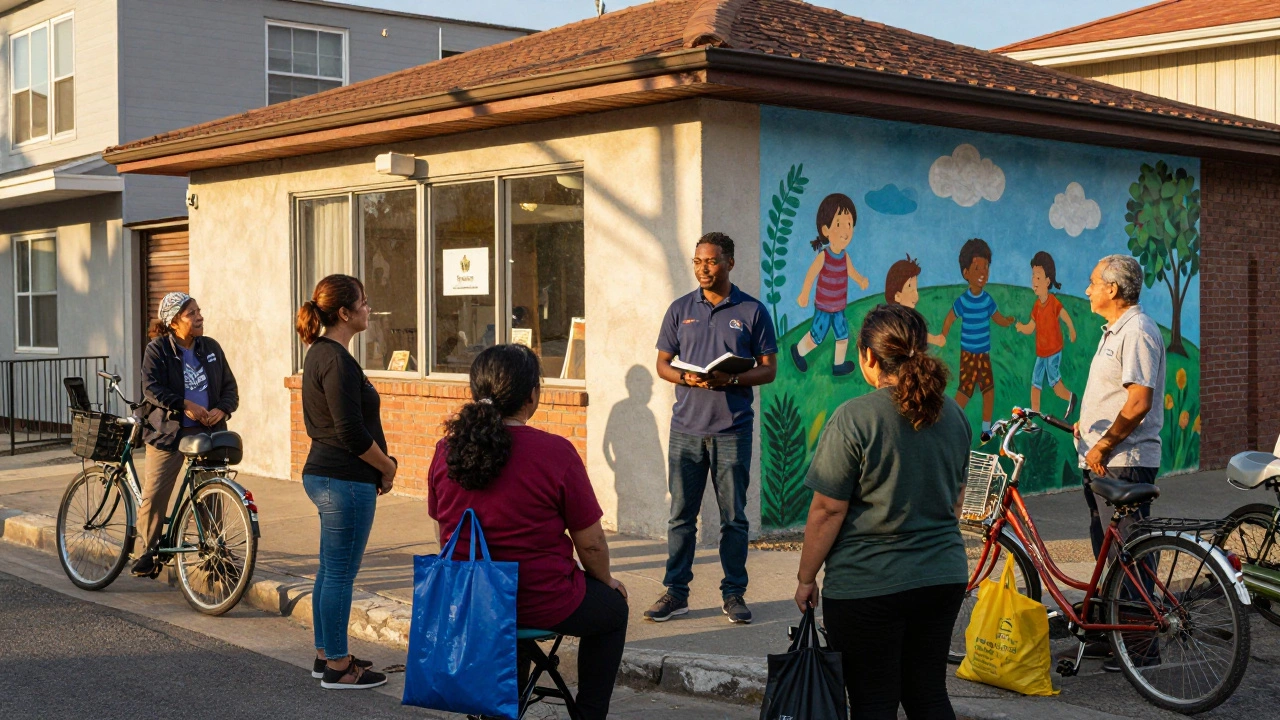
A community outreach leader doesn’t sit at a desk filing reports. They’re out in neighborhoods, schools, churches, and local events-talking to people, listening to their needs, and building trust. Their job is to connect an organization’s resources with the people who need them most. It’s bridge-building in its purest form.
Think of them as the human link between a nonprofit’s mission and the community it serves. If a group wants to reduce childhood hunger, the outreach leader doesn’t just hand out meals. They figure out where families are struggling the most, what barriers keep them from accessing help, and how to make support feel safe and welcoming. That might mean setting up food distribution at a public housing complex instead of a distant warehouse. Or translating materials into Spanish, Somali, or Vietnamese because language is a wall no one should have to climb alone.
Day-to-Day Responsibilities
There’s no single schedule, but here’s what a typical week looks like for someone in this role:
- Meeting with local leaders-school principals, faith groups, block association heads-to find out what’s really going on in the neighborhood.
- Planning and hosting events: health screenings, job fairs, youth workshops, or cultural celebrations that draw people in without feeling like a charity case.
- Training volunteers so they don’t just hand out flyers but know how to have respectful, meaningful conversations.
- Tracking which programs are working and which aren’t. If only 20% of targeted families show up to a nutrition class, they dig into why-is it timing? Transportation? Distrust?
- Writing grants or reports to show funders that outreach efforts are actually reaching people, not just checking boxes.
One outreach leader in Detroit told me she spends 60% of her time just driving around, stopping by corner stores to chat with owners, asking if they’ve seen families struggling with food insecurity. That’s not in any job description-but it’s how she finds the people no one else can reach.
Skills That Make a Great Outreach Leader
This isn’t a job you can fake. You can’t just show up with a clipboard and expect people to open up. Here’s what actually works:
- Active listening-not waiting for your turn to speak, but really hearing what someone says, and what they don’t say.
- Cultural humility-knowing you don’t have all the answers, and being willing to learn from the community instead of telling them what they need.
- Adaptability-if the community doesn’t respond to flyers, you switch to radio ads or door-to-door visits. If parents can’t come to a workshop at 6 p.m., you move it to Saturday morning.
- Conflict navigation-sometimes, there’s distrust toward outsiders, especially in neighborhoods that have been ignored or exploited by past programs. Building trust takes time, consistency, and honesty.
- Storytelling-not just reporting numbers, but sharing real stories that show why the work matters. A parent saying, “This after-school program kept my kid off the streets,” means more than a statistic about attendance rates.
Many outreach leaders come from the communities they serve. That’s not a requirement-but it helps. Someone who grew up in the same housing project, went to the same underfunded school, or survived the same economic hardship brings a level of credibility that no degree can buy.

How They Measure Success
Most nonprofits track donations, volunteer hours, or meals served. But outreach leaders measure something deeper:
- Are people coming back? One-time attendance is easy. Repeat engagement means trust is growing.
- Are community members speaking up at meetings? Are they leading initiatives themselves now?
- Has the organization changed its approach because of feedback from residents?
- Are local leaders asking for help with their own projects?
One program in Minneapolis tracked how many residents who attended their financial literacy workshops later became peer mentors. That wasn’t in the original grant-but it became their biggest success metric. Real change happens when the community starts leading itself.
Common Misconceptions
People often think outreach leaders are just event planners or glorified fundraisers. They’re not. They don’t spend their days calling donors or writing thank-you notes. Their focus is on relationships, not receipts.
Another myth: “They just need to get more people to show up.” But quantity doesn’t equal impact. One hundred people who feel seen and heard is better than five hundred who walked away feeling used.
And no, you don’t need a master’s in social work. Many outreach leaders started as volunteers, or worked in retail, or were single parents navigating the system themselves. What matters isn’t your resume-it’s your ability to show up, stay consistent, and care deeply.
Who They Work With
A community outreach leader doesn’t operate alone. They’re the hub of a network:
- Nonprofit staff-they translate what the community says into program changes.
- Local government-they push for policy changes, like better bus routes to clinics or expanded library hours.
- Schools and teachers-they connect families with tutoring, mental health services, or free breakfast programs.
- Businesses-they get local stores to donate food, sponsor events, or hire from the community.
- Residents themselves-the most important partners. The best outreach leaders know when to step back and let community members take the lead.
One outreach leader in rural Georgia partnered with a local barber shop to host monthly health check-ups. Why? Because men in the area trusted their barber more than any clinic. That’s the kind of insight you only get by being there, day after day.

Why This Role Matters Now More Than Ever
In 2025, communities are more divided than ever. Online echo chambers, economic inequality, and distrust in institutions have made it harder for organizations to reach people. That’s where outreach leaders come in. They’re the antidote to isolation.
When a community feels heard, they’re more likely to participate, to give back, to believe change is possible. Outreach leaders don’t just deliver services-they restore dignity. They remind people they’re not invisible.
Look at what happened in Phoenix after a major drought hit. Instead of just handing out water bottles, an outreach team worked with local gardeners to teach residents how to grow drought-resistant food. The result? Not just water saved-but a neighborhood food co-op started by residents themselves.
How to Become One
If you’re thinking about this path, here’s the truth: You don’t need to wait for permission. Start where you are.
- Volunteer with a local group. Don’t just show up for one event-stick around. Learn the rhythm of the work.
- Listen more than you speak. Ask people: “What do you wish someone would do differently?”
- Learn about your own community’s history. Who’s been left out? Who’s been ignored? Why?
- Take a basic course in community organizing-many are free through libraries or community colleges.
- Don’t aim for a title. Aim for impact. Titles come later.
The best outreach leaders aren’t hired because they have the perfect resume. They’re hired because they’ve already been doing the work-quietly, consistently, without a paycheck.
Is a community outreach leader the same as a community organizer?
They’re similar but not the same. A community organizer often focuses on mobilizing people to push for policy changes-like better housing laws or police reform. An outreach leader focuses more on connecting people with existing services and building trust within the community. Many people do both, but the goals differ: one is about changing systems, the other is about meeting people where they are.
Do you need a degree to be a community outreach leader?
No, you don’t. Many successful outreach leaders have no college degree. What matters more is experience, empathy, and reliability. That said, some organizations prefer candidates with a bachelor’s in social work, public health, or community development-especially for higher-level roles. But if you’ve spent years helping neighbors, running food drives, or translating for families, that counts as real training.
How much do community outreach leaders make?
Salaries vary widely. In small nonprofits, you might earn $35,000-$45,000 a year. In larger cities or government-funded programs, the range is $50,000-$70,000. Pay often depends on funding sources, location, and the size of the organization. But many people take these jobs because they care about the mission, not the paycheck.
What’s the biggest challenge community outreach leaders face?
Burnout. Many work long hours with little support. They carry the emotional weight of the communities they serve. Plus, funding is always uncertain. One grant ends, and suddenly the whole program is at risk. The most successful leaders build strong peer networks, set boundaries, and remind themselves why they started.
Can someone be a community outreach leader without working for a nonprofit?
Absolutely. Schools, hospitals, libraries, and even local businesses hire outreach staff. A hospital might have an outreach leader to connect low-income patients with free screenings. A public library might hire someone to bring tech training to seniors. The role isn’t tied to nonprofits-it’s tied to connection.
Final Thought
Community outreach leaders don’t get trophies. They don’t appear on news headlines. But every time a child eats a meal they wouldn’t have had, every time a senior gets a ride to their doctor, every time a parent finds a job because someone took the time to walk them through the application-those are the wins. Quiet. Real. Lasting.