
What Are the Two Major Environmental Organizations? A Guide to WWF and Greenpeace
 Nov, 5 2026
WWF vs. Greenpeace: Alignment Quiz
Answer these questions to see which global environmental giant—WWF or Greenpeace—matches your approach to saving the planet.
Question 1 of 5
How do you believe large-scale environmental change happens?
Question 2 of 5
What is your stance on corporate funding for NGOs?
Question 3 of 5
Which tactic feels more effective to you?
Question 4 of 5
Where should most of the donation money go?
Question 5 of 5
Do you trust institutions to self-regulate?
Your Match
You’ve probably heard the names thrown around in news headlines or seen them on t-shirts at a protest. But when someone asks, "What are the two environmental organizations?" they’re usually referring to the two most globally recognized giants of the green movement: World Wide Fund for Nature (WWF) and Greenpeace. These aren’t just charities; they are massive global engines that have shaped how we protect our planet for decades. If you’re trying to understand who is fighting for what, where your donation goes, or which group aligns with your values, this breakdown cuts through the noise.
The Big Two: Who They Actually Are
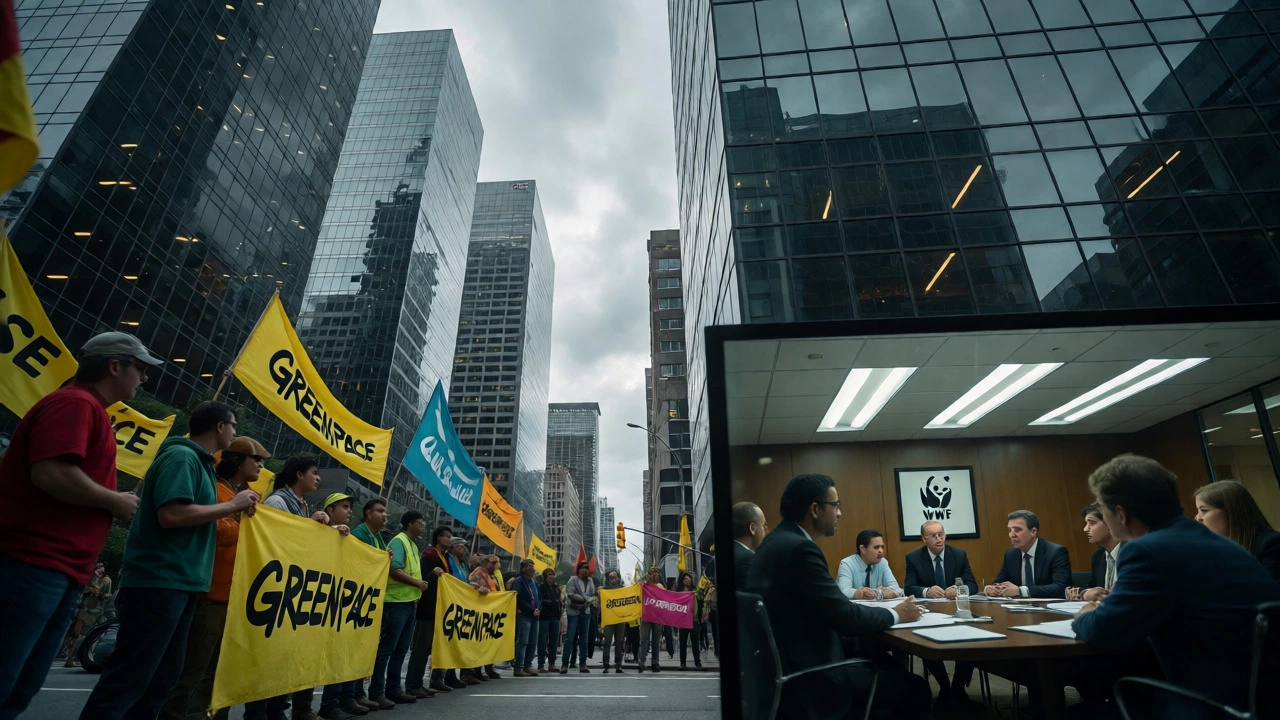
It’s easy to lump all eco-groups together, but these two operate very differently. Think of it like choosing between a surgeon and an activist. One works inside the system to fix problems with precision; the other stands outside, shouting to change the system itself.
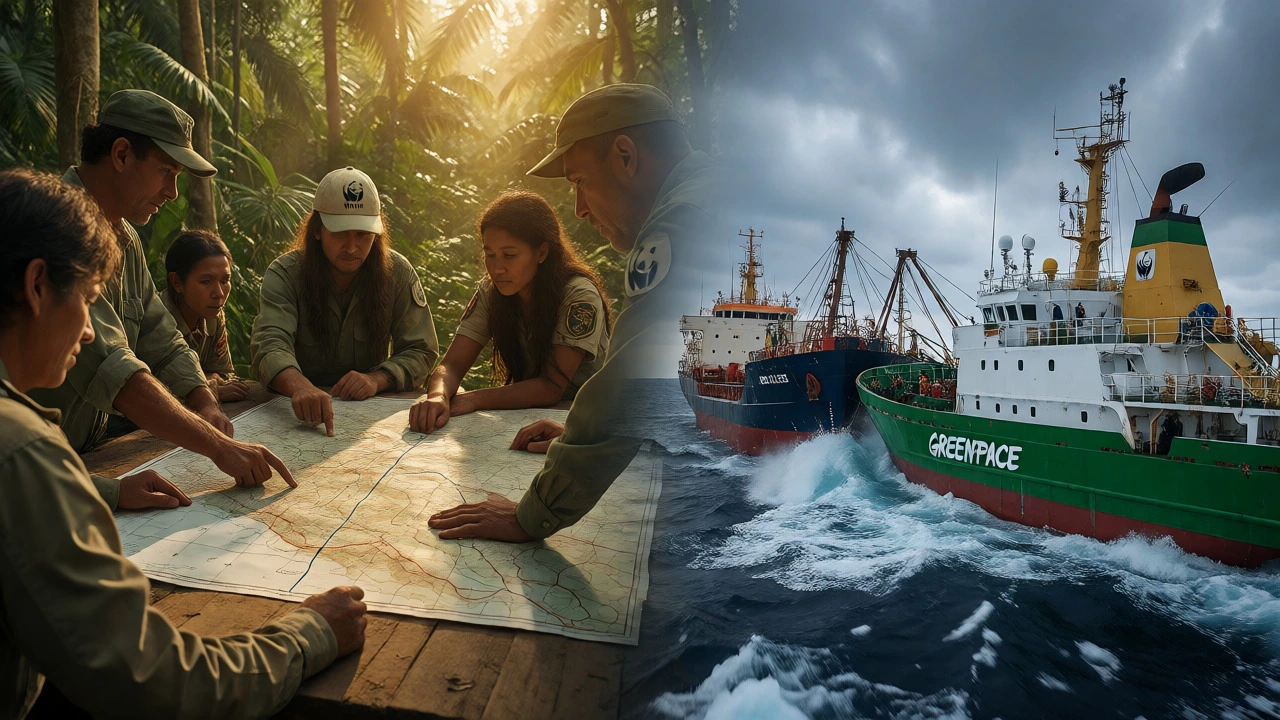
WWF, founded in 1961, is the panda-logo powerhouse. Its mission is scientific and practical: preserving biological diversity and ensuring human use of natural resources is sustainable. They work with governments, businesses, and local communities. You’ll find them negotiating fishing quotas in Brussels or helping rangers track rhinos in Kenya. They believe in collaboration. If a mining company wants to build near a forest, WWF often sits at the table to design safeguards rather than blocking the project entirely.
Greenpeace, born in 1971 from a small boat sailing into nuclear test zones, takes a different path. It refuses government and corporate funding to stay independent. Their strategy is direct action: climbing oil rigs, unfurling banners on skyscrapers, and investigating pollution firsthand. They don’t negotiate; they expose. When Greenpeace says no, they mean it. This independence allows them to be harsh critics of both polluters and governments that fail to act.
Key Differences at a Glance
Why does this distinction matter? Because if you donate £50, you want to know if it’s buying a satellite tracker for elephants or paying for a legal team to sue a plastic manufacturer. Here’s how they stack up against each other.
| Feature | WWF | Greenpeace |
|---|---|---|
| Funding Source | Government grants, corporate partnerships, individual donors | Individual supporters only (no corporate/gov money) |
| Primary Strategy | Collaboration, science-based policy, habitat restoration | Direct action, investigation, public pressure campaigns |
| Relationship with Industry | Engages companies to improve practices (e.g., sustainable palm oil) | Confronts industries causing harm (e.g., fast fashion, fossil fuels) |
| Focus Areas | Biodiversity, water, food, climate, forests, oceans | Climate justice, ocean protection, anti-nuclear, toxic chemicals |
| Global Presence | Operates in 100+ countries via national offices | Operates in 55+ countries with centralized campaign focus |
Where Do They Work? Real-World Impact
Abstract missions can feel distant. Let’s look at concrete examples of what these groups actually do on the ground.
WWF’s Approach: Imagine the Amazon rainforest. WWF doesn’t just say "stop cutting trees." They map critical corridors for jaguars, help indigenous communities secure land rights, and work with soybean farmers to adopt sustainable planting methods. In the UK, WWF has been instrumental in pushing for better river health standards, working with water companies to reduce sewage discharge. Their impact is often measured in hectares protected or species populations stabilized over time.
Greenpeace’s Approach: Now imagine the Arctic Ocean. Greenpeace sent ships to block industrial fishing fleets and documented illegal trawling practices. They didn’t ask politely; they made headlines. Recently, their investigations into microplastics in bottled water forced major brands to rethink packaging. In Edinburgh, local Greenpeace chapters might organize clean-ups not just to pick up trash, but to weigh it, categorize it, and present data to city councilors demanding single-use plastic bans.
Which One Should You Support?
This isn’t about one being "better." It’s about alignment. Ask yourself these questions:
- Do you trust institutions? If you believe change happens through laws, treaties, and corporate responsibility, WWF’s collaborative model likely resonates with you.
- Are you skeptical of big business? If you think corporations only listen when forced, and you value radical transparency, Greenpeace’s independence appeals more.
- What issue burns hottest for you? For wildlife conservation and ecosystem management, WWF has deeper scientific infrastructure. For climate justice and stopping specific industrial projects, Greenpeace often leads the charge.
Many people support both. After all, the world needs both the diplomat and the protester. The diplomat writes the rulebook; the protester makes sure it gets followed.

Common Misconceptions
People often confuse these two with smaller local trusts or assume they cover every environmental issue equally. Here’s what’s true:
- Myth: "They are competitors." Truth: They often complement each other. Greenpeace might highlight a crisis, creating public pressure that allows WWF to push for legislative solutions.
- Myth: "All donations go directly to animals/trees." Truth: Both spend significant funds on advocacy, research, and administration. Transparency reports show typical splits: ~80% program services, ~15% fundraising, ~5% admin. Always check the latest annual report before donating large sums.
- Myth: "They only care about polar bears." Truth: Climate change affects everything from coffee crops in Vietnam to flood risks in Scotland. Both organizations frame biodiversity loss and climate collapse as interconnected crises.
How to Get Involved Beyond Donating
Money helps, but action matters. If you live in Edinburgh or elsewhere in the UK, here’s how to engage without writing a cheque:
- Join Local Chapters: Both WWF and Greenpeace have regional volunteers. Greenpeace UK often runs training sessions for non-violent direct action. WWF UK hosts community science days where you can help count birds or monitor hedgehog paths.
- Lobby Your MP: Use their toolkits. Greenpeace provides templates for emailing MPs about climate bills. WWF offers guides on contacting representatives about nature recovery targets.
- Consumer Choices: Look for the MSC blue fish label (supported by WWF) for sustainable seafood. Check Greenpeace’s "Detox My Fashion" guide before buying new clothes to avoid toxic dyes.
Understanding these two pillars gives you a lens to view any environmental news story. When a treaty is signed, ask: Did WWF help draft it? When a factory is shamed, ask: Did Greenpeace uncover the leak? Knowing the players helps you judge the game.
Is WWF a government agency?
No, WWF is an independent international organization. While it receives some government funding for specific projects, it is not part of any government. It operates as a non-governmental organization (NGO) with consultative status at the UN.
Why does Greenpeace refuse corporate sponsorship?
Greenpeace refuses corporate and government funding to maintain complete independence. This ensures they can criticize any company or political party without fear of losing financial support, allowing them to take bold stances on issues like fossil fuel extraction or deforestation.
Which organization is older, WWF or Greenpeace?
WWF is older. It was founded in 1961 in Switzerland. Greenpeace was established later, in 1971, starting with a small crew sailing a fishing boat named Phyllis Cormack towards Amchitka Island to protest nuclear testing.
Can I volunteer for both WWF and Greenpeace?
Yes, absolutely. Many environmentalists participate in activities for both. WWF volunteering often involves citizen science, event support, or local conservation tasks. Greenpeace volunteering may include campaigning, street actions, or organizing local events. There is no conflict of interest.
Do these organizations work in the United Kingdom?
Yes, both have strong UK branches. WWF-UK focuses on British habitats like peatlands and coastal waters, while also influencing UK-wide policy. Greenpeace UK runs high-profile campaigns on topics like Brexit impacts on environment, plastic pollution, and renewable energy transition across England, Scotland, Wales, and Northern Ireland.