
What Are the 7 Levels of Organization in Ecology?
 Dec, 11 2025
Ecological Organization Levels Quiz
Test your understanding of the seven levels of ecological organization. Match each scenario to the correct level and see how well you know how nature is organized.
Which level of organization would a single oak tree in a park be considered?
When you look at a forest, you might see trees, birds, bugs, and soil. But what’s really going on beneath that surface? Ecology doesn’t just study individual animals or plants-it looks at how everything connects, from the smallest microbe to the entire planet. To make sense of this complexity, scientists break life down into seven clear levels of organization. These aren’t just textbook terms-they’re the actual structure of how nature works. If you’ve ever wondered why conservation efforts focus on different scales-like saving a single species versus protecting a whole biome-this breakdown explains why.
Individual Organism
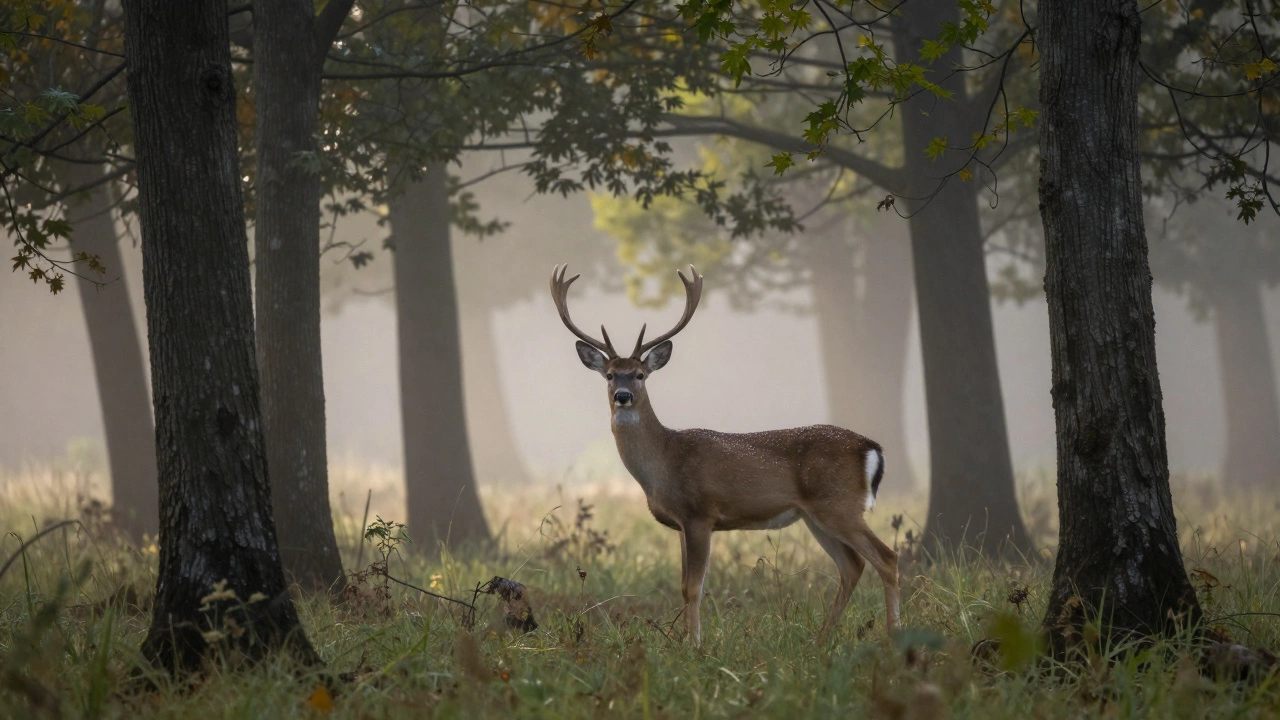
This is where it starts: one living thing. A single white-tailed deer, a maple tree, a bacterium in the soil. Each organism is a complete unit of life, capable of growing, reproducing, responding to its environment, and maintaining internal balance. In ecology, we don’t treat these individuals in isolation. But they’re the foundation. Without them, nothing else exists. When biologists track a tagged wolf across Yellowstone, they’re studying an individual organism. That data feeds into bigger patterns later on.
Population
A population is a group of organisms of the same species living in the same area at the same time. Think of all the gray wolves in Yellowstone, or all the monarch butterflies migrating through Texas each fall. Populations have measurable traits: birth rates, death rates, age structure, and genetic diversity. When a disease wipes out half the population of frogs in a pond, that’s a population-level event. Conservationists monitor populations to spot declines before a species becomes endangered. A population isn’t just a bunch of individuals-it’s a dynamic system with its own rhythms and risks.
Community
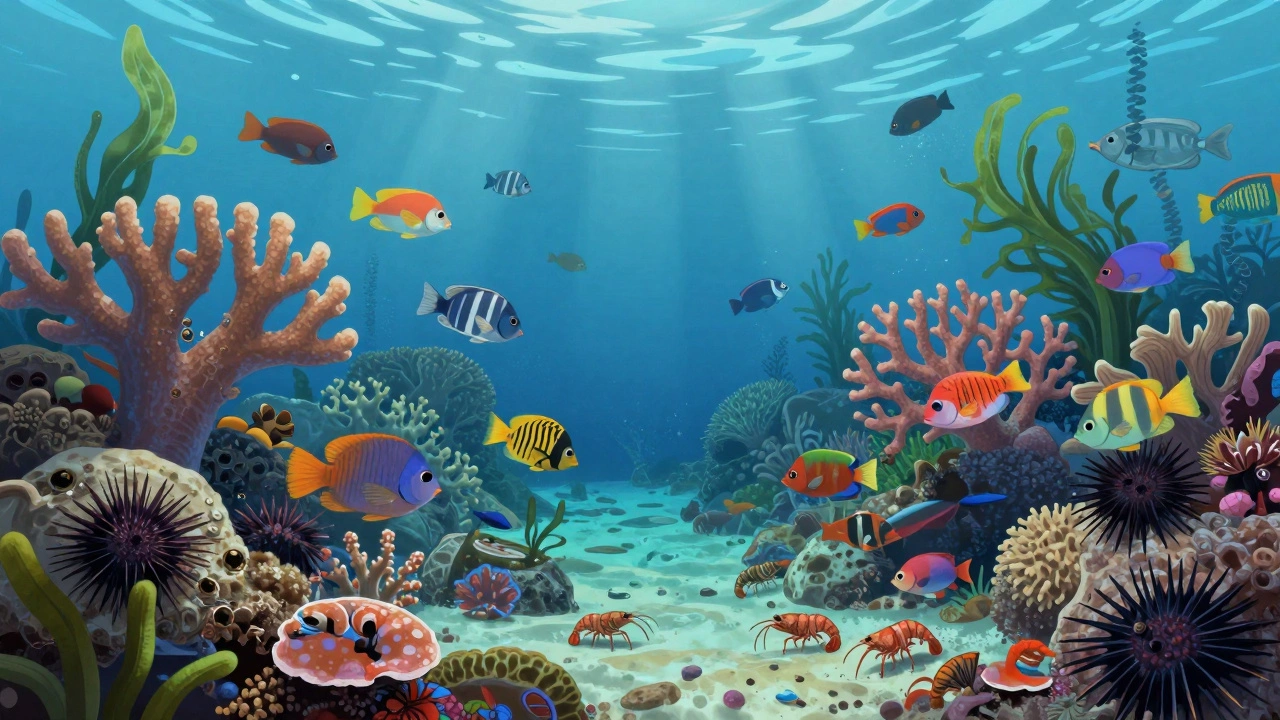
Now we start seeing relationships. A community includes all the populations of different species living and interacting in one place. In a coral reef, that means fish, corals, sea urchins, algae, shrimp, and microbes-all coexisting. These interactions matter: predators hunt prey, plants provide shelter, parasites spread, and pollinators help flowers reproduce. Communities are shaped by competition, symbiosis, and predation. When invasive species like zebra mussels show up in the Great Lakes, they disrupt the entire community by outcompeting native mussels for food and space. That’s why ecologists track communities-not just to count species, but to understand how they hold each other up.
Ecosystem
An ecosystem adds something invisible but essential: the non-living parts. It’s the community plus the physical environment-soil, water, air, sunlight, temperature, and nutrients. A desert ecosystem isn’t just the cacti and lizards; it’s the sand, the rare rainfall, the high daytime heat, and the minerals in the ground. Energy flows through ecosystems: sunlight → plants → herbivores → carnivores → decomposers. Nutrients cycle: dead leaves break down, release nitrogen, get absorbed by roots, and grow new leaves. When a forest burns, the ecosystem resets. The soil, water, and air all change. That’s why ecosystem management considers more than just animals and plants-it includes climate, geology, and chemistry.
Landscape
A landscape is a patchwork of different ecosystems connected by movement and energy. Imagine a river valley with forests on the hills, wetlands along the banks, grasslands in the floodplain, and farmland on the edges. These aren’t separate; animals move between them, water flows through them, seeds drift with the wind. A grizzly bear might eat berries in a forest, fish in a stream, and nap on a rocky outcrop-all within one landscape. Landscape ecology looks at how patterns across space affect ecological processes. A highway cutting through a forest isn’t just a road-it’s a barrier that splits populations, changes animal movement, and alters water drainage. Understanding landscapes helps planners design wildlife corridors and protect migration routes.
Biome
A biome is a huge area with similar climate, plants, and animals. Think tropical rainforest, tundra, desert, or grassland. Biomes are defined by temperature and rainfall patterns, not political borders. The Amazon rainforest, the African savanna, and the Siberian taiga are all biomes. Even though they’re thousands of miles apart, they share key features: tropical rainforests have high rainfall and dense tree cover everywhere, while tundras have permafrost and short growing seasons. Biomes help scientists predict how climate change will affect life globally. If the Arctic warms, the tundra biome could shrink, turning into boreal forest. That’s not just a change in plants-it’s a shift in entire animal communities, carbon storage, and even global weather patterns.
Biosphere
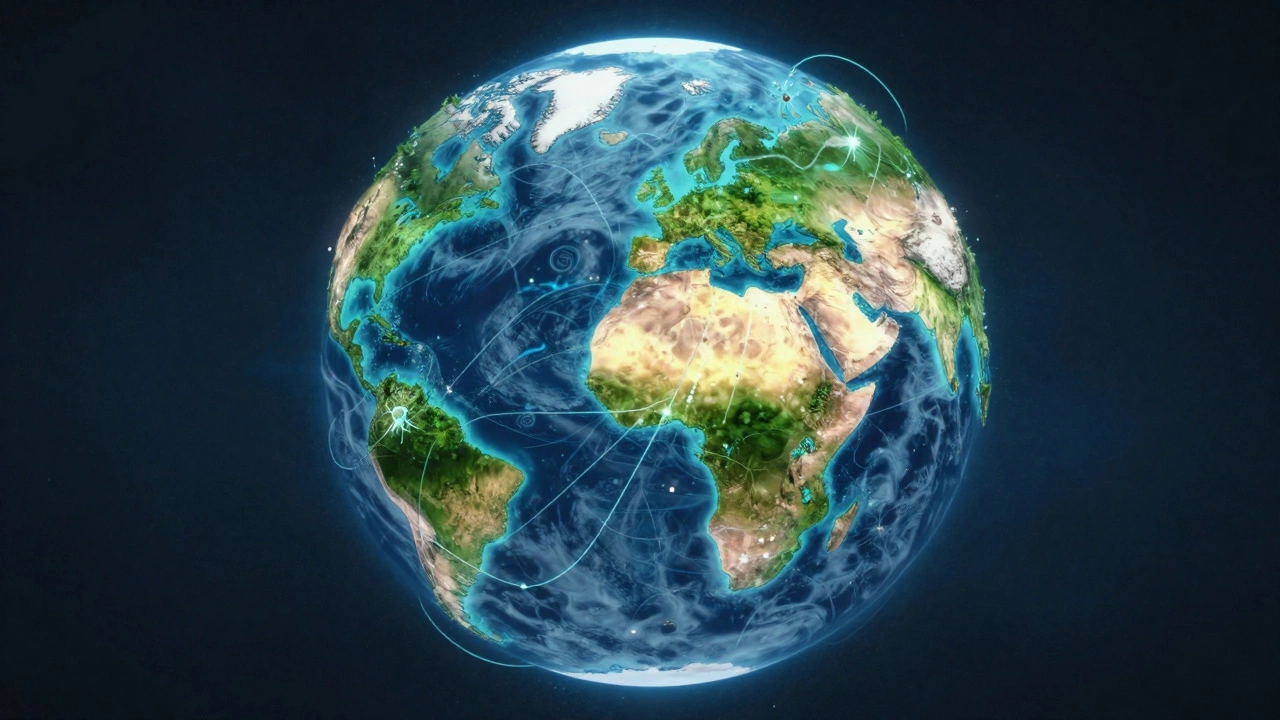
This is the big picture: the biosphere is the sum of all ecosystems on Earth. It includes every living thing, from deep-sea vents to mountain peaks, and the parts of the atmosphere, oceans, and land where life exists. The biosphere is a single, interconnected system. The oxygen you breathe was made by ocean plankton. The carbon in your bones was once in a tree in the Amazon. Pollution in one country can end up in Arctic ice. Climate change, mass extinction, and ocean acidification are all biosphere-level problems. You can’t fix them by protecting just one forest or one species. You have to understand how everything ties together.
Why These Levels Matter
These seven levels aren’t just for exams. They’re the framework for real-world decisions. When a city wants to build a new park, ecologists don’t just plant trees. They consider the individual plants, the insect populations they’ll support, the bird communities that might nest there, the soil and water systems, how the park connects to nearby green spaces, whether it fits the regional biome, and how it contributes to the city’s overall biosphere health. Environmental groups use this same logic. Protecting a wetland isn’t just about frogs-it’s about water filtration, flood control, carbon storage, and migratory bird routes. Each level gives you a different lens. Ignore one, and you miss part of the story.
What Happens When One Level Breaks?
Take the decline of bees. At the individual level, a bee dies from pesticide exposure. At the population level, bee colonies collapse. At the community level, flowers lose pollinators and start to disappear. At the ecosystem level, plant reproduction drops, affecting herbivores and predators. At the landscape level, farms lose crop yields. At the biome level, grassland and forest ecosystems shift. And at the biosphere level, food systems destabilize. You can’t fix bee decline by just buying more hives-you have to address the whole chain. That’s why ecological thinking is so powerful. It forces you to see beyond the obvious.
How to Use This Knowledge
Whether you’re a student, a volunteer, or someone who just cares about nature, understanding these levels helps you make better choices. If you’re planting a garden, think beyond the plants: what insects will it attract? Is it part of a larger green corridor? If you’re supporting a conservation group, ask: are they working at the population level, the ecosystem level, or just raising awareness? Real change happens when actions match the scale of the problem. Protecting a single species? That’s important. But protecting the biome it lives in? That’s lasting.
What is the smallest level of ecological organization?
The smallest level is the individual organism-a single living thing, like one deer, one tree, or one bacterium. Everything else builds on this foundation.
Is a city considered an ecosystem?
Yes, a city is an ecosystem. It includes living things like humans, birds, rats, and plants, plus non-living elements like buildings, roads, water pipes, and air pollution. Urban ecologists study how these parts interact, just like in a forest or wetland.
How do humans fit into these levels?
Humans are part of every level. As individuals, we’re organisms. We live in populations (like a neighborhood). We’re part of communities with other species. We shape ecosystems through agriculture and infrastructure. Our cities are landscapes. We live in the terrestrial biome. And our actions affect the entire biosphere-through climate change, pollution, and resource use.
Why isn’t the cell level included in these seven?
Cell biology is part of life science, but ecology focuses on how organisms interact with each other and their environment. The seven levels start where individual organisms become the unit of study-because that’s where ecological relationships begin. Cells are important, but they’re studied in biology, not ecology.
Can one level exist without another?
No. Each level depends on the ones below it. You can’t have a population without individuals. No community without populations. No ecosystem without a community and environment. The levels are stacked-like building blocks. Break the bottom, and everything above collapses.