
What Are the 4 C's of Volunteering? A Simple Guide to Meaningful Impact
 Mar, 19 2026
Volunteer Impact Assessment
Evaluate your current volunteer experience against the 4 C's framework. This tool helps identify what's working well and where you might need to seek better opportunities.
How often do you feel you're building meaningful relationships during your volunteering?
How well do you feel trained and equipped for your tasks?
How clear is it how your work makes a difference?
How often do you stretch beyond your comfort zone?
Your Volunteer Impact Score
Points (Max 12)
Key Insights
Based on your assessment, you're experiencing strong Connection and Competence in your volunteer role. To maximize impact, consider finding opportunities that offer more Contribution and Challenge.
Remember: All four C's are important for long-term engagement. If you're missing one or two, ask yourself: "What can I change to improve this?"
Ever wondered why some people stick with volunteering for years, while others fade away after one shift? It’s not just about giving time. The real reason some volunteers thrive comes down to four simple, powerful ideas-often called the 4 C's of volunteering. These aren’t fancy terms from a textbook. They’re the quiet engines behind every successful volunteer experience, whether you’re serving meals at a shelter, tutoring kids after school, or planting trees in a city park.
Connection: You’re Not Just Showing Up
Volunteering isn’t a solo mission. It’s about belonging. When you show up to help at a food bank, you’re not just handing out boxes of groceries-you’re making eye contact with someone who’s been waiting all week. You’re learning their name. You’re remembering they like apples, not oranges. That’s connection.
Studies from the University of Edinburgh’s Centre for Social Impact show that volunteers who form even one meaningful relationship during their service are 60% more likely to return. It’s not charity. It’s community. When you feel seen-and see others-you stop thinking of volunteering as something you do. You start thinking of it as something you are.
That’s why some of the most effective volunteer programs focus on small groups. A mentorship pair. A weekly garden team. A reading circle with seniors. These aren’t big events. They’re quiet spaces where connection grows naturally.
Competence: Doing Good Feels Better When You’re Good at It
Have you ever shown up to volunteer, only to feel lost? You’re handed a stack of forms you don’t understand. No one explains what to do. You end up sitting around, awkwardly scrolling on your phone. That’s not volunteering. That’s frustration.
True volunteering gives you skills. Real ones. Teaching a child to read. Managing a donation inventory. Leading a team of 10 people on a cleanup day. These aren’t just tasks. They’re opportunities to grow.
Organizations that train their volunteers-really train them-see retention rates double. Why? Because competence builds confidence. When you know how to do something well, you stop doubting your value. You start owning it. And that’s when volunteering stops being a chore and becomes a source of pride.
Look for programs that offer clear instructions, hands-on practice, and feedback. If a group says, “Just show up,” walk away. Good volunteering doesn’t leave you guessing.

Contribution: Your Time Actually Makes a Difference
Here’s the question most volunteers ask: “Does it even matter?”
You spend three hours sorting clothes at a thrift store. Ten people walk out with coats. One kid gets a winter jacket that fits. You don’t see the rest. You don’t know if they’re warm tonight. That uncertainty kills motivation faster than anything else.
The best volunteer experiences don’t leave you wondering. They show you the impact. A local youth group in Glasgow tracks how many students improve their grades after weekly tutoring. A wildlife group in the Highlands posts before-and-after photos of restored riverbanks. A shelter in Dundee shares stories-anonymous, but real-about people who found housing because of their help.
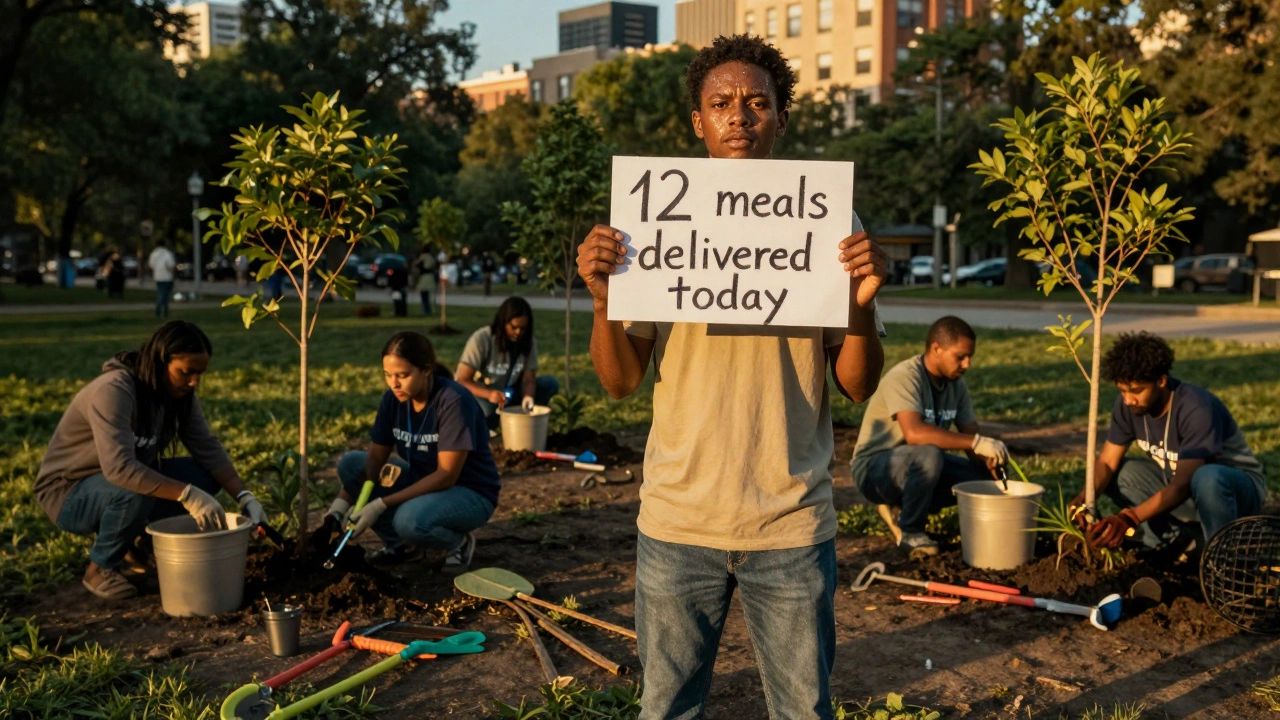
You don’t need to save the world. But you do need to see that your part mattered. That’s why some organizations now include short impact reports after every shift. A quick note: “Thanks to you, 12 meals were delivered to isolated seniors today.” Simple. Clear. Human.
Don’t volunteer where the impact is invisible. Find one where you can feel it.
Challenge: Growth Happens Outside Your Comfort Zone
Volunteering shouldn’t be easy. Not because it’s supposed to be hard-but because real change happens when you stretch.
That’s the fourth C: challenge. It doesn’t mean you have to climb a mountain or run a marathon. It means you’re doing something that pushes you. Maybe you’re shy, but you’re asked to lead a group discussion. Maybe you’ve never worked with people who’ve experienced homelessness, and now you’re learning how to listen without fixing. Maybe you’re organizing a fundraiser and you have to ask strangers for money.
Research from the Charities Aid Foundation shows that volunteers who regularly face new challenges report higher levels of personal satisfaction than those who do the same task month after month. Growth isn’t optional. It’s part of the deal.
Ask yourself: Is this role giving me space to learn? Am I being asked to try something new? If the answer is no, you’re not being challenged-you’re being comforted. And comfort doesn’t change you.
Putting the 4 C's to Work
So how do you find a volunteer opportunity that hits all four?
- Connection? Look for teams, not tasks. Ask: “Will I be working with the same people regularly?”
- Competence? Ask: “What training will I get? Will I be shown how to do this properly?”
- Contribution? Ask: “Can I see or hear how my work helped someone?”
- Challenge? Ask: “What will I learn here that I didn’t know before?”
If a program can’t answer these questions clearly, it might not be the right fit. You’re not asking for perks. You’re asking for respect-for your time, your effort, and your growth.
Some of the best opportunities aren’t the biggest. A tiny community garden in Leith. A weekly phone call service for lonely elders in Musselburgh. A peer-led mental health group in Livingston. These places don’t have flashy websites. But they have the 4 C's built into their bones.
What Happens When You Get It Right?
When all four C's are present, something shifts. You don’t just volunteer. You become part of something bigger. You start noticing other people’s needs. You stop seeing problems as distant. You start seeing them as yours to help with.
That’s the quiet magic of volunteering done right. It doesn’t fix the world. But it changes you. And when you change, you change the people around you too.
So don’t just sign up. Ask the right questions. Find the right fit. Let the 4 C's guide you-not the brochure.
Are the 4 C's of volunteering a formal framework or just a helpful model?
The 4 C's aren’t an official government or nonprofit standard. They’re a practical model developed by volunteer coordinators and researchers over the past 15 years, especially in the UK and North America. Organizations like Volunteer Scotland and the National Council for Voluntary Organisations (NCVO) use them to train staff and design programs. They’re not a checklist you have to follow perfectly-they’re a lens. Use them to ask better questions and find better opportunities.
Can you have one C without the others?
Yes-but it won’t last. You can show up and feel connected (like at a one-off food drive), but without competence or challenge, you’ll burn out. You can be good at a task (like data entry) but feel invisible if you don’t see your contribution. And you can be challenged (like leading a campaign) but feel isolated if no one connects with you. The magic happens when all four are present. One alone might get you through a shift. All four get you through a lifetime of service.
What if I don’t like the people I’m volunteering with?
It happens. Not every team is a good fit. The 4 C's can help you decide what to do next. If you feel competent and see your contribution, but the connection is weak, try switching teams within the same organization. If you’re challenged but feel disconnected, ask if you can work independently or with a different group. Volunteering isn’t about staying loyal to a bad situation. It’s about finding the right space for your growth. Don’t stay just because you started.
Do the 4 C's apply to corporate volunteering too?
Absolutely. Many companies now measure volunteer success not by hours logged, but by whether employees report feeling more connected, skilled, or purposeful afterward. Companies like BT, Scottish Water, and Edinburgh-based startups use the 4 C's to design their volunteer programs. If a corporate day out feels like a photo op with no real impact, it’s missing at least two of the C's. Look for programs that let you choose your role, get trained, and meet real people-not just hand out branded pens.
Is there a fifth C?
Some people talk about “Care” or “Consistency,” but those are usually just parts of the original four. Care is part of connection. Consistency helps with competence and contribution. The 4 C's were designed to be simple, not exhaustive. If you’re looking for a fifth, ask: “What’s missing for me?” Then see which of the four it ties into. More often than not, you’re just asking for a stronger version of one you already have.