
The Three Main Groups of Environmental Problems: Air, Water, and Land
 Jun, 18 2026
Environmental Impact Calculator
Select the options that best describe your daily habits to see how they impact the three main groups of environmental problems.
Car / Taxi
High EmissionsPublic Transport
Moderate EmissionsWalk / Bike
Zero EmissionsFrequent Single-use
High Pollution RiskOccasional
Moderate ImpactReusable Only
Minimal ImpactMass Produced
Industrial FarmingMixed Sources
Standard ShoppingLocal / Organic
Soil FriendlyYour Environmental Profile
Based on your selections, here is your estimated relative impact score (out of 45 per category) across the three main groups.
...
...
...
Understanding the Connection
Remember, these groups are interconnected. High emissions in the air can lead to acid rain affecting water and soil. Reducing plastic helps water systems but also prevents land contamination. Small changes in one area often benefit all three.
You look out the window in Edinburgh, see the grey sky, and think about the rain. It feels normal. But that rain might be carrying more than just water. The environment isn't a single thing you can fix with one action. It is a complex system made of three main parts: the air we breathe, the water we drink, and the land we live on. When people talk about "environmental problems," they are usually talking about damage to one or more of these three groups.
Understanding these three categories helps you see where the real issues lie. It stops the problem from feeling like a vague cloud of doom. Instead, it becomes a set of specific challenges with specific causes and solutions. Let’s break down the three major groups of environmental problems: atmospheric (air), hydrospheric (water), and lithospheric (land/soil). We will look at what they are, why they matter, and how they connect to your daily life.
Group 1: Atmospheric Problems (Air Quality)
The first group involves the air around us. This is often called Air Pollution, which refers to the contamination of the atmosphere by harmful substances. You don’t always smell it or see it, but it affects everyone. In cities like London or Beijing, you can see smog hanging over the skyline. That is particulate matter-tiny solid or liquid particles suspended in the air.
The biggest culprits here are fossil fuels. When cars burn gasoline or power plants burn coal, they release carbon dioxide (CO2), nitrogen oxides (NOx), and sulfur dioxide (SO2). These gases trap heat in the atmosphere, driving climate change. But beyond global warming, these pollutants cause immediate health issues. Asthma rates have risen sharply in urban areas over the last decade because of poor air quality.
- Particulate Matter (PM2.5): Tiny particles that get deep into your lungs and even into your bloodstream. They come from vehicle exhaust, industrial processes, and wood burning.
- Ground-level Ozone: Created when sunlight reacts with pollutants from cars and factories. It irritates the respiratory system and damages crops.
- Methane Emissions: A potent greenhouse gas released from livestock farming, landfills, and natural gas extraction.
If you live in a city, you are breathing this every day. The World Health Organization estimates that 99% of the global population breathes air that exceeds their safe limits. This makes air quality the most immediate environmental threat to human health right now.
Group 2: Hydrospheric Problems (Water Contamination)
The second group covers our water systems. This includes oceans, rivers, lakes, and groundwater. Water Pollution occurs when harmful substances enter water bodies, making them unsafe for use. Unlike air, which moves quickly, water holds onto contaminants. Once a river is polluted, it takes years to clean up.
There are two main types of water pollution: point source and non-point source. Point source pollution comes from a single, identifiable place, like a factory pipe dumping waste directly into a river. Non-point source pollution is harder to track. It comes from runoff. Think about rain washing over a farm field. It picks up fertilizers and pesticides and carries them into nearby streams. This causes algal blooms, which suck the oxygen out of the water, killing fish and creating "dead zones" where nothing can survive.
Plastic pollution is another huge part of this group. Every year, millions of tons of plastic end up in the ocean. It breaks down into microplastics, which are eaten by small fish, then bigger fish, and eventually end up on our plates. Microplastics have been found in tap water, bottled water, and even in human blood. This shows how interconnected our water systems are with our own bodies.
| Type | Source Example | Primary Impact |
|---|---|---|
| Point Source | Industrial discharge pipes | High concentration of toxins in one area |
| Non-Point Source | Agricultural runoff | Widespread nutrient overload and algal blooms |
| Marine Debris | Littering and improper waste disposal | Physical harm to wildlife and microplastic ingestion |
In the UK, sewage discharge into rivers and coastal waters has become a major political issue. Wastewater companies release untreated sewage during heavy rains, contaminating beaches and harming marine life. This highlights how infrastructure failures directly impact the hydrosphere.

Group 3: Lithospheric Problems (Land and Soil Degradation)
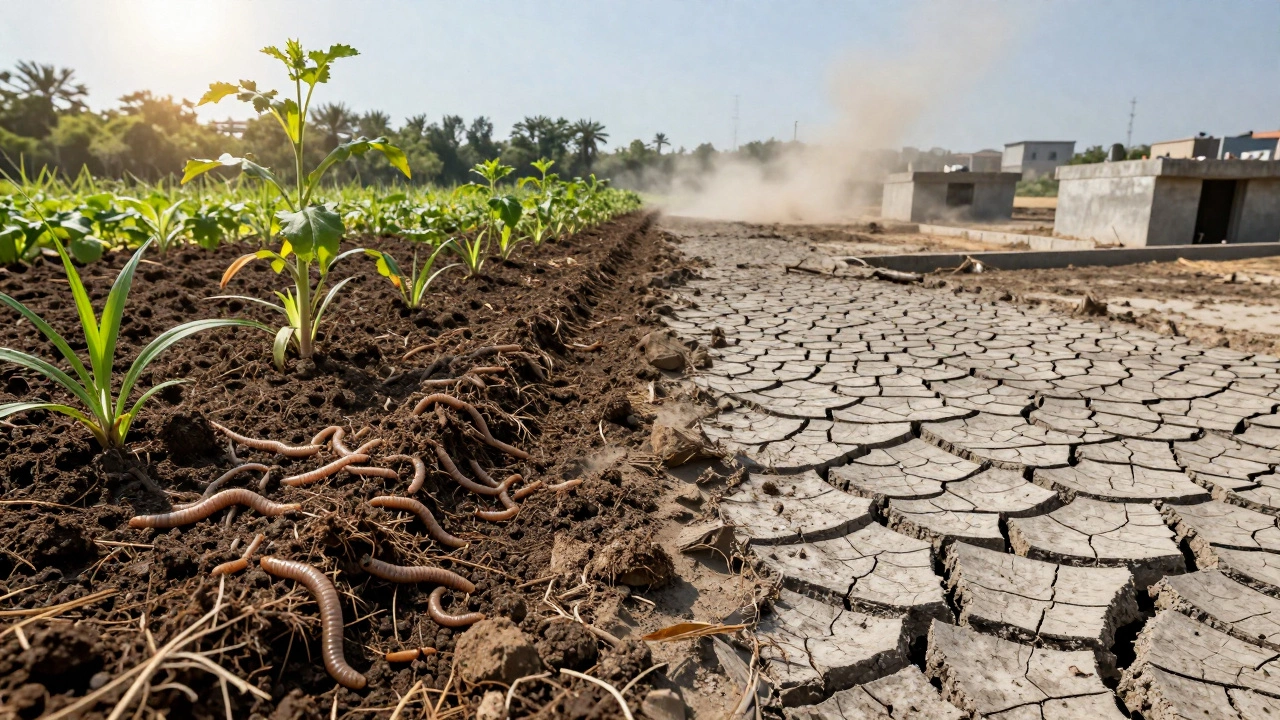
The third group deals with the ground beneath our feet. This is often overlooked because we don’t see soil erosion happening in real-time. However, Land Degradation refers to the reduction in the land's productivity and ecological resilience due to human activities. Healthy soil is not just dirt; it is a living ecosystem full of bacteria, fungi, and insects that help plants grow.
Deforestation is a primary driver of land degradation. Trees hold soil in place with their roots. When forests are cleared for agriculture or logging, the soil washes away during rainstorms. This leads to desertification, where fertile land turns into barren desert. In sub-Saharan Africa and parts of Asia, this threatens food security for millions of people.
Soil contamination is another serious issue. Heavy metals from mining, chemicals from industrial sites, and excessive pesticide use poison the soil. Once contaminated, land can take decades to recover. If you grow vegetables in poisoned soil, those toxins move into the food chain. This connects back to our health, just like air and water pollution do.
Urban sprawl also contributes to this group. As cities expand, they pave over permeable surfaces. This prevents rainwater from soaking into the ground, leading to flooding and reducing the recharge rate of aquifers (underground water reserves). Concrete jungles create heat islands, making cities hotter and increasing energy demand for cooling.
How These Three Groups Connect
You might think these three groups are separate boxes. They are not. They are deeply intertwined. An action in one area almost always affects the others. This is why solving environmental problems requires a holistic approach.
Consider burning fossil fuels. It releases CO2 into the air (Atmospheric problem). This CO2 dissolves in the ocean, making the water more acidic (Hydrospheric problem). Acidic water harms coral reefs and shellfish. Meanwhile, the mining required to extract coal destroys landscapes and pollutes local soil (Lithospheric problem). One activity triggers a chain reaction across all three domains.
Another example is agriculture. Overusing fertilizers pollutes groundwater (Water). The machinery used in farming emits exhaust fumes (Air). And intensive plowing depletes soil nutrients (Land). To fix one, you often need to address the root causes in the other two.
What Can You Do?
Knowing the three groups helps you target your actions. You don’t have to solve everything at once. Start small.
- For Air: Reduce car usage. Walk, bike, or use public transport when possible. Support policies that promote renewable energy like wind and solar power.
- For Water: Avoid single-use plastics. Use eco-friendly cleaning products that don’t contain harsh chemicals. Conserve water at home by fixing leaks and taking shorter showers.
- For Land: Buy organic produce to support healthier farming practices. Compost your food waste instead of throwing it in the trash. Plant native trees and shrubs in your garden to prevent soil erosion.
These steps seem minor individually, but they add up. When millions of people make small changes, it creates pressure on industries and governments to adopt larger-scale solutions. The goal is not perfection; it is progress.
Looking Ahead
By 2030, many countries aim to significantly reduce emissions and protect natural habitats. Success depends on understanding these three pillars of environmental health. If we ignore the air, we risk respiratory diseases and extreme weather. If we ignore the water, we face shortages and toxic ecosystems. If we ignore the land, we lose our ability to grow food.
The next time you hear about an environmental crisis, ask yourself: which group does it belong to? Is it air, water, or land? Often, the answer is all three. Recognizing this connection is the first step toward effective action. We share this planet, and its health is directly tied to ours. Protecting the environment isn’t just about saving polar bears; it’s about ensuring we have clean air to breathe, clean water to drink, and fertile soil to feed ourselves for generations to come.
What are the three main groups of environmental problems?
The three main groups are atmospheric problems (air pollution), hydrospheric problems (water pollution), and lithospheric problems (land and soil degradation). These categories cover the primary mediums through which human activity impacts the natural world.
How does air pollution affect water quality?
Air pollution affects water through acid rain and deposition. Pollutants like sulfur dioxide and nitrogen oxides mix with water vapor in the atmosphere and fall as rain, snow, or fog. This acidic precipitation lowers the pH of lakes and streams, harming aquatic life. Additionally, carbon dioxide dissolves in oceans, causing ocean acidification.
What is the biggest cause of land degradation?
The biggest causes of land degradation are deforestation, unsustainable agricultural practices, and urbanization. Removing trees exposes soil to erosion, while heavy tilling and chemical use deplete soil nutrients. Urban sprawl paves over land, preventing water absorption and destroying habitats.
Can individual actions really make a difference to these large-scale problems?
Yes, individual actions collectively drive market and policy changes. Reducing personal carbon footprints, conserving water, and supporting sustainable brands signal demand for greener options. While systemic change is necessary, individual choices create the cultural shift needed to push for broader regulations and innovations.
What is the connection between climate change and these three groups?
Climate change is driven primarily by atmospheric pollution (greenhouse gases). It exacerbates problems in all three groups: higher temperatures increase air pollution intensity, changing rainfall patterns affect water availability and quality, and extreme weather events accelerate soil erosion and land degradation.