
How to Prove Your Volunteer Work: Documentation and Verification Guide
 Nov, 9 2026
Volunteer Proof Strength Checker
Select the documents you currently have to see how strong your proof of volunteering is for schools, jobs, or legal requirements.
No documents selected
Check boxes on the left to evaluate your evidence.
You’ve spent months giving your time. Maybe you served food at a local shelter, tutored kids on weekends, or helped clean up a riverbank. But when you need to show that work actually happened-whether for a college application, a job interview, or a court requirement-you’re stuck with nothing but a memory and maybe a text message from the coordinator. That’s not enough. Proving you are a volunteer requires specific documentation that third parties can verify.
The problem isn’t usually that you didn’t do the work. It’s that the organization you helped doesn’t have a standardized way to prove it to outsiders. Or worse, they lost the records. This guide breaks down exactly what counts as proof, how to get it before you leave an organization, and what to do if you’re already gone. We’ll cover the three main types of verification: official certificates, reference letters, and digital logs. By the end, you’ll know exactly which paper trail to build so your hours count when it matters most.
What Counts as Official Proof of Volunteering?
Not all evidence is created equal. A selfie at the event proves you were there, but it doesn’t prove you worked four hours. To be accepted by schools, employers, or legal bodies, your proof needs to meet specific criteria. Generally, valid documentation must include five key elements: your name, the organization’s name, the dates of service, the total number of hours, and a signature or stamp from an authorized representative.
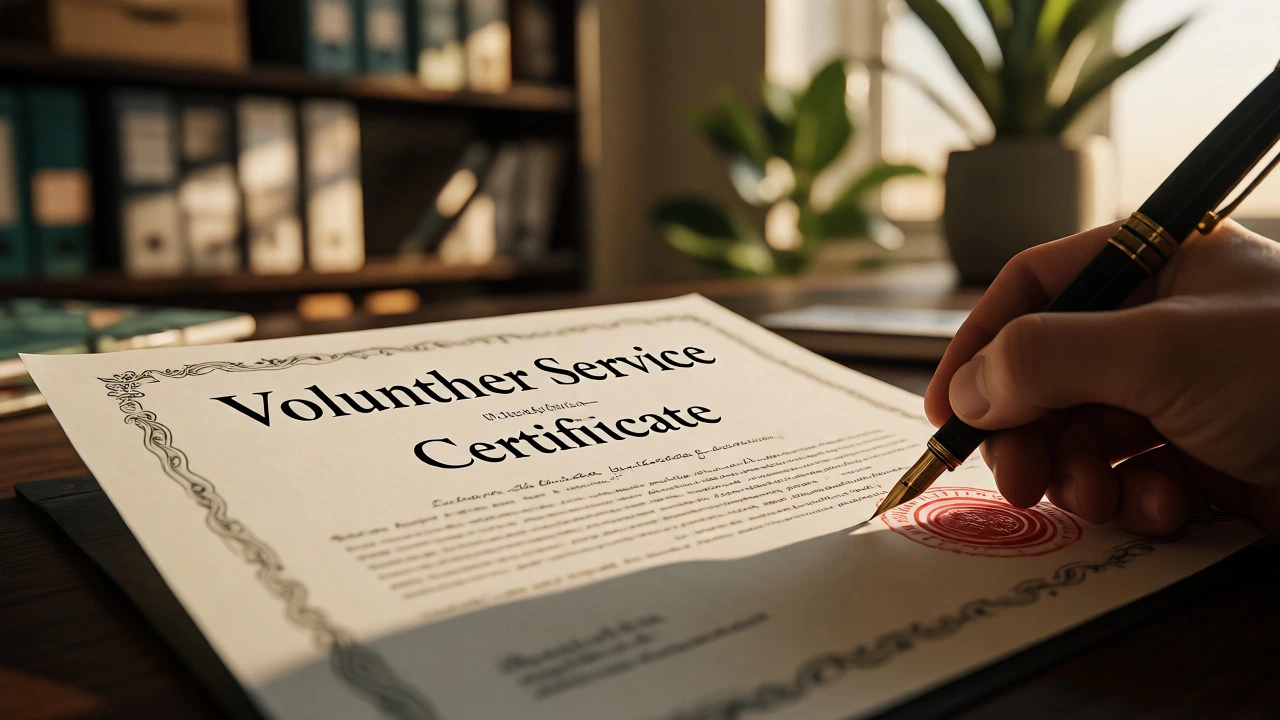
Think of it like a receipt. If you buy something online, you need the invoice to return it. For volunteering, the "invoice" is a document that confirms a transaction of time occurred. The gold standard here is a Volunteer Service Certificate. This is a formal document issued by the non-profit or charity stating that you completed a certain amount of service. However, many smaller charities don’t issue these automatically. They might just say "thanks" in an email. That email can still be proof, but it’s weaker than a signed certificate.
Why does this distinction matter? Because auditors and admissions officers look for consistency. If you claim 100 hours of service, they want to see a pattern. A single certificate is good; a logbook backed by a supervisor’s signature is better. Always ask yourself: "If I disappeared tomorrow, could someone else verify my hours using only this piece of paper?" If the answer is no, you need more detail.
The Three Pillars of Volunteer Verification
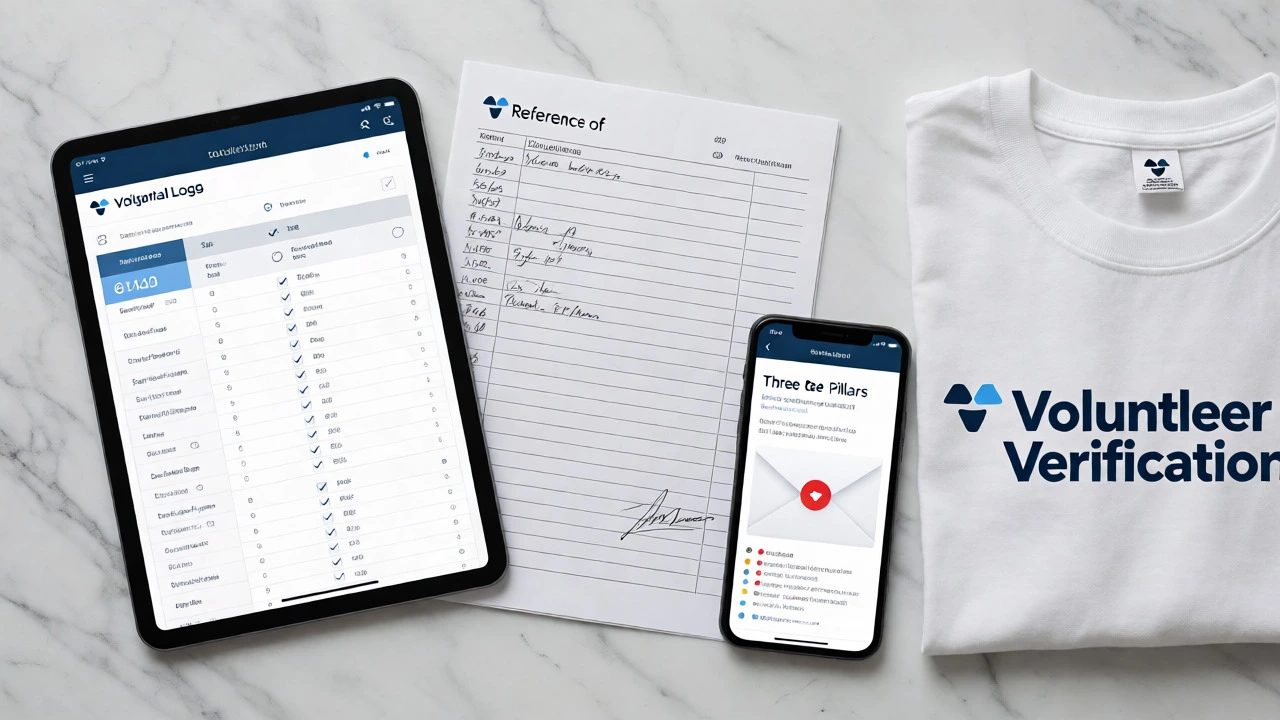
When you need to prove your status, you will likely rely on one of three documents. Each serves a different purpose depending on who is asking.
| Document Type | Best For | Strengths | Weaknesses |
|---|---|---|---|
| Service Certificate | School applications, court mandates, immigration files | Formal, standardized, includes exact hours | Hard to get retroactively; some orgs refuse to issue them |
| Reference Letter | Job interviews, university essays, scholarships | Personalized, highlights skills and character | Subjective; may lack precise hour counts |
| Timesheet/Log | Internal tracking, grant reporting, personal records | Detailed, shows frequency and consistency | Requires supervisor sign-off to be credible externally |
A Reference Letter is distinct from a certificate because it focuses on quality, not just quantity. While a certificate says "You worked 50 hours," a reference letter says "You showed up every Tuesday for six months and mentored two students." Employers often prefer this because it provides context. However, if a government agency asks for proof of community service, they rarely care about your mentoring style-they care about the hours. In that case, the certificate wins.
Your own timesheet is useful, but it’s self-reported. Unless it’s co-signed by a manager, it’s essentially a diary entry. Treat it as a draft. Use it to remind your supervisor of what you did, then ask them to convert that data into one of the first two formats.
How to Request Proof Before You Leave
The biggest mistake volunteers make is waiting until they need proof to ask for it. By then, the staff member who supervised you has quit, the office has moved, or the project is over. The best time to secure your documentation is while you are still active.
Here is a simple protocol to follow during your final week of service:
- Compile your raw data. Don’t just guess. Pull out your calendar or app logs. Calculate the exact start and end dates. Total the hours. Be precise-if you missed a day due to rain, note it.
- Draft the language. Many supervisors are busy and hate administrative tasks. Make it easy for them. Write a draft email that includes your name, the role title (e.g., "Food Bank Assistant"), the date range, and the total hours. Ask them to copy-paste this onto letterhead.
- Ask for a physical signature. Digital PDFs are fine, but a wet ink signature on original letterhead carries more weight for legal or academic purposes. If they can’t provide paper, ensure the digital version has a verifiable sender domain (not a Gmail address).
- Get contact details for future verification. If you ever move cities or apply for jobs abroad, the new employer might call the old charity. Get the direct phone number and email of the person signing the document, plus a backup contact like the volunteer coordinator.
If the organization uses a platform like DoSomething.org or VolunteerMatch, your hours might already be logged digitally. Check their user dashboard. Often, you can download a verified transcript directly from these platforms without needing to beg a human for a letter.
Proving Past Volunteer Work When Records Are Lost
So, you volunteered three years ago. You never got a certificate. The charity merged with another one, or the website is dead. What now? You can’t just lie, but you can reconstruct the narrative.
Start with secondary evidence. Do you have emails thanking you? Photos of you wearing a branded t-shirt? Social media posts tagging the organization? These aren’t perfect proofs, but they establish a timeline. Gather everything into a folder labeled "Evidence of Service."
Next, try to find a surviving witness. Who else was there? Did you work with a peer who also needs proof? Sometimes, two volunteers corroborating each other’s presence is stronger than a single unsigned note. Contact past colleagues on LinkedIn. Ask if they remember your involvement. If they do, ask if they would be willing to write a brief statement confirming you were part of the team.
If the organization still exists, reach out to their current administration. Be polite but persistent. Explain that you are updating your professional portfolio and need to verify past contributions. Provide them with any clues you have: your full name, approximate dates, and the specific program you joined (e.g., "The Summer River Cleanup Initiative, June-August 2023"). Large organizations like the Red Cross or Habitat for Humanity often keep centralized databases. Small ones might not, but they might still have archived emails.
Special Cases: Court Orders and Immigration
Not all proof is for resumes. Sometimes, you need to prove volunteering to a judge or an immigration officer. These contexts have stricter rules.
For court-mandated community service, the organization usually provides a specific form that the judge expects. Do not substitute a generic letter unless the judge allows it. Ensure the form includes the exact number of hours ordered versus the hours completed. Any discrepancy can lead to penalties.
In immigration cases, such as applying for a visa that requires community engagement, the focus is on consistency and impact. Immigration officers look for long-term commitment rather than sporadic efforts. A letter detailing a year-long weekly commitment is far more persuasive than a certificate for a one-day event. Additionally, translations are required if the original document isn’t in English. Use a certified translator, not a friend.
Always check the specific requirements of the body asking for proof. The Home Office in the UK, for example, has different standards than a US university. Assuming they are the same is a common error that leads to rejected applications.

Common Pitfalls to Avoid
Even with good intentions, volunteers often sabotage their own proof. Here are the traps to watch out for.
- Vague Job Titles: "Helper" means nothing. Use specific titles like "Event Coordinator," "Tutor," or "Warehouse Sorter." Specificity implies responsibility.
- Missing Dates: "Summer 2024" is too broad. Give exact start and end dates. Auditors hate ambiguity.
- Unverifiable Contacts: Listing a generic [email protected] email is risky. If that inbox is unmonitored, your verification fails. Always list a named person.
- Paid vs. Unpaid Confusion: If you received a stipend, clarify if it was reimbursement for expenses or actual pay. Some definitions of "volunteer" exclude paid roles. If you were reimbursed for travel, state that clearly-it’s still volunteering, but transparency builds trust.
Another pitfall is assuming digital badges count everywhere. Platforms like Coursera or specialized volunteer apps issue digital badges. While great for social media, many traditional institutions do not recognize them as official proof. Always back up digital credentials with a traditional document.
Building a Long-Term Verification Strategy
Don’t treat proof as an afterthought. Build a system from day one. Create a dedicated folder in your cloud storage called "Volunteer Records." Every time you complete a stint, upload the certificate, the reference letter, and a screenshot of your hours log immediately.
Maintain a master spreadsheet. Columns should include: Organization Name, Role, Start Date, End Date, Total Hours, Supervisor Name, Supervisor Email, and Link to Document. This spreadsheet becomes your resume source of truth. When you apply for jobs, you won’t have to scramble to remember if you did 40 or 45 hours. You’ll just look it up.
Finally, nurture relationships. The people who supervise you are your witnesses. Send a thank-you note when you finish. Stay in touch occasionally. If you need a favor later-like verifying your hours for a job you applied for last week-they’ll be happy to help because you were professional and appreciative. Volunteering is a network. Protecting your reputation ensures your proof remains accessible.
Can I use a photo of myself volunteering as proof?
Generally, no. A photo proves presence, not duration or role. It lacks the specific data points (hours, dates, supervisor signature) required by most institutions. Use photos only as supplementary evidence alongside a written document.
What if the charity refuses to give me a certificate?
Some small charities lack the resources to issue formal certificates. In this case, request a signed letter on letterhead instead. If they refuse both, ask for an official email from their domain address that explicitly states your hours and dates. Forward this email to yourself and print it out.
Do online volunteering hours count?
Yes, provided the organization is legitimate and can verify your contribution. Platforms like UN Volunteers or Catchafire provide verified transcripts. For informal remote help, ensure you have written confirmation from the beneficiary or organizer detailing the time invested.
How far back can I claim volunteer hours?
There is no universal limit, but relevance decreases over time. Most universities and employers prioritize experience from the last 3-5 years. For legal or immigration purposes, older hours may still count if they demonstrate consistent civic engagement, but you must be able to prove them.
Is a LinkedIn recommendation enough proof?
No. LinkedIn recommendations are public and easily fabricated. They serve as social proof, not documentary evidence. Always keep private, direct communications or official documents from the organization as your primary proof.