
Do Truckers Sleep With Engines Running? The Reality of Diesel Idling and Homeless Shelters
 Aug, 3 2026
Truck Idling vs. APU Cost Calculator
Configuration
Analysis & Savings
Monthly Idling Cost
$0.00
Monthly APU Cost
$0.00
Time required to recover the upfront investment through fuel savings.
By switching to an APU, you save approximately 0 gallons of diesel per month, significantly reducing NOx and particulate emissions near rest stops and shelters.
The Sound of Survival: Why Truckers Idle
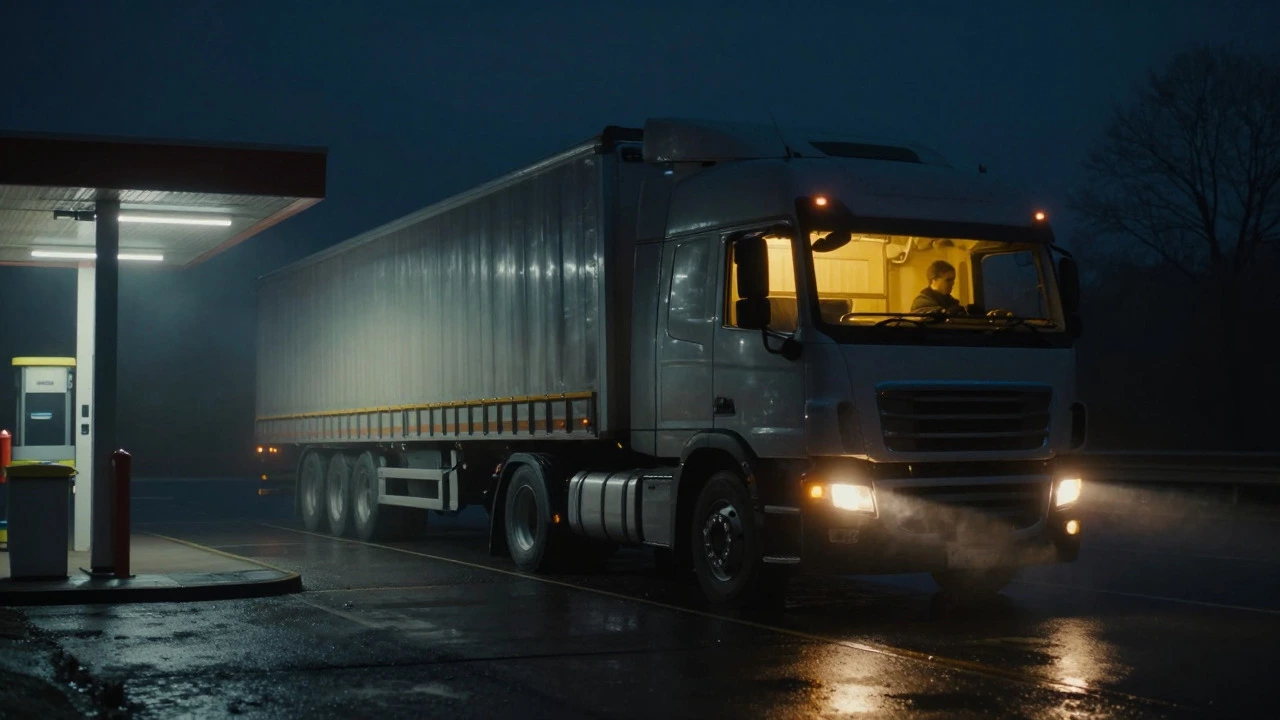
If you’ve ever driven past a rest stop late at night, you know the sound. It’s a low, rhythmic thrumming that never quite fades into silence. You might wonder why those massive semi-trucks are still running when the drivers are supposed to be asleep. Are they just wasteful? Or is there a deeper reason behind that constant hum?
The short answer is yes, many truckers do leave their engines running while they sleep. But it’s not because they’re lazy or indifferent to fuel costs. For most long-haul drivers, idling is a matter of basic survival and comfort. In winter, turning off the engine means freezing inside a cab that can drop below zero degrees in hours. In summer, it means baking in a metal box with no air conditioning. The engine provides heat for the cabin and power for refrigerators that keep food from spoiling.
However, this practice has created an unexpected ripple effect in our communities. As trucking routes shift and regulations tighten, some truckers find themselves without safe places to park. This overlap between commercial transportation needs and community resources has led to complex interactions between truckers and homeless shelters, which are often the only remaining option for temporary rest.
The Economics of Idling vs. Auxiliary Power
To understand why idling persists, we have to look at the economics. A typical semi-truck burns about one gallon of diesel per hour while idling. At current prices, that’s roughly $4 to $5 an hour. Over an eight-hour sleep cycle, that’s $32 to $40 spent just to stay warm or cool. For a driver making $1.50 to $2.50 per mile, every dollar counts.
You might ask, "Why don’t they just buy auxiliary power units (APUs)?" APUs are small generators that plug into the truck’s electrical system, providing climate control without running the main engine. They save fuel and reduce emissions. But here’s the catch: a good APU costs between $3,000 and $6,000. Many drivers lease their trucks or drive for companies that haven’t upgraded their fleets yet. Until the industry standard shifts, idling remains the cheapest immediate solution.
This economic reality creates a tension. Drivers need to conserve money, but idling pollutes local air quality and disturbs nearby residents. Cities and states have responded with anti-idling laws, limiting how long a truck can run its engine while parked. These laws force drivers to seek out designated parking areas, which are notoriously scarce.
| Method | Upfront Cost | Hourly Operating Cost | Environmental Impact |
|---|---|---|---|
| Engine Idling | $0 | $4 - $5 | High (NOx, Particulates) |
| Auxiliary Power Unit (APU) | $3,000 - $6,000 | $0.50 - $1.00 | Low |
| Sleeper Bunk Heater (Electric) | $500 - $1,500 | $0.20 - $0.50 | Depends on Grid Source |
| Insulation & Blankets | $100 - $300 | $0 | None |
When Truck Stops Fill Up: The Shelter Connection
Here is where the story gets complicated. There simply aren’t enough legal parking spots for America’s 3.5 million truckers. During peak seasons, truckers wait days for a spot at major hubs like Chicago or Los Angeles. When official lots are full, drivers search for alternatives. Some pull into Walmart parking lots (though policies vary by state). Others look for quiet industrial parks. And increasingly, some end up near community centers or shelters.
This proximity has sparked confusion. Do truckers use homeless shelters? Generally, no. Most traditional homeless shelters are designed for foot traffic, with strict curfews, gender-separated dormitories, and limited storage for personal belongings. A semi-truck doesn’t fit in a shelter’s parking lot, nor does it fit the demographic profile of most shelter intake systems.
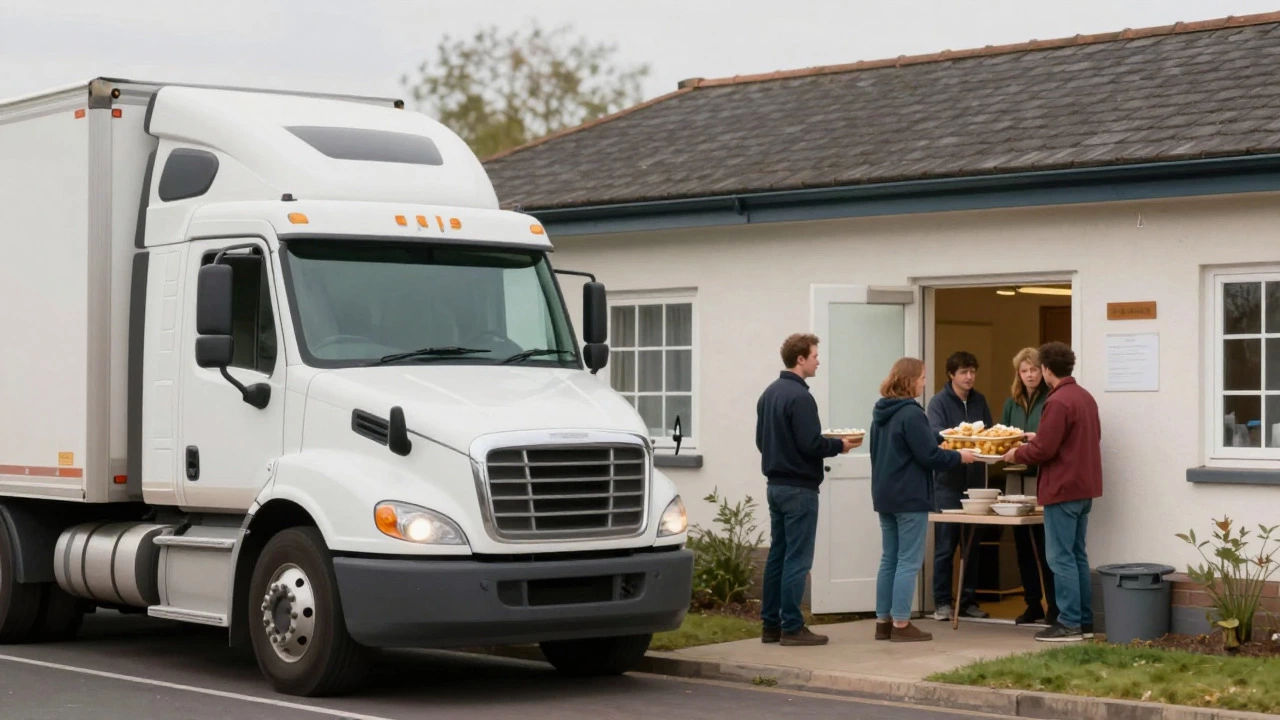
However, the lines blur in times of crisis. During extreme weather events or supply chain disruptions, truckers stranded for days may seek humanitarian aid. Some faith-based organizations and community groups offer "warm-up shelters" or meal services that welcome anyone in need, regardless of housing status. In these cases, a trucker might walk into a shelter facility for a hot meal or a shower, even if they sleep in their cab outside.
Conversely, some individuals who appear to be truckers-wearing uniforms and driving large vehicles-are actually experiencing homelessness. They live in their trucks because they cannot afford rent. For them, the line between "on the road" and "homeless" is thin. They rely on the same networks as other unhoused individuals: food banks, outreach workers, and emergency shelters.
The Environmental and Health Toll
Leaving engines running isn’t just a financial or logistical issue; it’s a public health concern. Diesel exhaust contains nitrogen oxides (NOx) and particulate matter (PM2.5), both linked to respiratory problems, heart disease, and cancer. Communities located near truck stops or highways often suffer from higher rates of asthma, particularly among children.
For the people living in or near homeless shelters, this exposure is compounded. Many shelters are located in urban areas with high traffic density. If a shelter is situated near a corridor used by idling trucks, residents breathe in concentrated pollutants. This creates a double burden: the stress of housing instability combined with poor air quality.
Advocacy groups are pushing for change. Organizations like the American Lung Association and various environmental justice coalitions are lobbying for stricter idling limits and incentives for electric trucks. Electric semi-trucks, which are becoming more common for regional hauls, produce zero tailpipe emissions. However, long-haul electric trucks still face battery range limitations, meaning diesel will dominate the roads for years to come.
Humanizing the Driver: More Than Just a Machine
It’s easy to judge from the outside. You see a giant machine belching smoke and think, "They could just turn it off." But consider the human inside. Truckers spend weeks away from home. Their cab is their bedroom, kitchen, and office. If it’s too cold or too hot, they can’t sleep. Without sleep, they’re dangerous on the road. Fatigued driving causes thousands of accidents annually.
Many drivers also deal with chronic pain, back issues, and digestive problems exacerbated by long hours sitting. A warm cab allows them to stretch out slightly, heat up a meal, and decompress. For some, the noise of the engine is white noise that helps them sleep. It’s a coping mechanism in a high-stress job.
Understanding this context changes how we view the interaction between truckers and community resources. When a trucker pulls into a lot near a shelter, they’re not necessarily looking for charity. They’re looking for safety. They want to park somewhere they won’t be ticketed, towed, or harassed. If a shelter’s lot is open and secure, it becomes a de facto refuge.
Community Solutions: Bridging the Gap
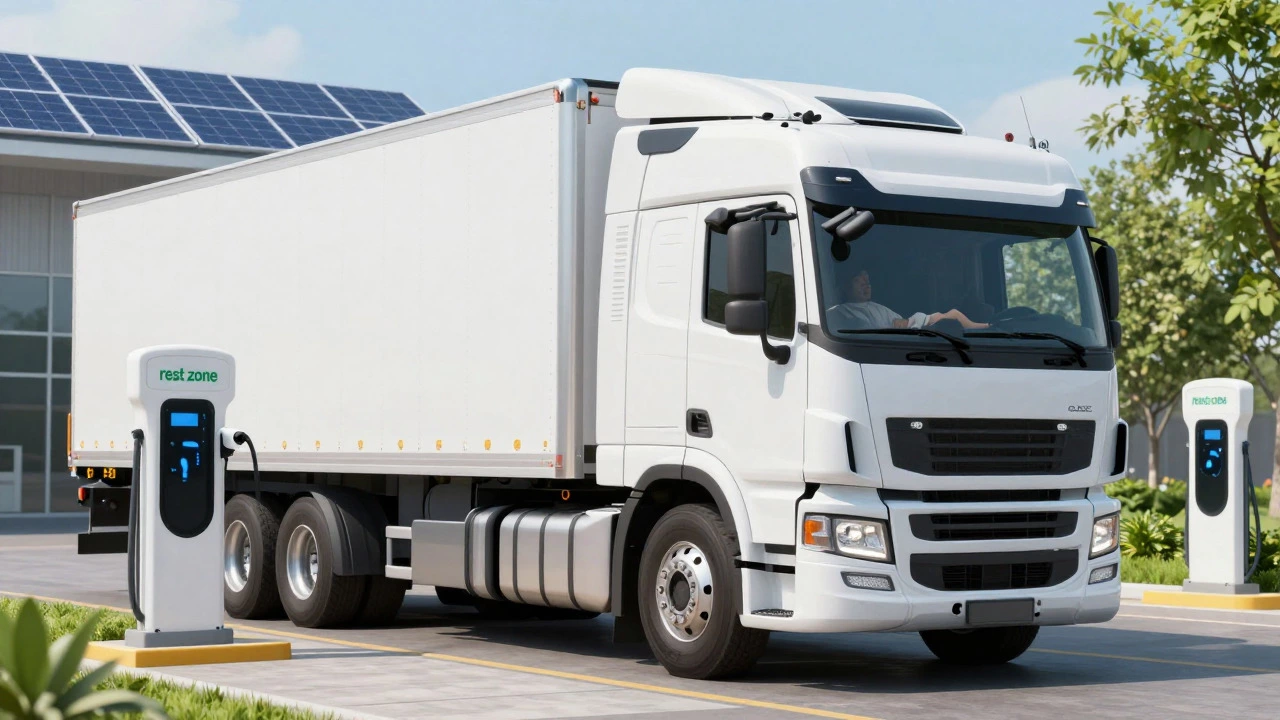
So, what can be done? Cities and communities are experimenting with creative solutions. One approach is creating designated "rest zones" with access to electricity. These zones allow trucks to plug in and run their HVAC systems without idling the diesel engine. Some municipalities partner with local businesses to provide free Wi-Fi and showers in exchange for reduced idling.
Another strategy involves better coordination between transportation authorities and social services. Outreach workers who serve the homeless population often encounter truckers living in their vehicles. By recognizing these individuals as part of the broader housing crisis, shelters can adapt their services. For example, offering secure overnight parking for vehicle-dwellers, or providing mobile hygiene kits that can be used in cabs.
Volunteer groups play a crucial role here. Organizations that deliver meals to the homeless sometimes include truck stops in their routes. They bring coffee, sandwiches, and blankets to drivers stuck in queues. This simple act of kindness acknowledges the humanity of the driver and reduces the stigma associated with seeking help.
- Secure Parking: Municipalities should invest in more truck parking facilities with electrical hookups.
- Flexible Shelter Policies: Shelters can create protocols for assisting vehicle-dwellers, including access to restrooms and laundry.
- Public Awareness: Educating the public about the challenges faced by truckers can reduce hostility and increase support.
- Health Monitoring: Community health clinics near high-traffic areas should screen for respiratory issues linked to diesel exposure.
The Future of Rest on the Road
As technology advances, the need to idle may decrease. Battery-electric trucks are improving rapidly. Companies like Tesla and Volvo are deploying electric semis for shorter routes. For long-haul trips, hydrogen fuel cells offer a potential alternative, though infrastructure is still sparse. Meanwhile, improved insulation materials and solar-powered roof vents are helping drivers maintain comfortable temperatures without running the engine.
Yet, until these technologies become affordable and widespread, idling will remain a common sight. And as long as truckers struggle to find safe places to rest, their paths will cross with those of the homeless. Both groups are navigating a system that prioritizes efficiency over human well-being. Recognizing this shared vulnerability is the first step toward building more compassionate communities.
Next time you hear that low rumble at a rest stop, remember the person inside. They’re not just burning fuel; they’re trying to survive the night. And if you see a truck parked near a shelter, consider the possibility that the driver might need more than just a place to park-they might need a moment of connection in a lonely profession.
Do truckers really freeze if they turn off their engines?
Yes, especially in winter. Semi-truck cabs are made of metal and lack the insulation of a house. Without the engine’s heat, temperatures inside can drop below freezing within an hour. Drivers often use thick blankets and insulated window covers, but these are not always sufficient for extended periods.
Can truckers stay in homeless shelters?
Typically, no. Most shelters do not have space for large trucks and are designed for pedestrians. However, some shelters offer day services, such as meals or showers, which truckers may use. Additionally, some communities have specific programs for people living in vehicles, which may include truckers.
How much fuel does a truck burn while idling?
A standard diesel semi-truck burns approximately one gallon of fuel per hour while idling. This can cost between $4 and $5 per hour, depending on fuel prices. Over a night’s sleep, this adds up significantly, impacting the driver’s income.
Are there laws against idling?
Yes, many cities and states have anti-idling ordinances. These laws limit the amount of time a vehicle can run its engine while parked, usually to five minutes. Violations can result in fines. However, exemptions often exist for safety reasons or if the driver is using auxiliary power units.
What is an APU in a truck?
An Auxiliary Power Unit (APU) is a small generator installed in the truck’s cab. It provides electricity for heating, cooling, and appliances without running the main diesel engine. APUs are more fuel-efficient and environmentally friendly but require a significant upfront investment.