
Community Outreach: A Practical Guide to Making a Real Impact
 Apr, 9 2026
Community Outreach Strategy Planner
Follow the 5-step framework from the article to design your outreach plan. Fill in the details for each stage to generate your customized roadmap.
1. Target Demographic
Phase 12. Local Influence Map
Phase 23. Needs & Assets (ABCD)
Phase 34. Co-Creation Strategy
Phase 45. Delivery Method
Phase 5Your Strategy Roadmap
Remember: Be honest about what you cannot do. Focus on "quick wins" first to prove reliability before asking for larger commitments.
Fill out the steps on the left and click "Generate" to see your customized strategy.
The Core Mechanics of Effective Engagement
If you want to know how this actually works, you have to look at it as a cycle. It starts with research and ends with a measurable change in the community. You can't just wing it. For instance, if a local council wants to reduce plastic waste in a coastal town, they don't start by banning bags. They start by talking to the fishermen and shop owners to see why plastic is used in the first place. This is where Asset-Based Community Development (ABCD) comes in. Instead of looking at what a neighborhood lacks-like a lack of parks-ABCD looks at what it has, like a strong network of church groups or a talented group of young artists.
When you focus on assets, you stop treating the community as a "problem to be solved" and start treating them as partners. This shift in mindset is the difference between a program that fails after six months and one that lasts for decades. When people feel ownership over a project, they protect it and promote it. That's the secret sauce of community outreach.
Step-by-Step Framework for Starting an Initiative
You don't need a massive budget to start, but you do need a clear plan. If you're launching a program, follow these steps to avoid the common mistake of "parachuting in"-where an organization drops into a neighborhood, does a project, and leaves without leaving a lasting footprint.
- Identify Your Target Demographic: Be specific. Don't say "everyone." Say "single parents in the East End who don't have reliable childcare." The narrower your focus, the easier it is to find where they actually hang out.
- Map the Local Influence: Every community has "gatekeepers." These are the people everyone trusts-the local barber, a respected priest, or the woman who has run the corner shop for thirty years. If the gatekeepers don't trust you, the community won't either.
- Conduct a Needs Assessment: Don't guess what people need. Use surveys, town hall meetings, or simple one-on-one conversations. A classic mistake is providing a food bank for fresh produce when the community actually needs a way to transport the food home.
- Co-Create the Solution: Bring a few community leaders into the planning room. Ask them, "If we did this, would people actually come?" and "How should we announce this so it doesn't sound like a government lecture?"
- Execute and Iterate: Launch a pilot project. Collect data. If nobody shows up on Tuesday nights, move it to Saturday mornings. Be flexible enough to admit when your original plan was wrong.
Common Outreach Methods and Their Trade-offs
Not all outreach is created equal. Depending on your goal, you might choose a high-visibility event or a slow-burn relationship strategy. For example, Grassroots Organizing is fantastic for building long-term political power or social change, but it takes years of patience. On the other hand, a mobile health clinic provides immediate relief but might not solve the underlying reason why people are getting sick.
| Method | Best For | Pros | Cons |
|---|---|---|---|
| Door-to-Door Canvassing | High-touch trust building | Personal connection, high conversion | Very slow, labor intensive |
| Town Hall Meetings | Broad feedback/consensus | Gets many voices in one room | Can be dominated by loud voices |
| Social Media Campaigns | Awareness and scaling | Fast reach, low cost | Low trust, easy to ignore |
| Partnerships with NGOs | Instant credibility | Leverages existing trust | Shared control/branding |
Overcoming the "Trust Gap"
The biggest hurdle in any outreach effort is the trust gap. This happens when a community has been burned by promises in the past. Maybe a developer promised a new community center ten years ago and then built luxury condos instead. Now, when you arrive talking about "community improvement," people see a red flag. To break through this, you need radical transparency. Be honest about what you can and cannot do. If you can't provide funding, don't hint at it. Instead, say, "I don't have a budget for that, but I can connect you with the people who do."
Another way to build trust is through Consistent Presence. Showing up once a year for a photo op is not outreach; it's PR. Genuine outreach means being there when things are boring, not just when there's a ribbon-cutting ceremony. It means attending the school board meetings and the local football games. When people see you as a neighbor rather than an "official," the doors start to open.
Measuring Success Beyond the Numbers
Most organizations make the mistake of measuring outreach by "headcounts." They'll say, "We had 200 people at the event, so it was a success." But if those 200 people left feeling confused or unheard, the event was actually a failure. You need to track qualitative outcomes. Are people actually changing their behavior? Are they accessing services they didn't know existed? Are they starting to organize among themselves?
A great metric is the "Referral Rate." If a community member brings their neighbor to your program, that is a massive win. It means the trust you've built has scaled. Another indicator is the shift in language. When the community stops saying "their program" and starts saying "our program," you've moved from being an outsider to a partner. This level of integration is what Social Impact actually looks like in the real world.
Navigating Potential Pitfalls
It is easy to fall into the trap of "saviorism," where the organization thinks they are "saving" the community. This is the fastest way to alienate people. Real outreach recognizes that the people living in the community are the experts on their own lives. Your role is to provide the tools, the funding, or the platform-not to tell them how to live. For example, if you're working on a Youth Program, don't just decide that kids need a basketball league. Ask the kids. They might actually want a recording studio or a coding club. When you pivot based on their desires, the engagement sky-rockets.
Additionally, watch out for "Consultation Fatigue." This happens when a community is surveyed ten times a year by ten different agencies, but nothing ever changes. People get tired of talking. To avoid this, ensure every piece of feedback leads to a visible action. Even if it's a small change-like adding a trash can to a street corner because people complained about litter-it proves that listening leads to doing.
What is the difference between community outreach and community organizing?
Outreach is generally about providing services or information from an organization to a community. It's a way to connect people to resources. Community organizing, however, is about building power from the bottom up. It focuses on mobilizing the community to demand change or challenge systems of power. While outreach says, "Here is a service we can offer you," organizing says, "Let's work together to change the law that created this problem."
How do you reach people who are skeptical of outside organizations?
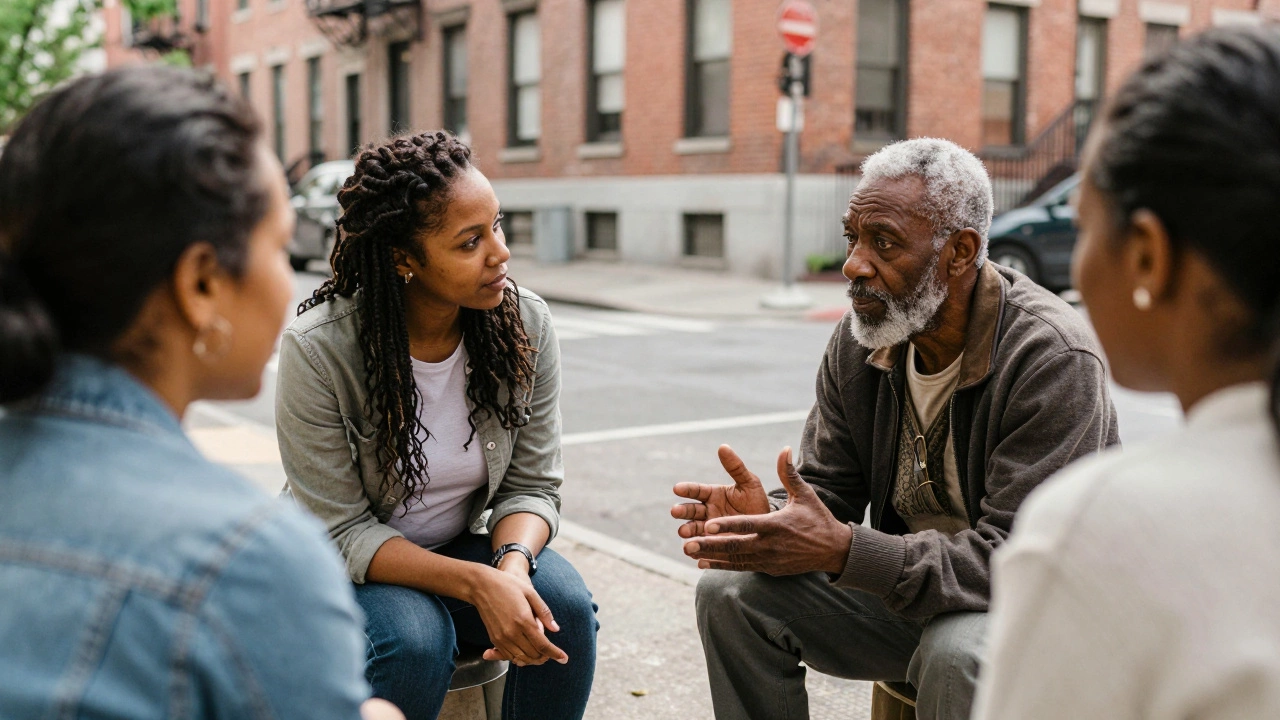
The best way to reach skeptical groups is through "trusted messengers." These are local leaders, business owners, or long-term residents who already have the community's respect. Instead of leading the conversation yourself, partner with these messengers. Let them introduce you and vouch for your intentions. Additionally, focus on "quick wins"-small, tangible improvements that show you are reliable before asking for larger commitments.
Can community outreach be done entirely online?
Digital outreach is a powerful tool for spreading awareness and gathering data quickly, but it cannot replace face-to-face interaction for trust-building. In many marginalized communities, there is a "digital divide" where the people who need the most help have the least internet access. A hybrid approach is best: use social media to cast a wide net, but use in-person meetings and local events to build deep, lasting relationships.
How do you measure the ROI of a community outreach program?
Return on Investment (ROI) in outreach isn't usually measured in dollars, but in social capital and outcomes. Look for a decrease in the problem you're tackling (e.g., lower unemployment rates in a specific zip code) or an increase in service utilization. You can also use "Pre- and Post-Surveys" to measure changes in community perception or knowledge. The most valuable ROI is often the creation of a sustainable network that continues to function even after your organization stops providing direct support.
What are some examples of successful community outreach?
A great example is a university that opens its library and computer labs to the general public during weekends, providing free literacy classes. Another is a health department that employs "Community Health Workers"-people hired from within the neighborhood to educate their peers about diabetes or hypertension. Both examples work because they remove barriers (cost, location, distrust) and integrate the service into the existing fabric of the community.
Next Steps for Your Outreach Journey
If you're ready to get started, don't start by writing a formal report. Start by taking a walk. Spend a week observing the natural flow of the neighborhood you want to serve. Where do people gather? What are they talking about at the bus stop? Once you have a feel for the environment, reach out to one local leader for a low-pressure coffee chat. Your goal for the first month shouldn't be to "implement" anything-it should be to learn. When you lead with curiosity instead of a solution, the community will usually open the door for you.