
Can Your Environment Make You Depressed? The Science of Place
 Aug, 30 2026
Environmental Mood Impact Calculator
Based on research regarding Attention Restoration Theory and environmental stressors, this tool estimates the potential impact of your current living conditions on your mood regulation.
1. Nature Access
2. Noise Exposure
3. Light Quality
4. View & Space
Your Environmental Stress Score
Analysis:
Recommended Micro-Adjustments:
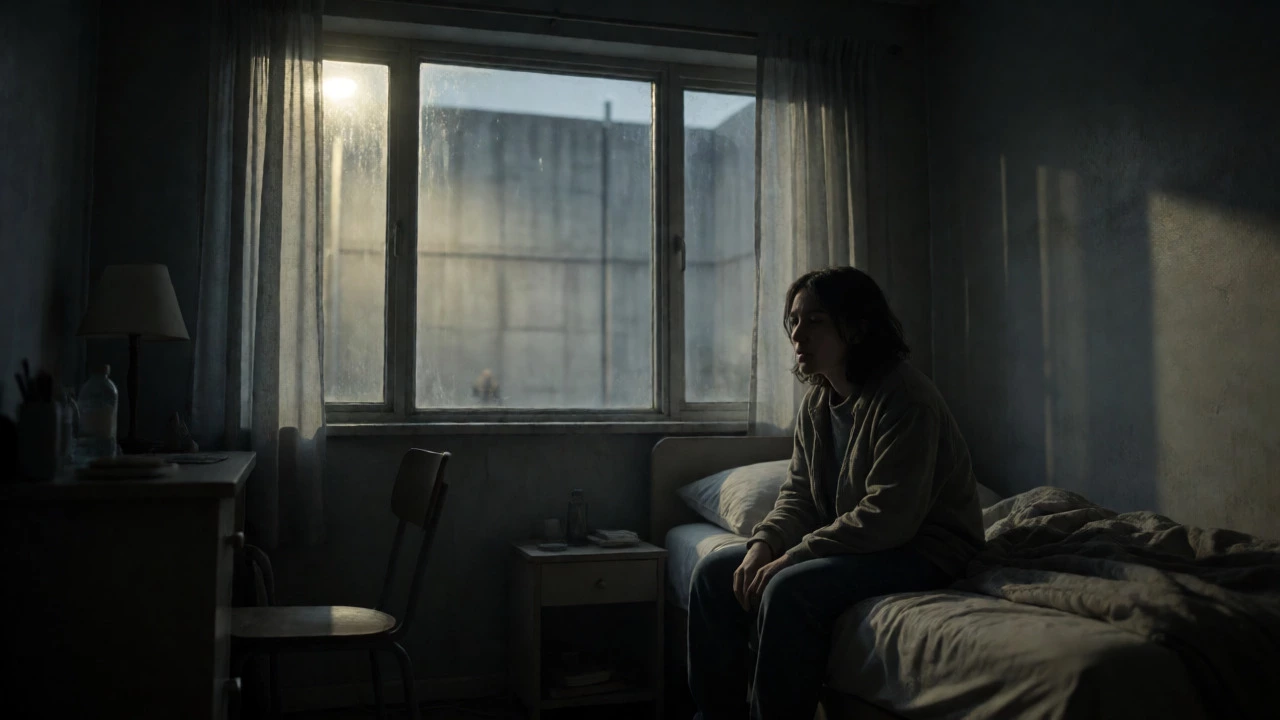
You wake up. The light filtering through the window is grey, not because it’s raining, but because a massive concrete wall blocks the sun until noon. The air smells faintly of exhaust and damp plaster. You feel a heavy, low-grade sadness that you can’t quite name. Is it just "the blues"? Or is your living situation actively draining your serotonin?
We often treat mental health as something purely internal-a chemical imbalance or a result of personal history. But there is a growing body of evidence suggesting that environmental depression, also known as solastalgia when tied to climate change or a state of distress caused by environmental degradation, is a very real physiological response to our surroundings. It’s not all in your head; sometimes, it’s literally in your zip code.
The Biology of Bad Views
Your brain is an environment-processing machine. It constantly scans for safety, resources, and social connection. When your physical space fails to provide these cues, your nervous system stays in a low-level state of fight-or-flight. This chronic stress elevates cortisol levels, which over time, suppresses the production of neurotransmitters like serotonin and dopamine-the chemicals responsible for mood regulation.
Consider the concept of Attention Restoration Theory (ART). Developed by psychologists Rachel and Stephen Kaplan, this framework suggests that directed attention (focusing on work or screens) depletes mental energy. Nature provides "soft fascination," allowing your brain to rest and restore itself. If you live in a high-density urban area with no green spaces, you never get that reset button. You are running on empty, day after day.
In Edinburgh, where I write this, we see this daily. People trapped in tenement flats without gardens report higher rates of anxiety than those with access to the Pentland Hills. It’s not about wealth; it’s about visual access to complexity and depth that isn’t man-made.
Nature Deficit Disorder: More Than Just a Buzzword
While not a clinical diagnosis in the DSM-5, Nature Deficit Disorder describes the human costs of alienation from nature, specifically diminished use of the senses, attention difficulties, and physical and emotional illnesses. Richard Louv coined the term, but the data backs it up. A study published in Science Advances found that people who spent at least 120 minutes a week in nature had significantly better health and wellbeing than those who didn’t. That’s two hours. Not twenty minutes. Two hours.
If you haven’t touched grass, smelled soil, or listened to birdsong in a week, your brain is missing critical sensory inputs. We evolved in savannas and forests, not in open-plan offices with fluorescent lighting. Our brains expect certain patterns-fractals in leaves, rhythmic sounds of water. When these are absent, we experience a subtle form of cognitive starvation.
The Urban Stressors: Noise, Light, and Crowding
It’s not just the lack of trees. It’s the presence of things that shouldn’t be there. Chronic noise pollution is a major driver of environmental depression. Traffic noise, construction, and sirens disrupt sleep architecture. Poor sleep is one of the fastest routes to depressive symptoms. A 2023 meta-analysis showed that long-term exposure to road traffic noise was associated with a 14% increased risk of depression.
Then there’s light pollution. Artificial light at night (ALAN) disrupts circadian rhythms. If your bedroom is lit up by streetlights or neon signs, your melatonin production drops. Melatonin doesn’t just help you sleep; it has antioxidant properties and plays a role in mood stability. Living under a constant glow keeps your body in a state of confused alertness.
| Factor | Mechanism | Impact on Mood |
|---|---|---|
| Lack of Green Space | Reduced Attention Restoration | Higher anxiety, mental fatigue |
| Noise Pollution | Sleep disruption & Cortisol spikes | Irritability, depression risk +14% |
| Light Pollution | Circadian rhythm disruption | Poor sleep quality, mood instability |
| Crowding/Lack of Privacy | Loss of perceived control | Helplessness, social withdrawal |
Place Attachment and Solastalgia
Have you ever felt grief for a place that hasn’t been destroyed yet? That’s solastalgia, a term coined by philosopher Glenn Albrecht. Unlike nostalgia, which is homesickness for a place you’ve left, solastalgia is homesickness while still at home. It occurs when your environment changes around you in ways you dislike-gentrification, deforestation, or industrial expansion.
This loss of place attachment-the emotional bond between person and place-is linked to lower resilience against stress. When you feel disconnected from your neighborhood, you lose your sense of community support. You stop waving to neighbors. You stop using the local park. You become isolated, even if you’re surrounded by people.
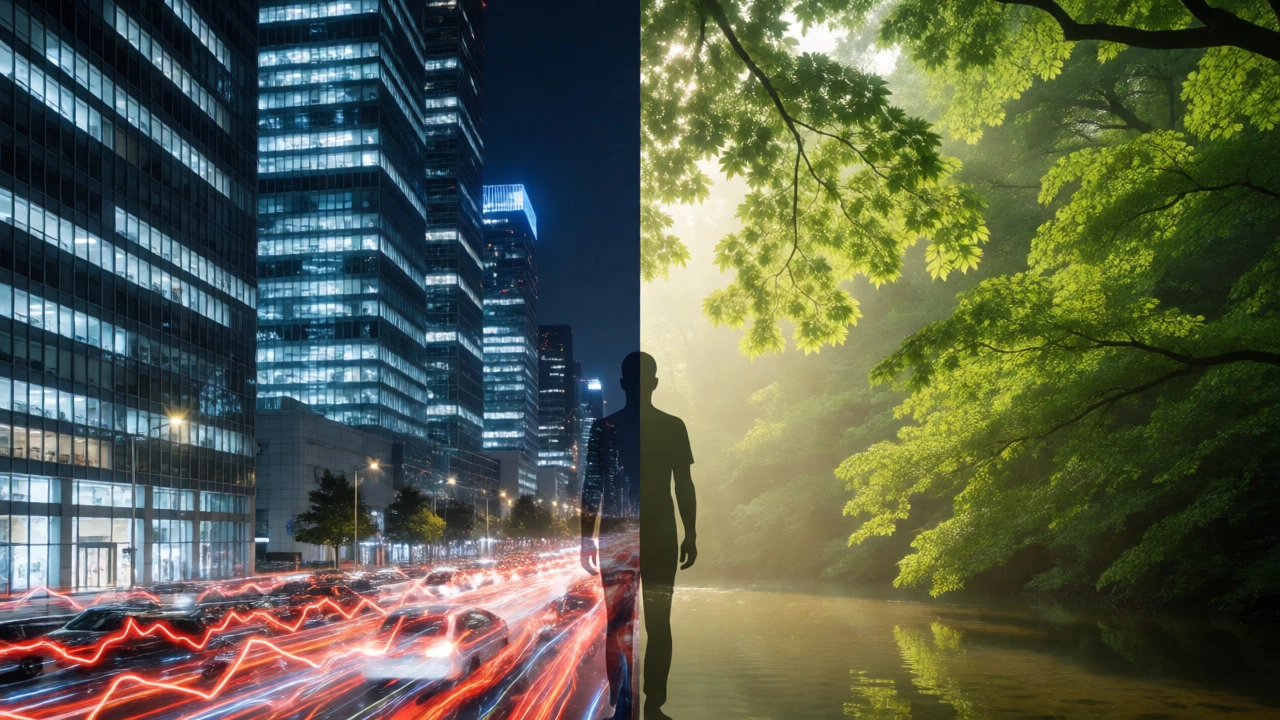
In many UK cities, rapid development has replaced familiar landmarks with generic glass towers. For older residents especially, this erasure of memory triggers a sense of displacement. You are physically present, but psychologically unmoored.
What Can You Actually Do About It?
You might think, "I can’t move house today." Fair enough. But you can tweak your micro-environment. Small changes can trick your brain into feeling safer and more restored.
- Bring the outside in: Houseplants aren’t just decor. Studies show that viewing plants lowers blood pressure and stress markers. Even a single pothos on your desk can act as a soft-fascination trigger.
- Control your light diet: Use blackout curtains to ensure true darkness at night. In the morning, get bright natural light within 30 minutes of waking. This anchors your circadian rhythm.
- Create a "third place": If your home feels oppressive, find a neutral ground-a library, a quiet café, a bench in a park. Having a space that is neither work nor home reduces the feeling of being trapped.
- Audit your noise: White noise machines or earplugs can mitigate sudden spikes in ambient sound, protecting your sleep cycle.
For those in severe situations, advocacy matters too. Joining local groups to push for more green corridors or quieter streets gives you agency. Action combats helplessness, which is the fuel of depression.
Is It the Weather or the Window?
People often blame Seasonal Affective Disorder (SAD) for their winter gloom. While reduced sunlight does affect vitamin D and serotonin, SAD is often exacerbated by indoor confinement. If you spend 90% of your day indoors with poor ventilation and no view, the weather outside becomes irrelevant. You are effectively living in a cave.
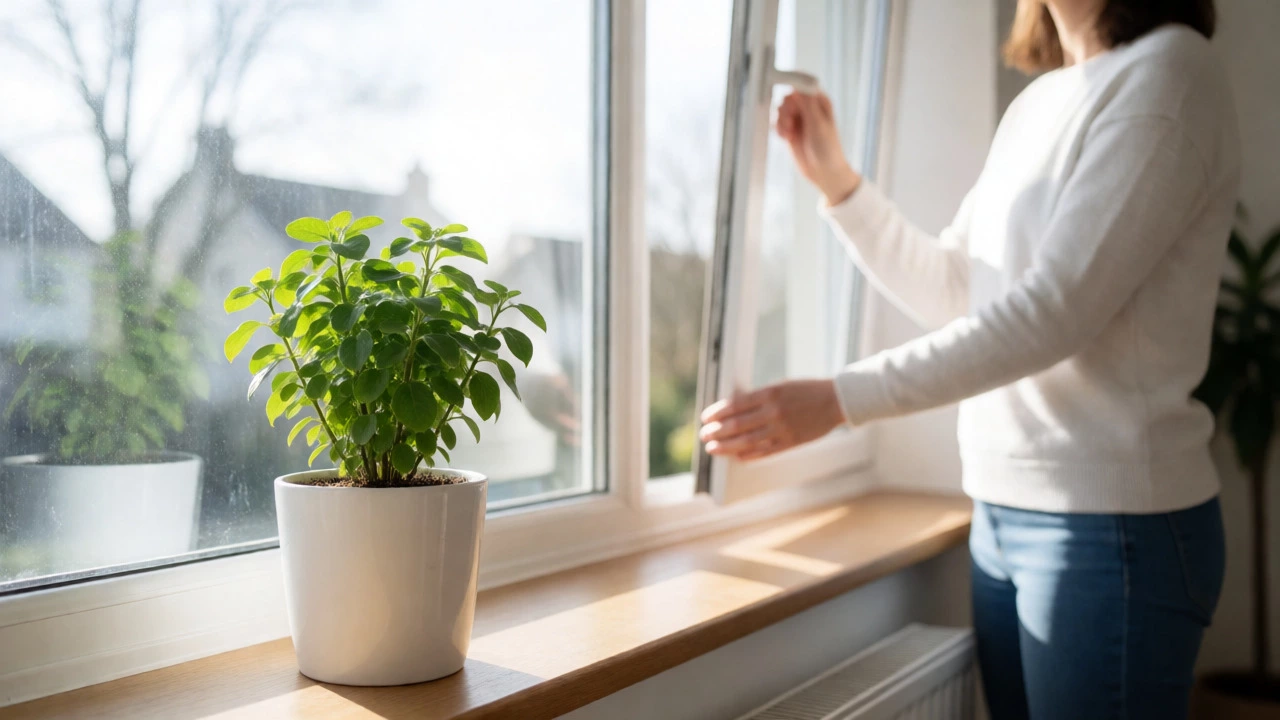
Ventilation is key. Stale air with high CO2 levels impairs cognitive function and mood. Opening a window for five minutes every hour can reset your mental clarity. It’s a tiny habit with outsized rewards.
Frequently Asked Questions
How much nature do I need to see per week to improve my mood?
Research suggests that at least 120 minutes per week of contact with nature is the threshold for significant health and wellbeing benefits. This doesn't have to be in one go; three 40-minute walks in a park are sufficient. The key is consistency and immersion in a natural setting rather than an urban one.
Can moving to a greener area cure depression?
Moving can help reduce environmental stressors like noise and lack of green space, potentially alleviating symptoms of environmental depression. However, depression is multifactorial. While a better environment supports recovery, it is rarely a standalone cure for clinical depression, which may require therapy, medication, or lifestyle changes alongside environmental improvements.
What is solastalgia and how is it different from depression?
Solastalgia is a specific type of distress caused by environmental change impacting your home environment. While it shares symptoms with depression, such as hopelessness and grief, it is distinct because its primary cause is external environmental degradation rather than internal biological or psychological factors. Addressing the environmental loss or finding new ways to connect with the changing landscape can alleviate solastalgia.
Does city living always lead to worse mental health?
Not necessarily. Well-designed cities with ample parks, good public transport, and strong community ties can support excellent mental health. The negative effects come from specific stressors like overcrowding, noise, and lack of access to nature. Many urban dwellers thrive due to social connectivity and cultural opportunities, provided they manage their exposure to environmental stressors.
How does artificial light affect my mood?
Artificial light at night disrupts the production of melatonin, a hormone essential for sleep and mood regulation. Disrupted circadian rhythms can lead to poor sleep quality, fatigue, and increased risk of depression. Keeping your sleeping environment dark and limiting blue light exposure before bed helps maintain healthy hormonal balance.