
3 Types of Help for Mental Disorders: Clinical, Community, and Peer Support
 Jul, 20 2026
Mental Health Support System Builder
This interactive guide helps you create a comprehensive support system by identifying your needs across three pillars: clinical care, community resources, and peer support.
Step 1: Assess Your Current Situation
Immediate Action Steps:
Living with a mental disorder is a complex challenge that affects millions of people worldwide, requiring diverse forms of intervention and care. Whether it’s anxiety, depression, bipolar disorder, or schizophrenia, the path to stability rarely looks the same for everyone. The good news? You don’t have to navigate this alone. There are three distinct pillars of help available today: clinical treatment, community-based resources, and peer support networks. Each serves a unique role, and understanding how they work together can transform your journey from feeling overwhelmed to feeling empowered.
Many people assume that seeing a doctor is the only option. But what if you need immediate crisis support at 2 AM? Or what if you just want to talk to someone who has walked the same path? This guide breaks down these three types of help so you can build a support system that actually works for your life.
Clinical Treatment: The Medical Foundation
When we talk about professional help, we’re usually referring to clinical treatment, which involves diagnosis and therapy provided by licensed healthcare professionals such as psychiatrists, psychologists, and licensed clinical social workers. This is the backbone of managing severe mental health conditions. It’s not just about getting a prescription; it’s about having a structured plan tailored to your biology and psychology.
Clinical treatment typically falls into two main buckets: medication management and psychotherapy. Medication, prescribed by a psychiatrist, helps regulate brain chemistry. For example, SSRIs (Selective Serotonin Reuptake Inhibitors) are commonly used for depression and anxiety disorders. Psychotherapy, often called "talk therapy," includes approaches like Cognitive Behavioral Therapy (CBT), which helps you identify and change negative thought patterns. According to data from the National Institute of Mental Health, combining medication with therapy yields better outcomes than either approach alone for many conditions.
Why is this layer essential? Because untreated mental disorders can lead to physical health complications, relationship breakdowns, and job loss. A clinician provides the medical expertise to stabilize acute symptoms. If you are experiencing hallucinations, severe panic attacks, or suicidal thoughts, clinical intervention is non-negotiable. It creates the safety net that allows other forms of support to take hold.
- Psychiatrists: Medical doctors who can prescribe medication and provide therapy.
- Psychologists: Hold doctoral degrees and specialize in psychological testing and therapy.
- Licensed Counselors: Provide short-term therapy for specific issues like grief or stress.
Community-Based Resources: Local Safety Nets
While clinics handle the medical side, community-based resources are local organizations, charities, and public services that offer accessible, often low-cost support including housing assistance, job training, and crisis intervention. These resources bridge the gap between hospital care and daily life. They are especially vital for those who might fall through the cracks of the traditional healthcare system due to cost, stigma, or logistical barriers.
Think of community resources as the infrastructure of mental health. This includes local mental health charities that non-profit organizations dedicated to raising awareness, funding research, and providing direct services to individuals affected by mental illness. For instance, organizations like NAMI (National Alliance on Mental Illness) offer free education programs and family support groups. Other community assets include crisis hotlines (like 988 in the US), mobile crisis teams that come to your home instead of sending police, and supported housing programs for those recovering from severe episodes.
These services are crucial because mental health doesn't exist in a vacuum. If you’re depressed but also struggling to pay rent, therapy alone won’t solve the problem. Community agencies address the social determinants of health. They provide practical help-food banks, legal aid for disability claims, and vocational rehab-that reduces overall stress levels. When your basic needs are met, you have more energy to focus on recovery.
| Feature | Clinical Treatment | Community Resources |
|---|---|---|
| Primary Goal | Symptom reduction & medical stability | Social integration & practical support |
| Providers | Doctors, Therapists | Case Managers, Volunteers, NGOs |
| Cost | Often high (insurance/copays) | Often free or sliding scale |
| Accessibility | Requires appointments/referrals | Walk-in centers, hotlines, drop-ins |
Peer Support Networks: Shared Experience
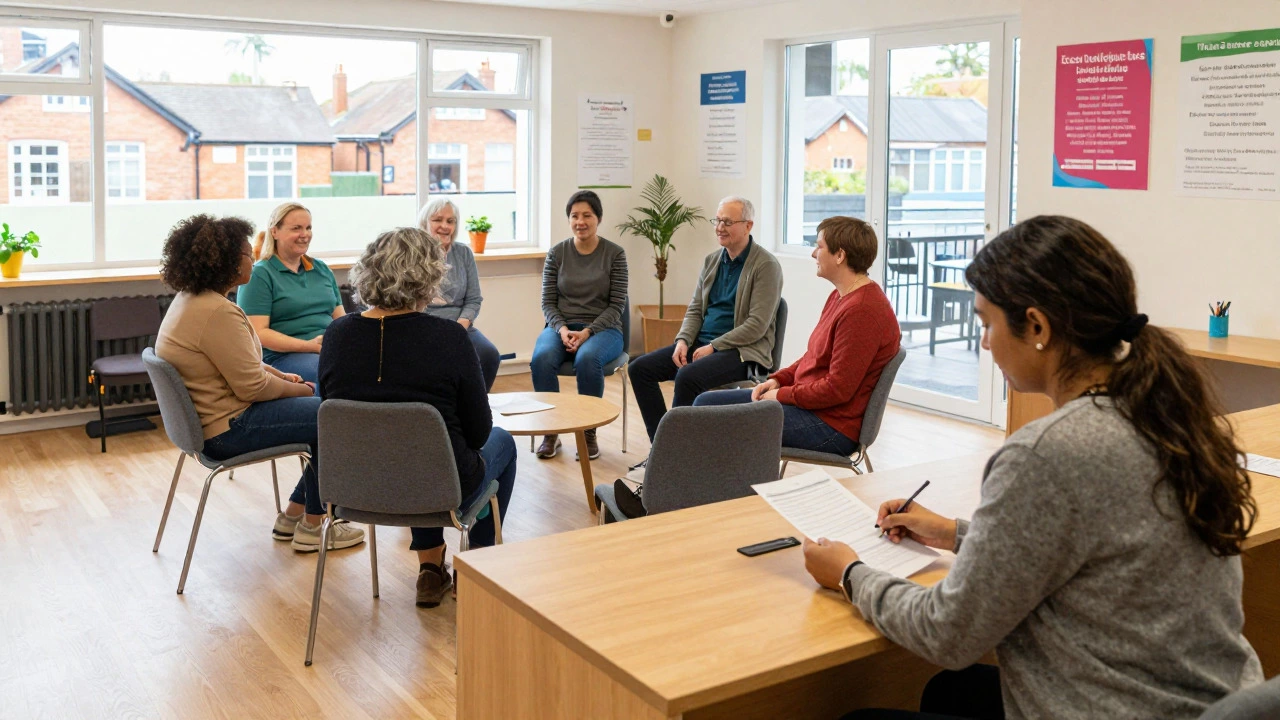
The third pillar is perhaps the most underrated: peer support, which connects individuals with mental health challenges to others who have lived experience, fostering mutual understanding and hope without professional hierarchy. This isn’t just "talking to friends." It’s structured connection with people who truly get it. Peer specialists are trained individuals in recovery themselves, offering guidance based on their own journeys.
Why does this matter? Because isolation fuels mental illness. When you’re in the thick of a depressive episode, hearing a doctor say "it gets better" feels hollow. Hearing it from someone who was where you are now-and made it out-carries weight. Peer support groups, whether online forums or local meetups, reduce shame. You realize you aren’t broken; you’re part of a community navigating similar struggles.
Research published in journals like *Psychiatric Services* shows that peer support improves engagement in treatment and increases self-efficacy. It empowers you to become an active participant in your care rather than a passive patient. Many charities run these programs. For example, Depression and Bipolar Support Alliance (DBSA) offers both in-person and online support groups moderated by peers. These networks provide accountability, emotional validation, and practical tips for coping strategies that textbooks miss.

How to Combine All Three Types Effectively
You don’t have to choose just one. The most effective approach is integrated care. Imagine building a house: clinical treatment is the foundation, community resources are the walls, and peer support is the roof that keeps you dry during storms. Here’s how to weave them together.
- Start with Assessment: See a clinician to get a clear diagnosis. Rule out physical causes (like thyroid issues) that mimic mental health symptoms.
- Map Your Local Resources: Look up local mental health charities. Check if they offer case management. Can they help with insurance paperwork? Housing?
- Find Your Tribe: Join a peer support group related to your specific condition. Try a few before settling on one that feels safe.
- Create a Crisis Plan: Write down who to call first. Is it your therapist? A crisis line? A peer mentor? Having this written down removes decision fatigue during emergencies.
Barriers exist, of course. Stigma still prevents many from seeking help. Cost is another huge factor. However, many community charities operate on sliding scales or grants specifically for uninsured individuals. Don’t let fear stop you from exploring all three avenues. Start small. One phone call to a local charity can open doors to all three types of support.
Frequently Asked Questions
What is the difference between a psychologist and a psychiatrist?
A psychiatrist is a medical doctor (MD) who can prescribe medication and manage biological aspects of mental disorders. A psychologist holds a PhD or PsyD and specializes in psychotherapy and psychological testing but generally cannot prescribe medication (with rare exceptions in some states). Both are essential parts of clinical treatment.
Are peer support groups free?
Most peer support groups organized by mental health charities and non-profits are free to attend. Some private coaching services may charge fees, but standard support groups rely on volunteer facilitators and donations. Organizations like NAMI and DBSA offer free meetings nationwide.
How do I find community mental health resources near me?
You can start by calling 211 (in the US and Canada) to connect with local social services. Additionally, searching for "mental health charities [your city]" will reveal local NGOs. Hospital websites often list community partners they refer patients to for ongoing support.
Can peer support replace therapy?
No, peer support should complement, not replace, clinical therapy. While peers offer empathy and shared experience, they are not licensed to diagnose or treat mental disorders. Clinical treatment addresses the medical and psychological roots of the condition, while peer support aids in recovery and social reintegration.
What should I do if I am in immediate crisis?
If you are in danger of hurting yourself or others, call emergency services (911 in the US) or go to the nearest emergency room. For less immediate crises, call or text 988 (Suicide & Crisis Lifeline) to speak with a trained counselor 24/7. These are critical components of community-based emergency resources.